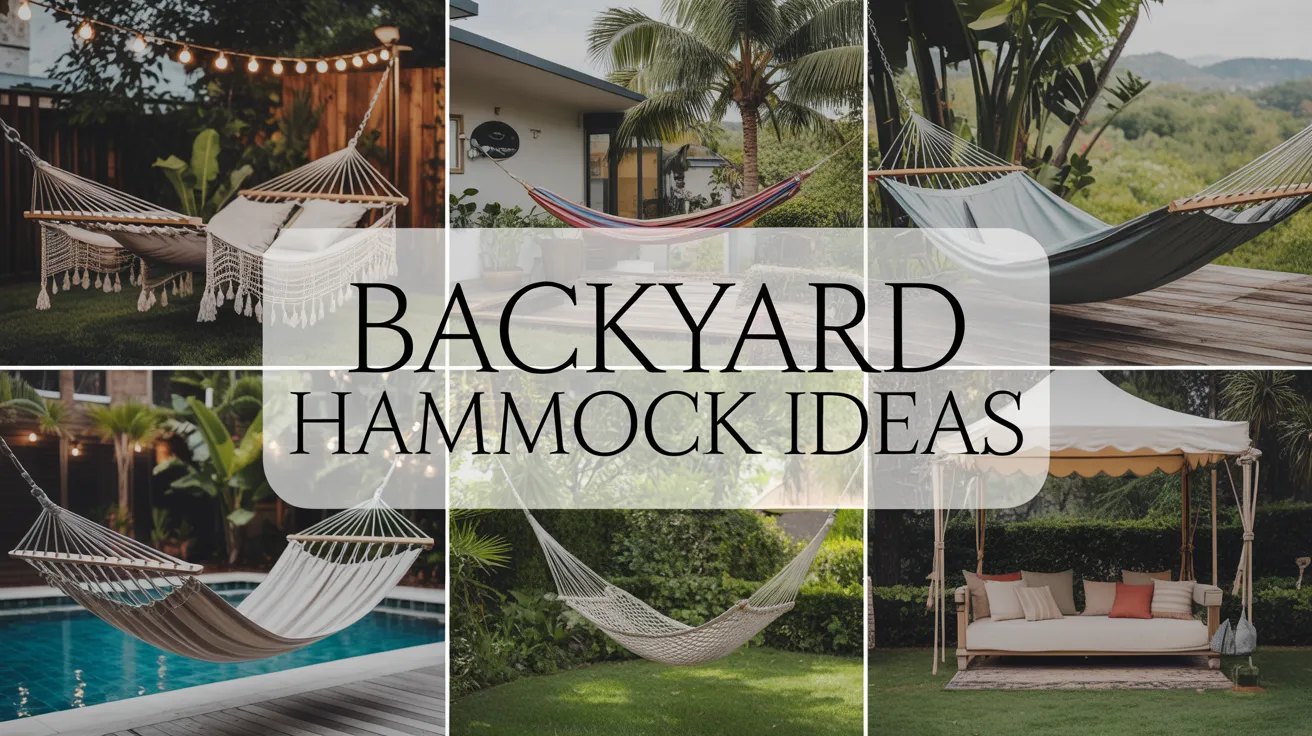
15 Backyard Hammock Ideas to Transform Your Outdoor Space
Creating a comfortable backyard space is important for anyone who wants to relax and enjoy the outdoors. Hammocks offer a simple way to add comfort and charm to any yard. They can fit different styles and sizes of outdoor areas, making them a versatile choice.
15 backyard hammock ideas help people find the right option to turn their outdoor space into a peaceful retreat. These ideas cover a variety of setups and designs, so anyone can choose one that suits their needs and taste. Whether the space is large or small, a hammock can make it more inviting.
Classic tree-to-tree hammock setup
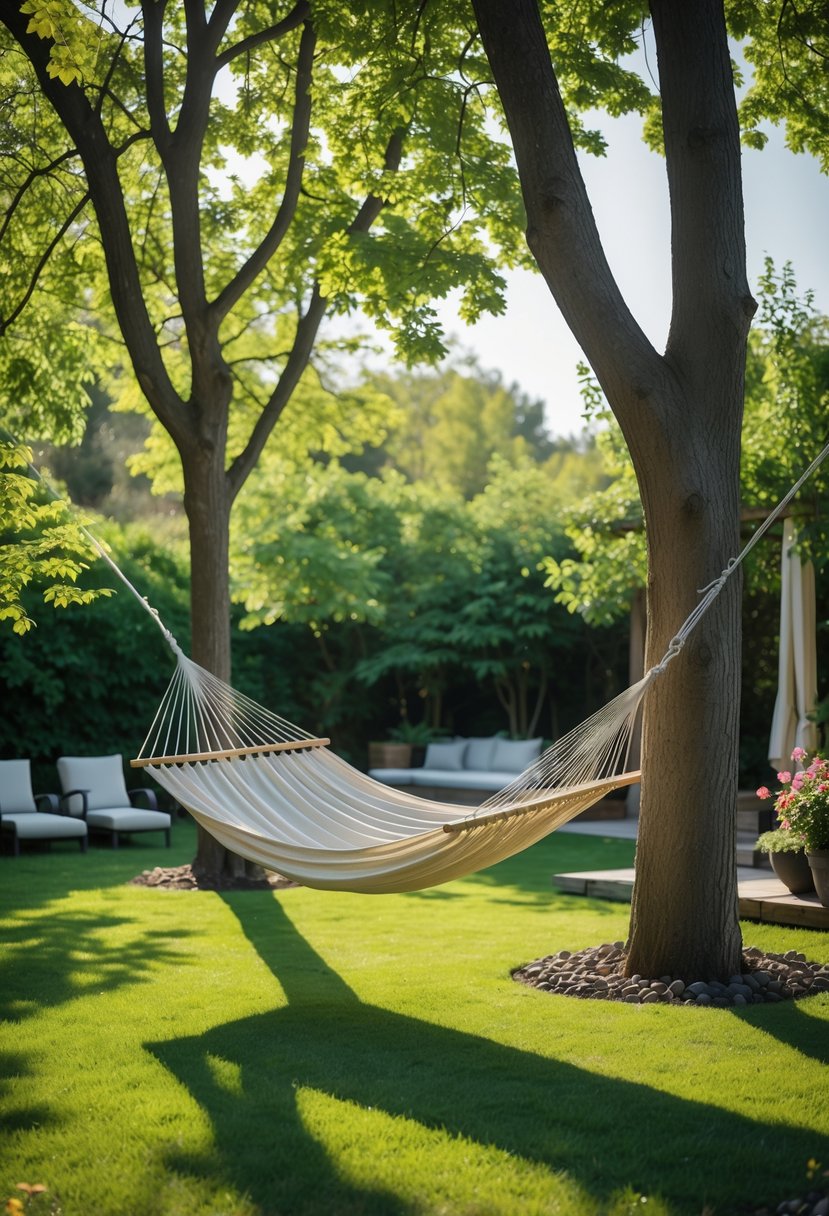
A classic hammock setup hangs between two sturdy trees about 12 to 15 feet apart. This spacing ensures the hammock hangs with a gentle sag for comfort.
Using tree-friendly straps helps protect the bark and keeps the hammock secure. Ropes can damage trees and are not recommended.
The setup is simple and natural. It offers shade and a slight sway with the breeze, making it a popular choice for many backyards.
Freestanding wooden hammock stand
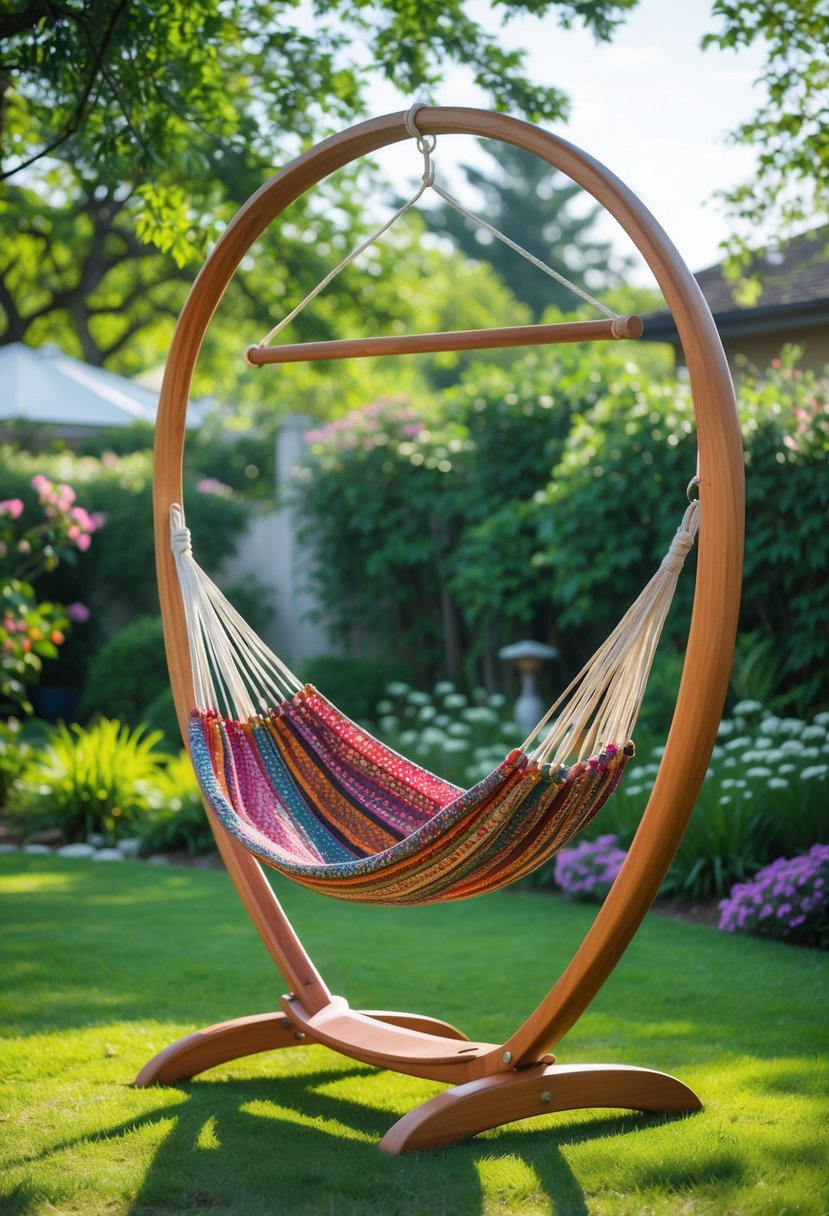
A freestanding wooden hammock stand is a solid option for those without suitable trees. It can be placed anywhere in the backyard, giving flexibility in setup.
Wood like redwood or cedar is common because it is strong and looks natural. Weather-resistant finishes help protect the stand from outdoor elements.
These stands often have wide legs for stability. Building one can be a quick DIY project with basic tools and materials.
The design allows easy movement if needed. It also fits well with different garden styles and outdoor spaces.
Rope hammock with wooden spreader bars
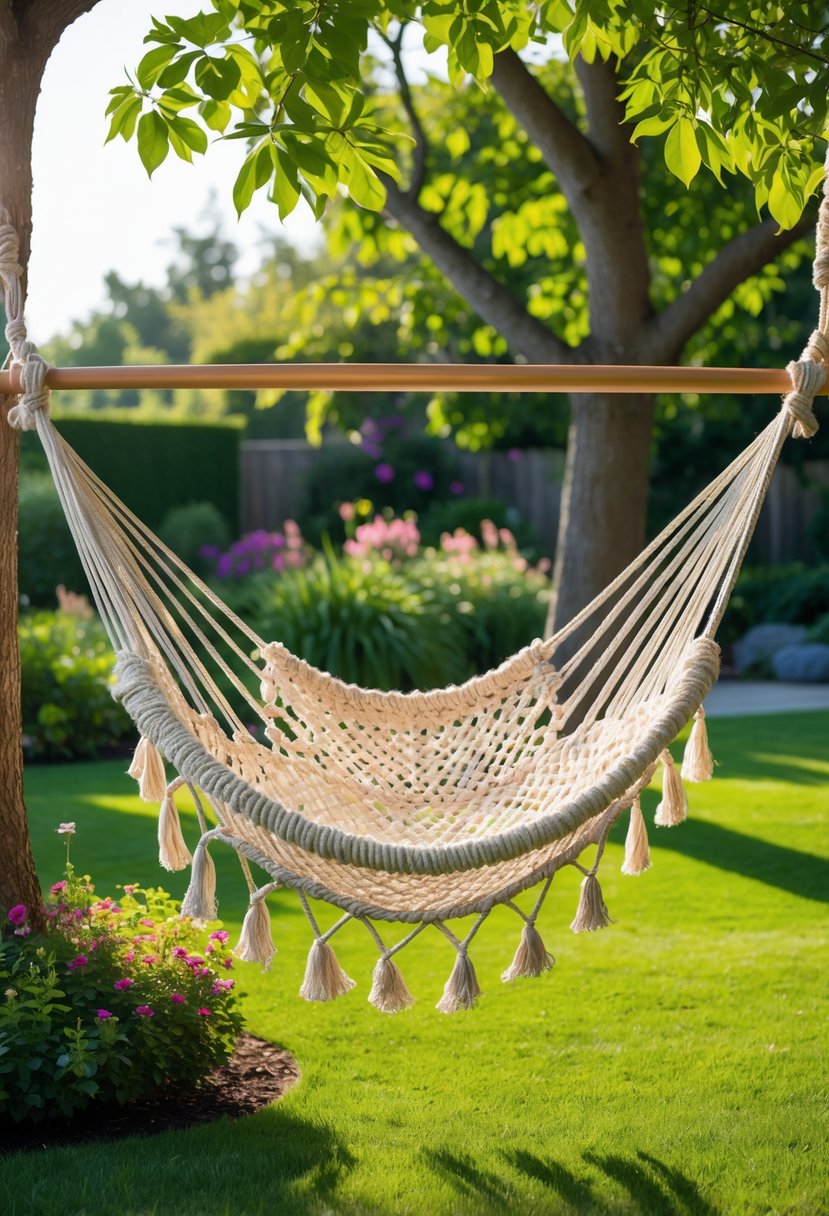
A rope hammock with wooden spreader bars offers stability and a classic look. The wooden bars keep the hammock fabric open, preventing it from bunching up. This design provides extra space to lie comfortably.
These hammocks are often made from cotton or a cotton-polyester blend. The materials balance softness and durability, making them suitable for outdoor use.
They can be hung between trees or on a stand. The spreader bars also add style while supporting even weight distribution for two people.
Double hammock for two
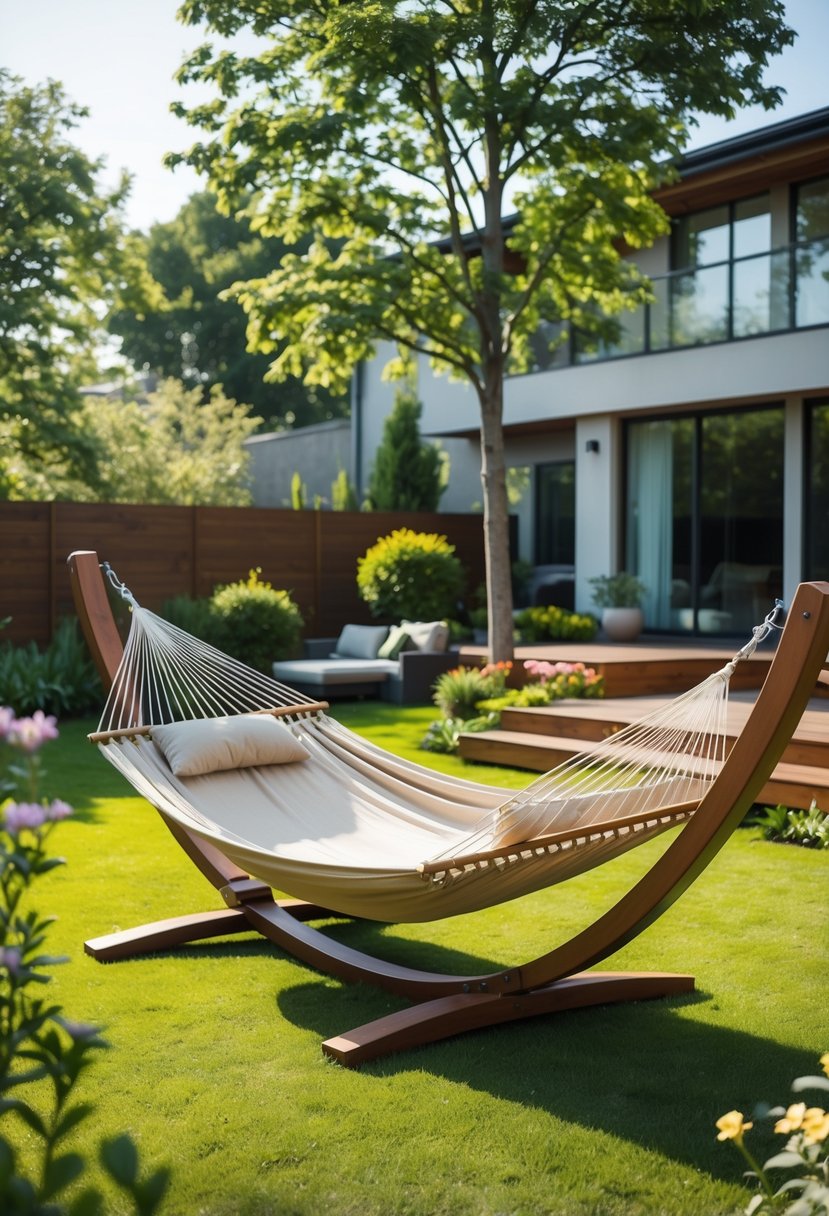
A double hammock is designed to hold two people comfortably. It is wider and stronger than a single hammock, making it a great choice for couples or close friends.
These hammocks often have soft fabrics and sturdy support to create a cozy spot. They can be hung between two trees or on a frame made for double hammocks.
Adding cushions or blankets can make the space even more inviting. This setup is perfect for relaxing outside, reading, or enjoying quiet moments together.
Portable camping hammock
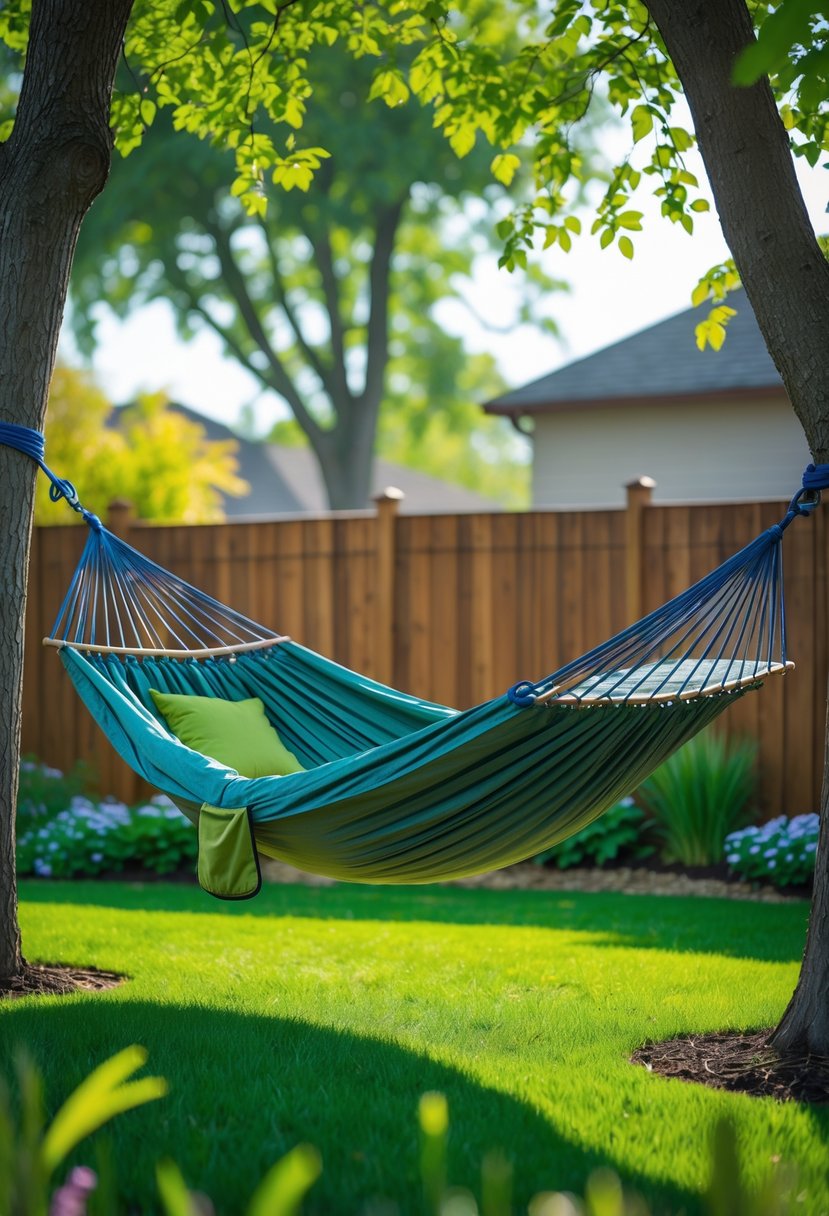
A portable camping hammock is designed to be lightweight and easy to carry. It fits well in backpacks and takes up little space, making it a good choice for hiking or camping trips.
These hammocks usually come with built-in straps or ropes for quick setup between trees or poles. They provide a comfortable resting spot outdoors without heavy gear.
Many portable hammocks are made of durable materials that dry quickly. This makes them practical for different weather conditions during camping or outdoor activities.
Hammock with mosquito netting
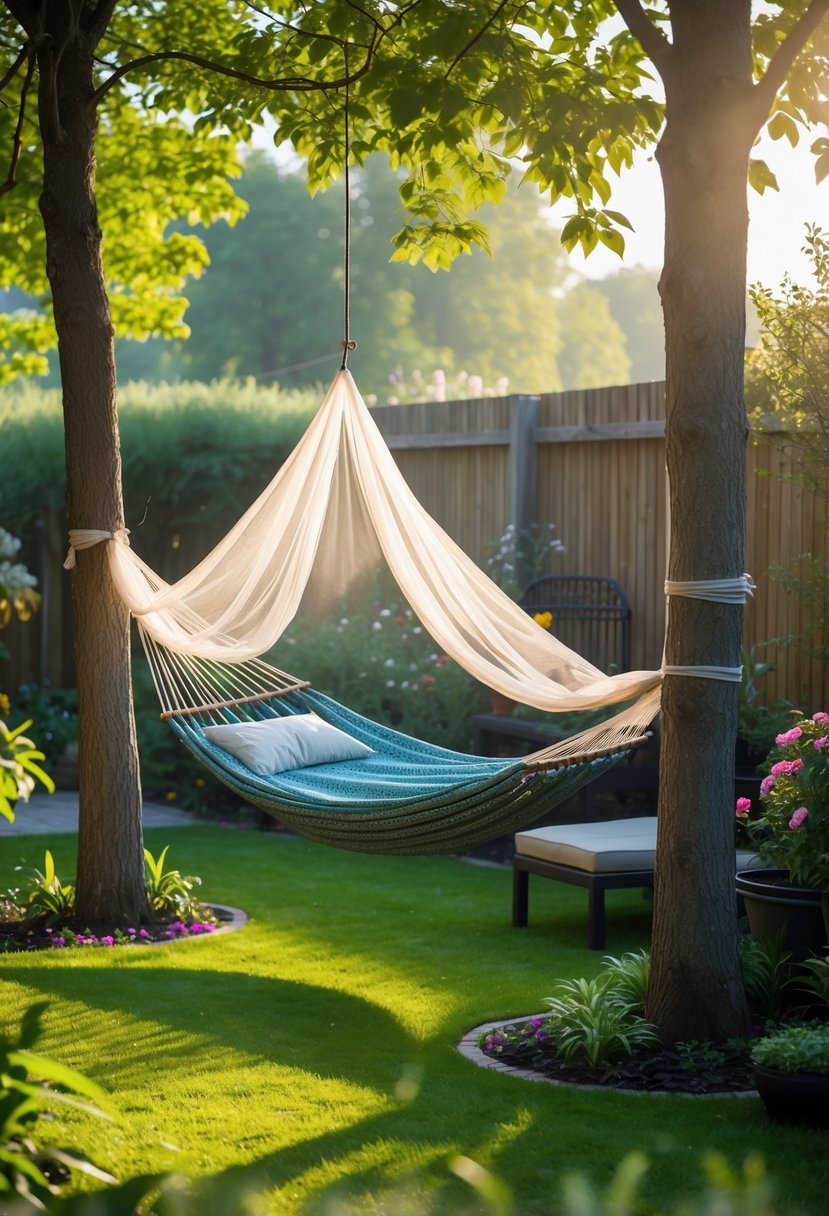
A hammock with mosquito netting keeps bugs away while relaxing outside. The netting creates a protective barrier without blocking the view. This makes it ideal for backyards with many mosquitoes or other insects.
These hammocks are easy to set up and often lightweight, making them portable for trips. Some have the netting built in, while others attach or detach as needed. This feature helps ensure comfort during warm evenings.
Suspended hammock chair
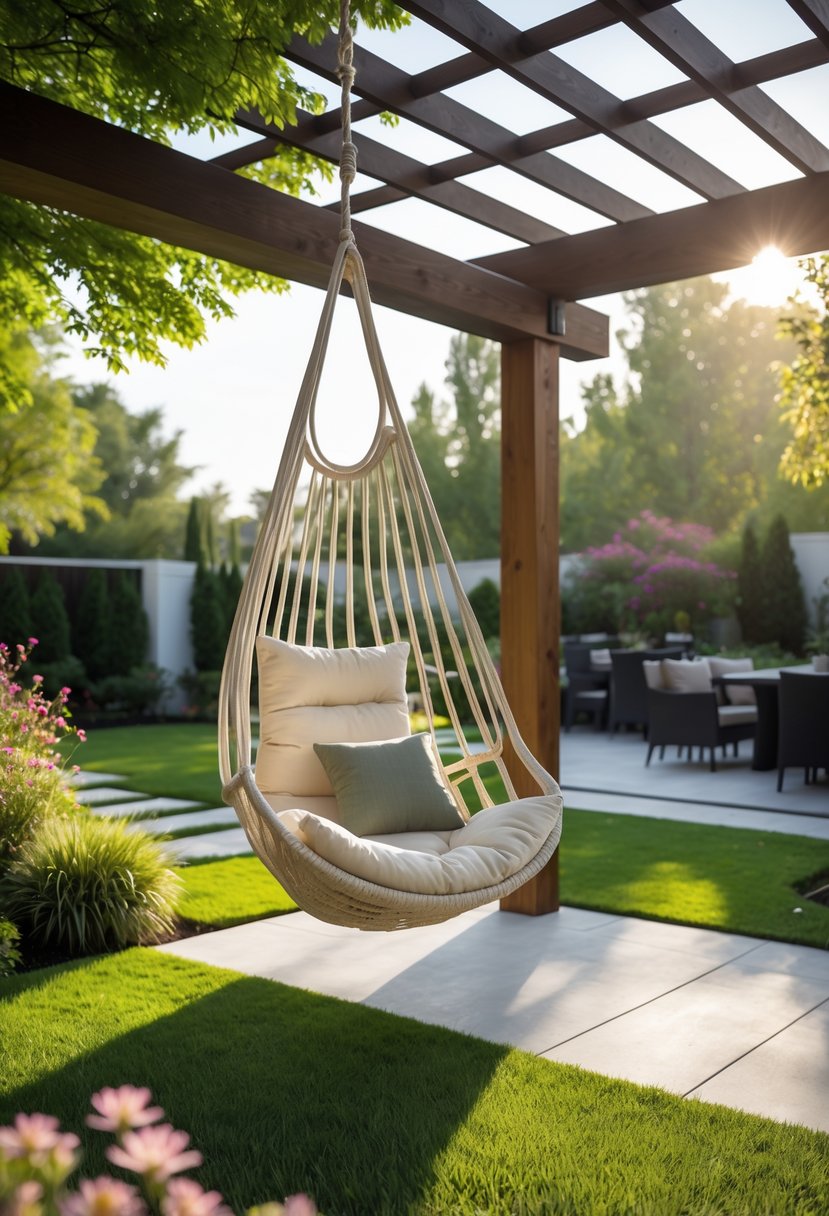
A suspended hammock chair is a great option for small backyard spaces. It hangs from a single point, like a sturdy tree branch or a porch beam, saving floor space.
These chairs offer gentle swaying, which can help with relaxation. The design adds a cozy and stylish touch to any outdoor area.
Materials like rattan or woven rope are popular. They provide comfort and fit well with natural surroundings. The chair can create a quiet spot for reading or resting.
Hammock swing attached to a porch ceiling
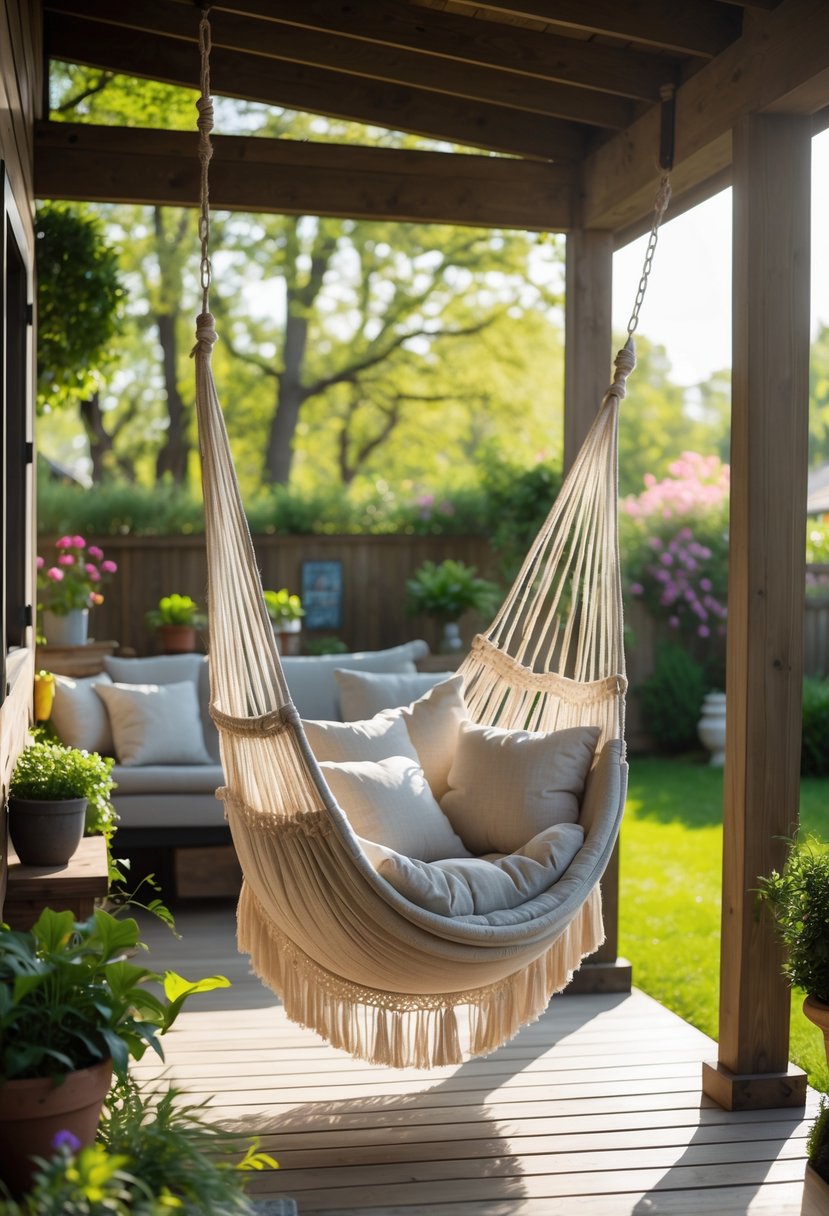
A hammock swing hung from a porch ceiling creates a cozy spot for relaxing outdoors. It offers gentle movement while keeping the sitter shaded and protected from direct sun or rain.
Installing it requires sturdy support, like strong ceiling joists or beams. Using proper hardware ensures safety and stability.
This setup fits well on covered porches and adds charm to the space. It is ideal for reading, napping, or simply enjoying fresh air without leaving the porch.
Canopy hammock for sun protection
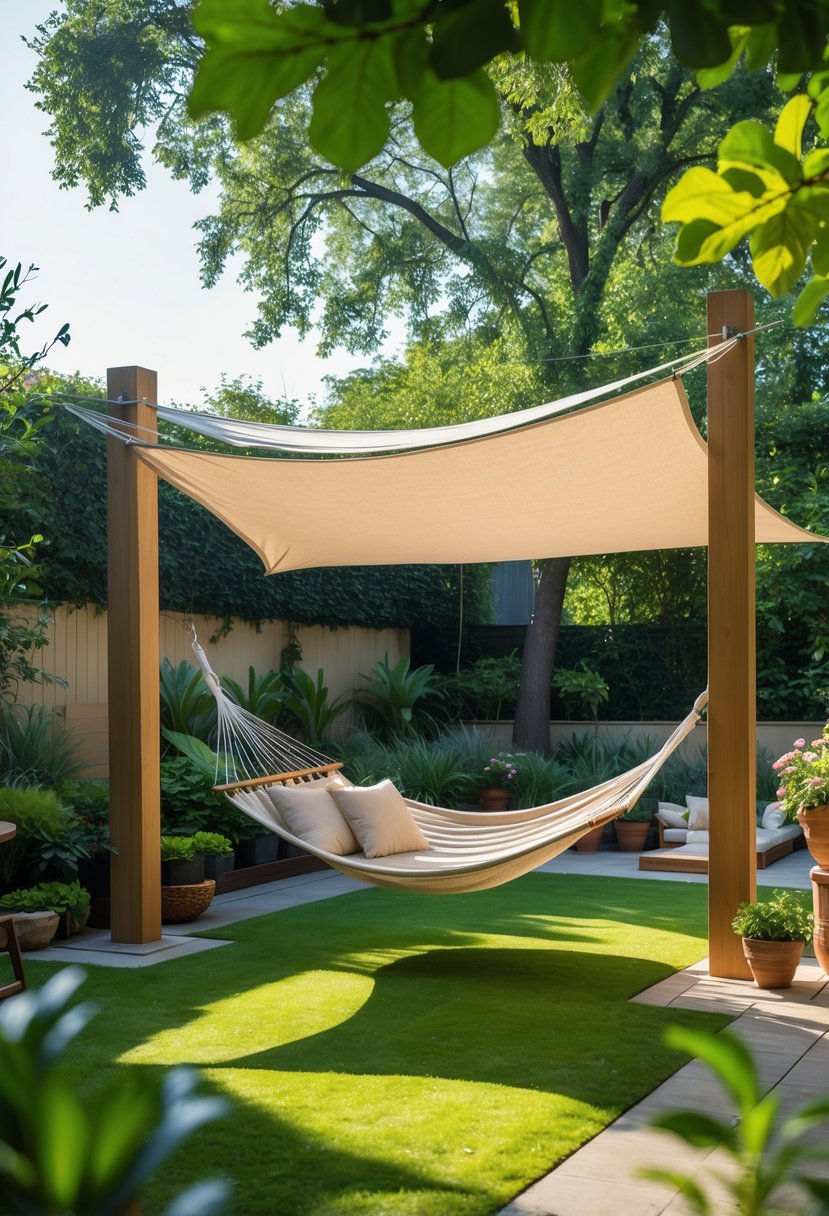
A canopy hammock offers shade while relaxing outdoors. It helps block direct sunlight, making it easier to enjoy a warm day without overheating.
Many canopies attach directly to the hammock frame or use separate poles for support. This setup works well in yards without natural tree shade.
The fabric used is usually UV-resistant to reduce sun damage. It also allows air to flow, keeping the space cool and comfortable.
DIY Pallet Hammock Stand
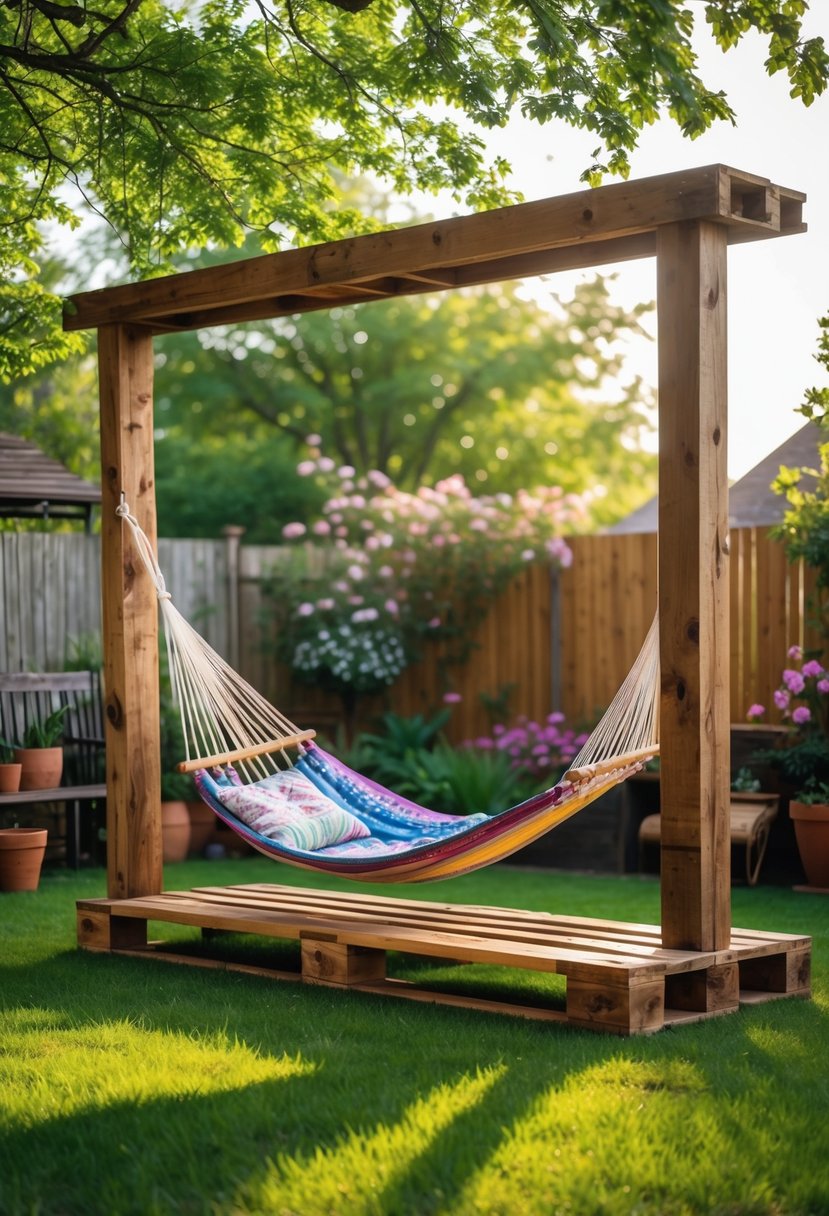
A DIY pallet hammock stand is a practical and affordable option for the backyard. It uses pallet wood, which is easy to find and repurpose. The stand is simple to build with basic tools and some fasteners.
This type of stand can hold a reasonable weight, usually up to around 130 pounds. It often measures over 9 feet long, giving enough space to stretch comfortably. The design is sturdy when assembled correctly.
Using pallets also gives the stand a rustic look. It fits well in casual outdoor settings. This project works well for those who want a quick, budget-friendly hammock support without needing trees or expensive materials.
Hammock with built-in cup holder
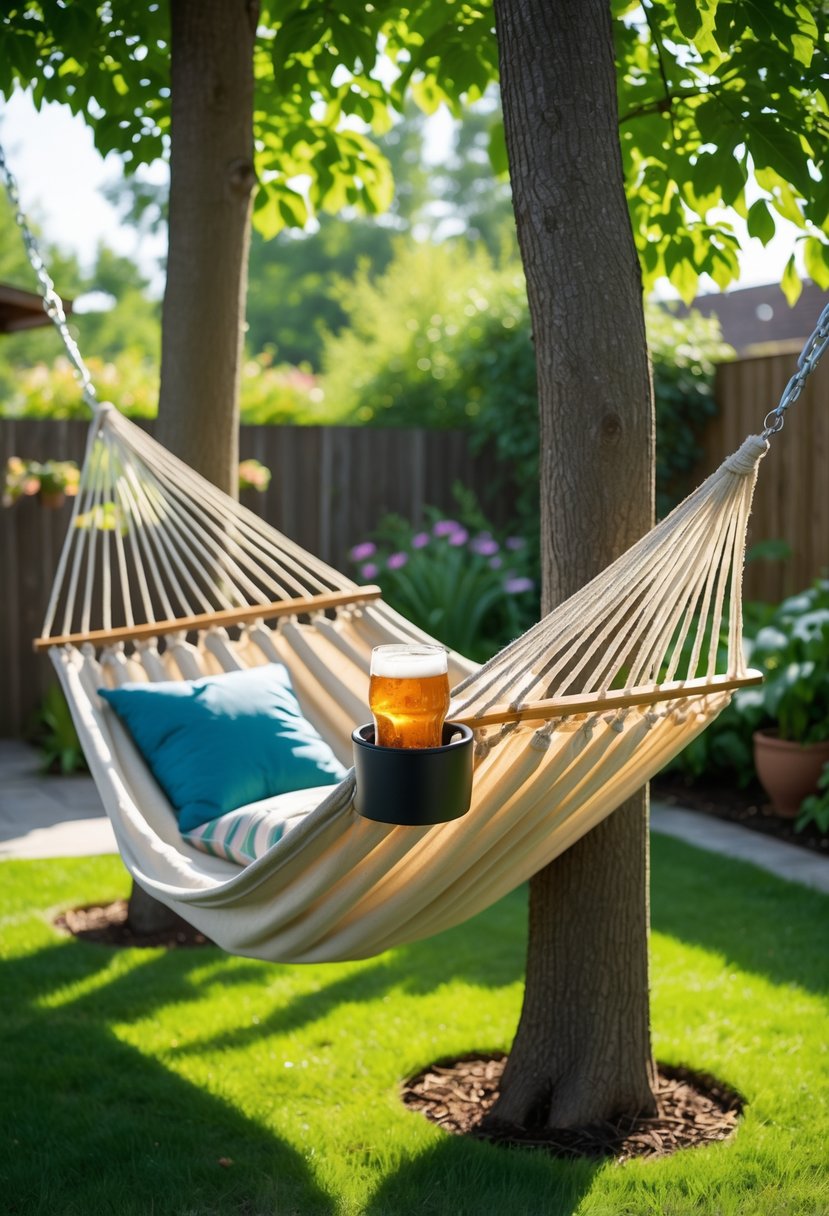
A hammock with a built-in cup holder adds convenience to backyard relaxation. It keeps drinks close by, so there is no need to get up when enjoying a book or nap.
This feature can be a small pocket or a sturdy side table attached to the hammock frame. It helps prevent spills and keeps the drink stable.
People who spend long hours outdoors find this especially useful. It also adds a practical touch without taking up extra space.
Weather-resistant fabric hammock
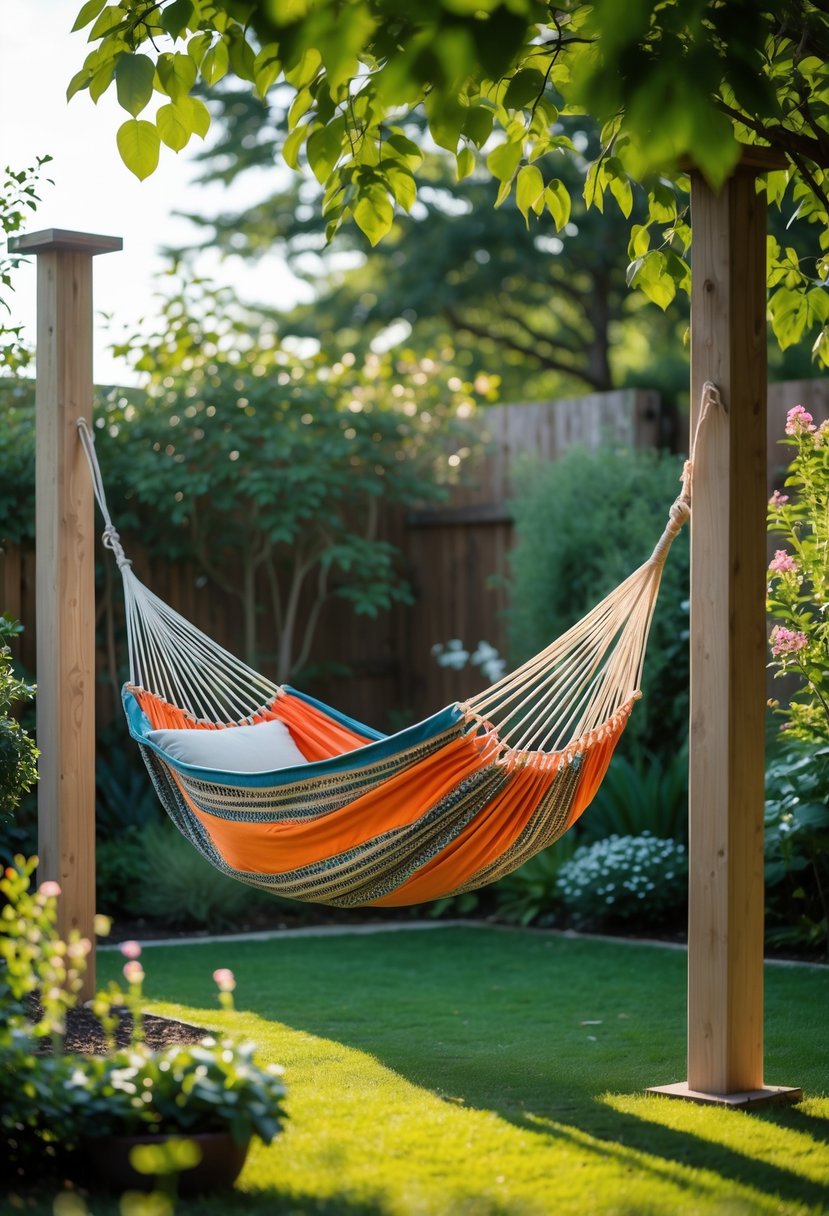
A weather-resistant fabric hammock is a smart choice for anyone who wants to keep their hammock outside all year. Materials like polyester or acrylic resist moisture and UV rays, helping the hammock last longer.
These fabrics dry quickly and avoid mold or fading. They also stay strong in different weather conditions. Using a weather-resistant hammock means less worry about damage from rain or sun. Cushions made from similar materials add comfort without losing durability.
Hammock with integrated storage pockets
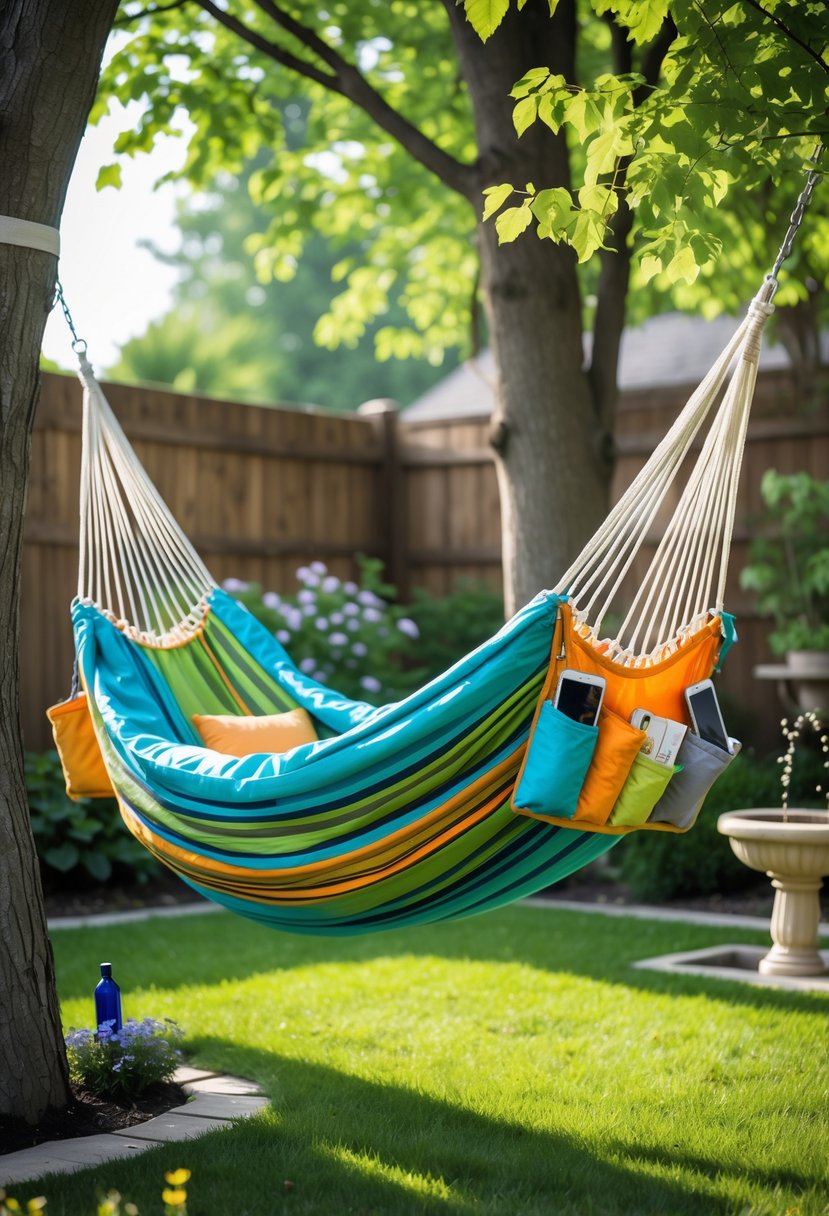
A hammock with integrated storage pockets offers practical convenience. It allows users to keep small items like phones, books, or sunglasses close while relaxing.
This feature adds to the overall comfort by reducing the need to get up frequently. It helps keep the outdoor space tidy by providing a dedicated spot for essentials.
Many models come with durable fabric pockets attached to the side. These storage options are useful for both short naps and longer relaxation sessions.
Hammock under a pergola with string lights
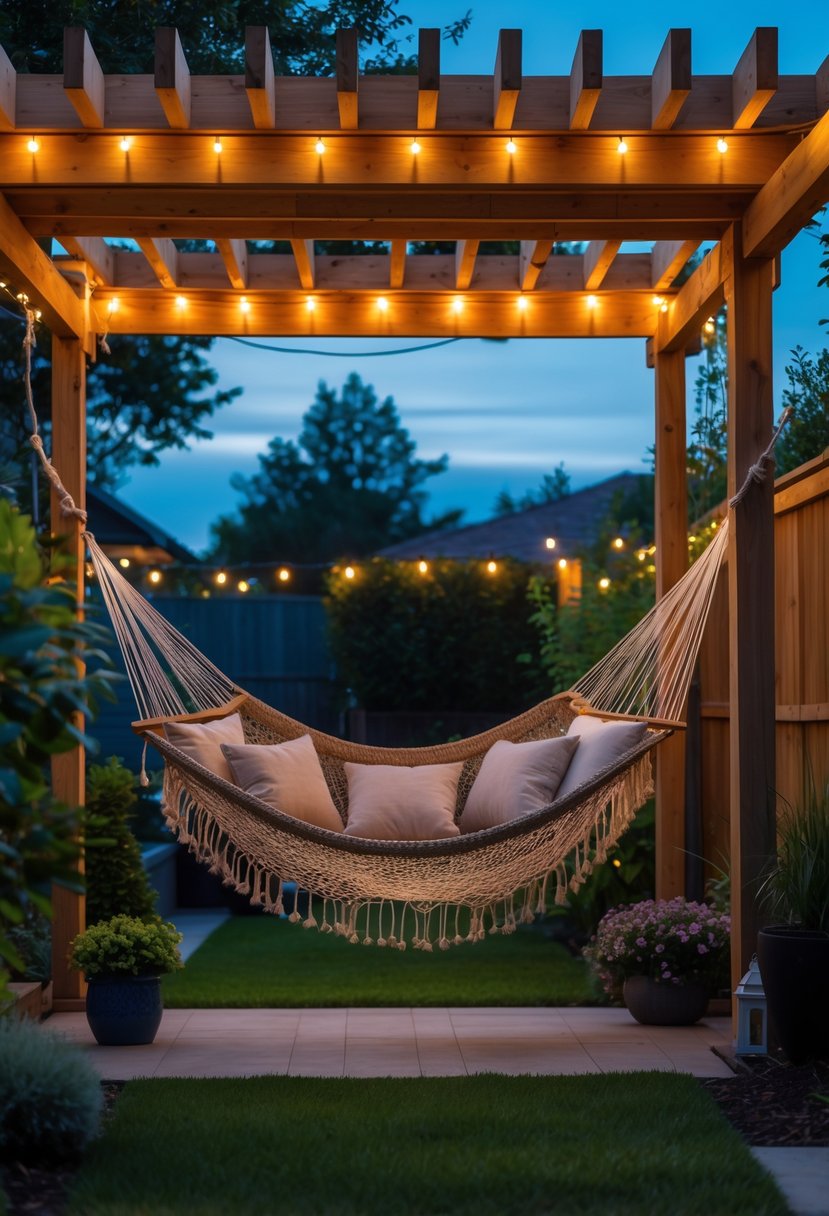
A hammock placed under a pergola offers shade and structure. The open beams allow air to flow while protecting from direct sunlight. This setup creates a cozy and defined relaxation spot in the backyard.
String lights hung across the pergola add soft, warm lighting. They create a calm atmosphere, making the space inviting at night. Together, the hammock, pergola, and lights form a practical and stylish outdoor retreat.
Hammock with adjustable straps for uneven trees
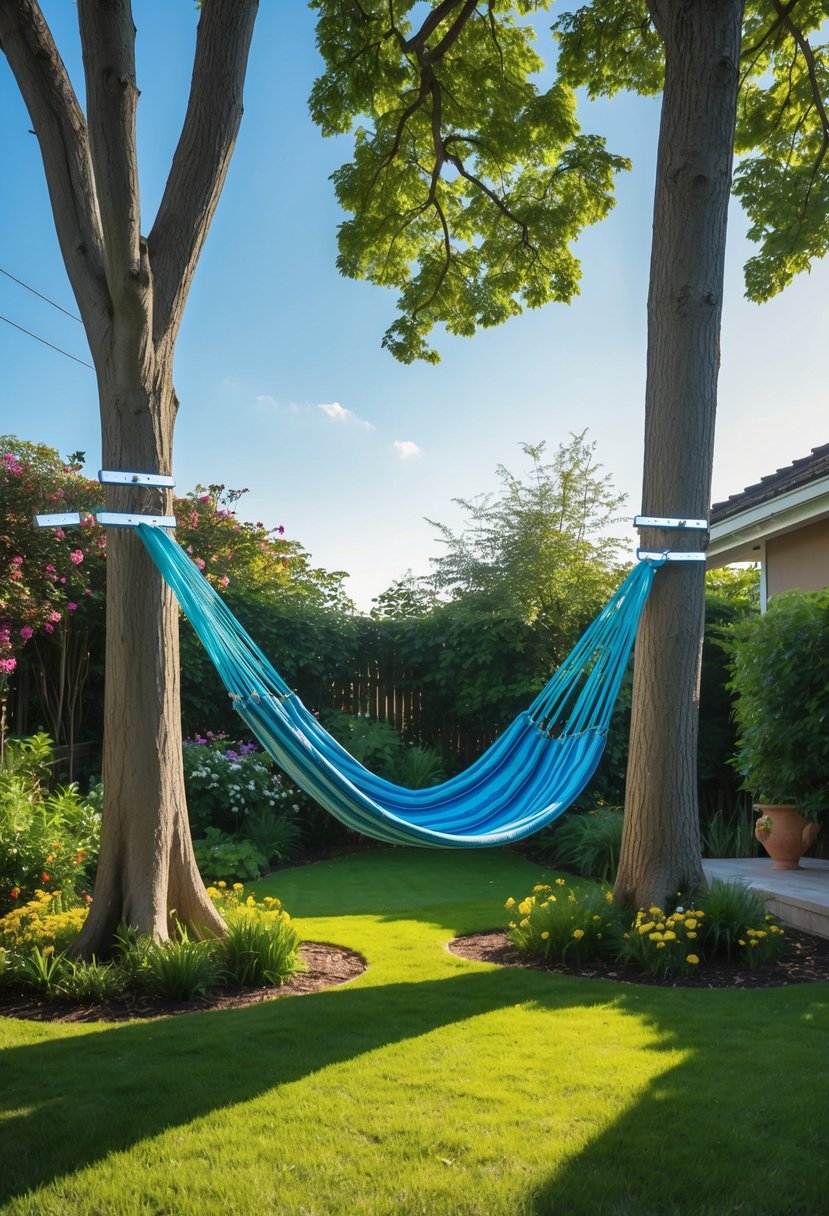
Using adjustable straps is a smart choice when hanging a hammock between uneven trees. These straps let you change the length and tension easily to fit trees at different heights or distances.
Adjustable straps often come with multiple loops or locking systems. This allows for quick adjustments without needing extra tools or knots.
They also protect trees by spreading out the pressure, which helps keep the bark safe. Many straps are made of strong, durable materials that support heavy weights while staying lightweight for easy use.
Hammock Maintenance and Seasonal Care
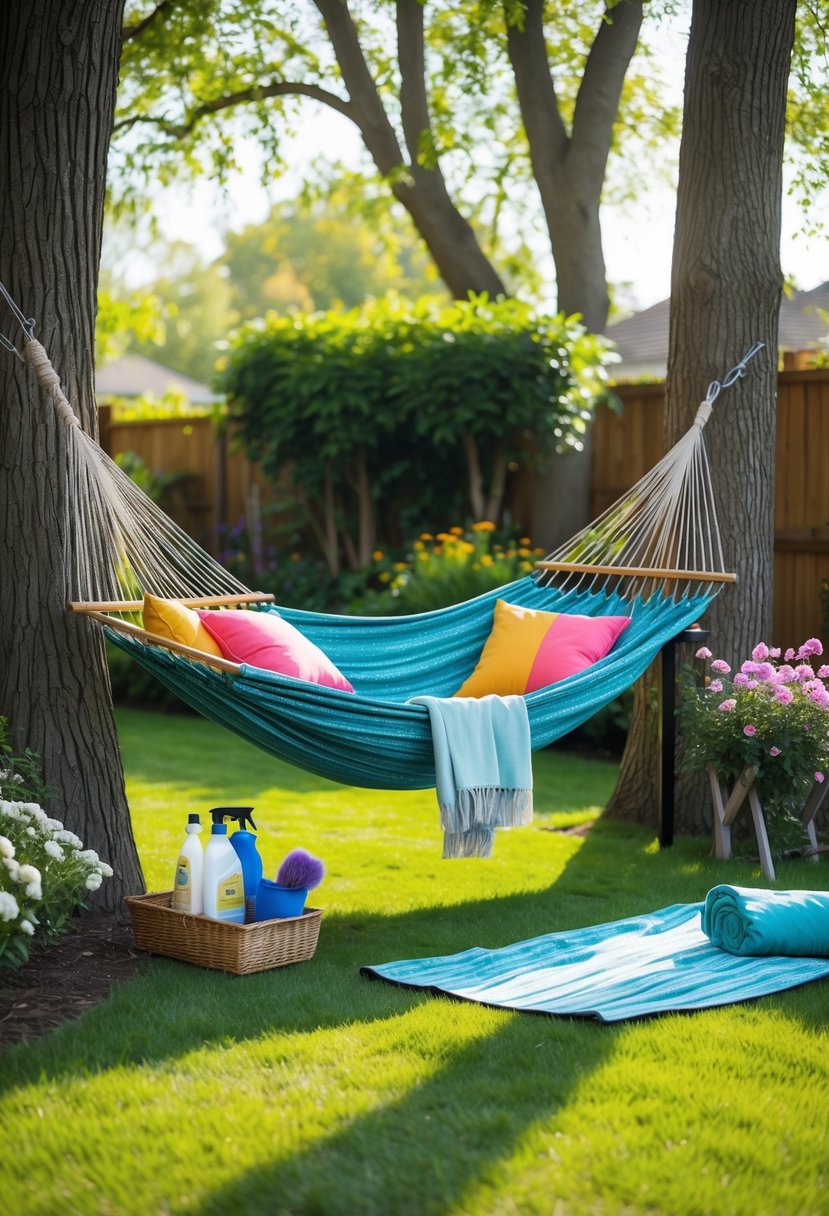
Proper care keeps a hammock in good condition for years. Regular cleaning removes dirt and oils. Protecting it from harsh weather prevents damage. Storing it right during off-seasons avoids wear and tear.
Cleaning Tips
A hammock should be cleaned regularly to stop dirt buildup. Use mild soap with cold water and a soft brush or cloth. Avoid harsh chemicals that can damage fabric or rope.
For stubborn stains, spot clean gently without scrubbing hard. Rinsing thoroughly is important to remove all soap residue.
Make sure the hammock dries completely before using or storing it. Hanging it in a shaded, breezy area speeds up drying and prevents mold growth.
Cleaning frequency depends on use and environment. For outdoor hammocks exposed to pollen or dust, a monthly wash is ideal.
Weather Protection
Weather can shorten a hammock’s life if not properly managed. Sun exposure can fade colors and weaken fabric fibers over time.
Rain and moisture increase the risk of mildew and rot, especially on rope hammocks or natural fibers. Use water-resistant sprays or covers made for hammocks to help shield them from rain and UV rays.
If possible, set up the hammock in a shaded area or under a canopy to limit direct sunlight. Moving it indoors or under cover during storms protects it from wind damage and heavy rain.
Storage Solutions
Proper storage extends a hammock’s usability through changing seasons. Before storing, ensure the hammock is clean and completely dry.
Fold it loosely to avoid creases and fabric stress. Place it in a breathable storage bag or container to prevent moisture buildup.
Store it in a cool, dry place away from pests and direct sunlight. Basements, closets, or garages work well as long as the area is ventilated and dry.
Avoid leaving the hammock hanging when not in use for long periods, as constant tension can wear out attachment points and fabric.
Final Thoughts
Adding a hammock to a backyard is a simple way to create a relaxing space. It offers both comfort and style, making any outdoor area feel more inviting.
Choosing the right hammock depends on space, budget, and personal taste. Options range from rope hammocks with wooden spreader bars to fabric and portable designs.
To enhance the area, consider adding features like string lights, cozy throws, or a nearby fire pit. These extras can make the hammock spot even more enjoyable.
It is important to place the hammock securely, whether between trees or with sturdy posts. Safety and durability should be a priority.
A well-chosen hammock setup creates a quiet retreat perfect for reading, napping, or stargazing. It turns ordinary backyards into personal escapes without complex changes.