
10 DIY Japanese Zen Garden Ideas for Small Spaces
Many people want to create a peaceful spot at home but often have limited space. A Japanese Zen garden is a simple way to bring calmness and balance to small areas like balconies, patios, or indoor corners. These gardens use natural elements to create a relaxing atmosphere that fits even tight spaces.
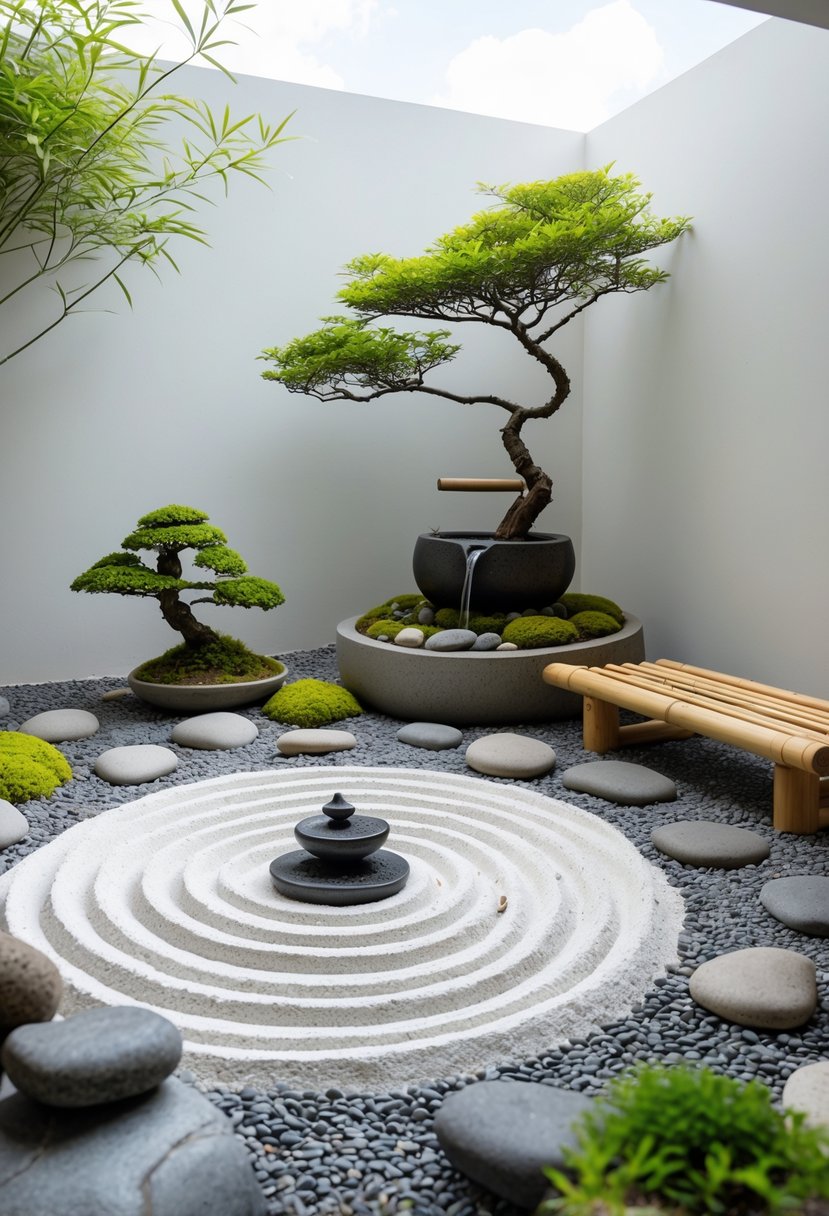
DIY Japanese Zen gardens offer easy, budget-friendly ideas that help anyone add a touch of nature and calm to their living space. They focus on minimalism, using stones, sand, plants, and small water features to build a quiet retreat without needing a large yard.
1. Use white sand or fine gravel for raked Zen patterns
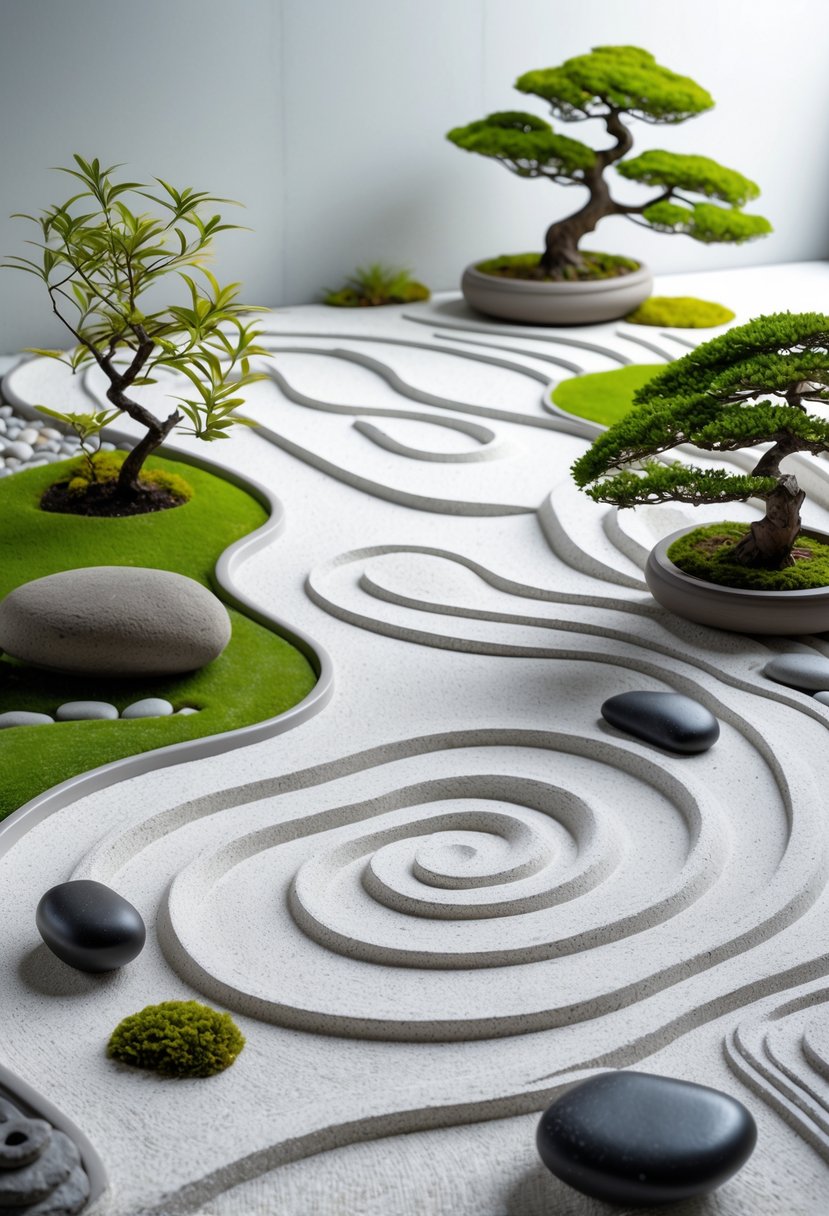
White sand or fine gravel works best for creating clear, raked patterns in a small Zen garden. It allows smooth lines that show well and hold shapes over time.
Most true sand is too soft to keep designs sharp, so fine gravel or crushed stone is often preferred.
Selecting light colors like white or earth tones helps highlight the raked waves or curves, making the garden visually calm and balanced.
2. Incorporate smooth river rocks as focal points
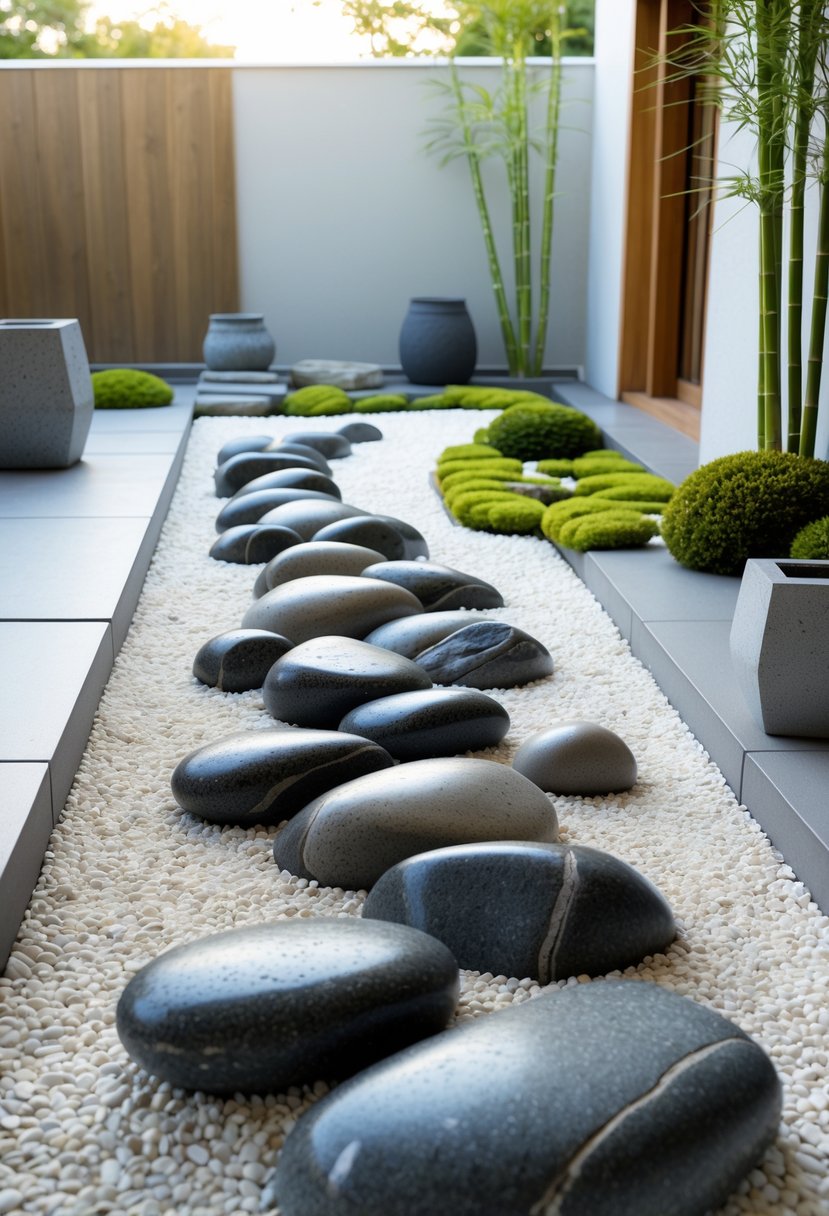
Smooth river rocks add natural beauty to a small Japanese Zen garden. Their gentle shapes create a calm and balanced look.
Placing these rocks carefully helps form simple, peaceful scenes. They act as focal points that draw the eye and invite quiet reflection.
Using a few larger stones with smaller ones around them creates variety without clutter. This approach keeps the garden feeling open and tranquil.
3. Add a small bamboo water feature for tranquility
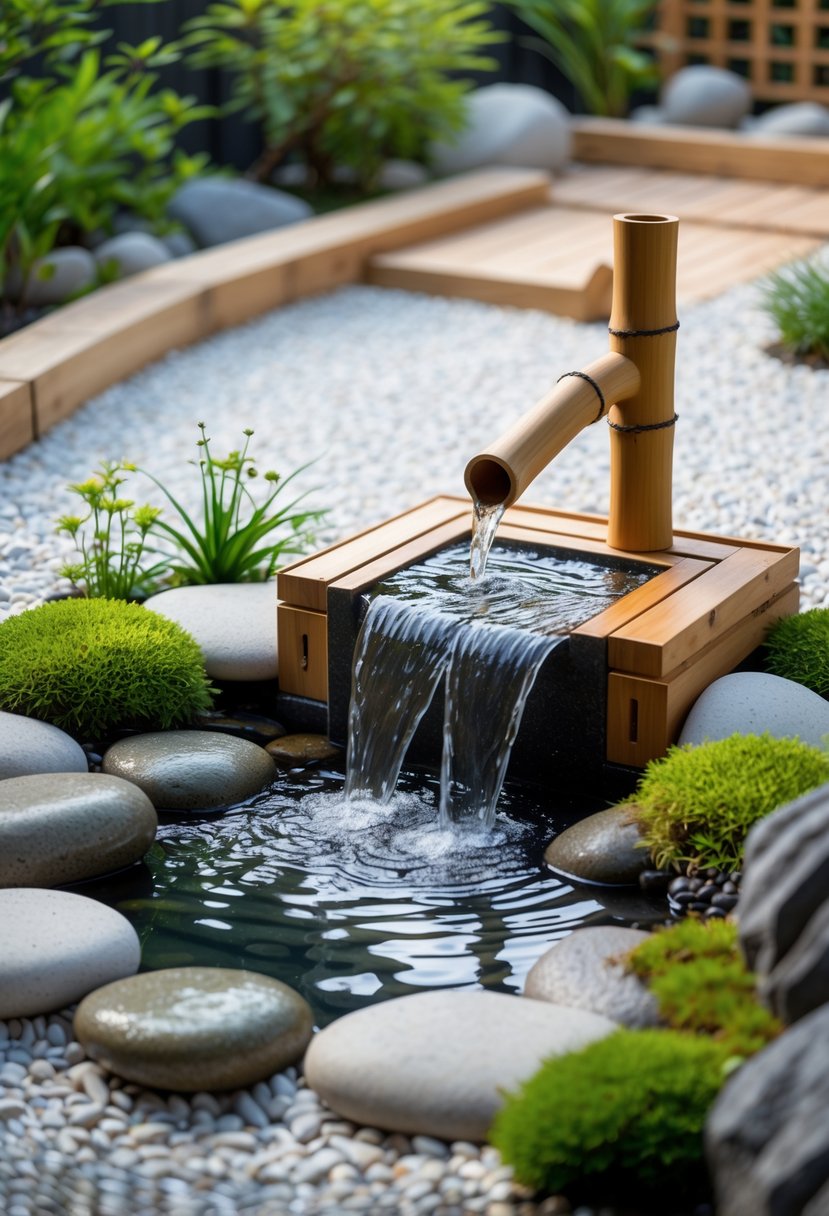
A bamboo water feature adds a soothing sound that helps create a calm atmosphere. It fits well in small spaces and is simple to install with basic materials like bamboo and a small water pump.
The gentle flow of water encourages relaxation and mindfulness. It also adds a natural touch that blends with stones and plants often found in Zen gardens.
This feature requires minimal maintenance and can be adjusted to suit the size of the garden. It is an effective way to bring the spirit of a traditional Japanese garden into a compact space.
4. Plant miniature bonsai trees for authentic greenery

Miniature bonsai trees add a natural and authentic touch to a Japanese Zen garden. They bring greenery without taking up much space, making them ideal for small areas.
Choosing species like Ficus, Juniper, or Chinese Elm works well for beginners. Bonsai require careful care, including proper watering and occasional trimming to maintain their shape.
Using bonsai trees helps create a peaceful atmosphere that reflects traditional Japanese garden design. They can be combined with rocks and sand for a balanced look.
5. Include flat stepping stones to create pathways
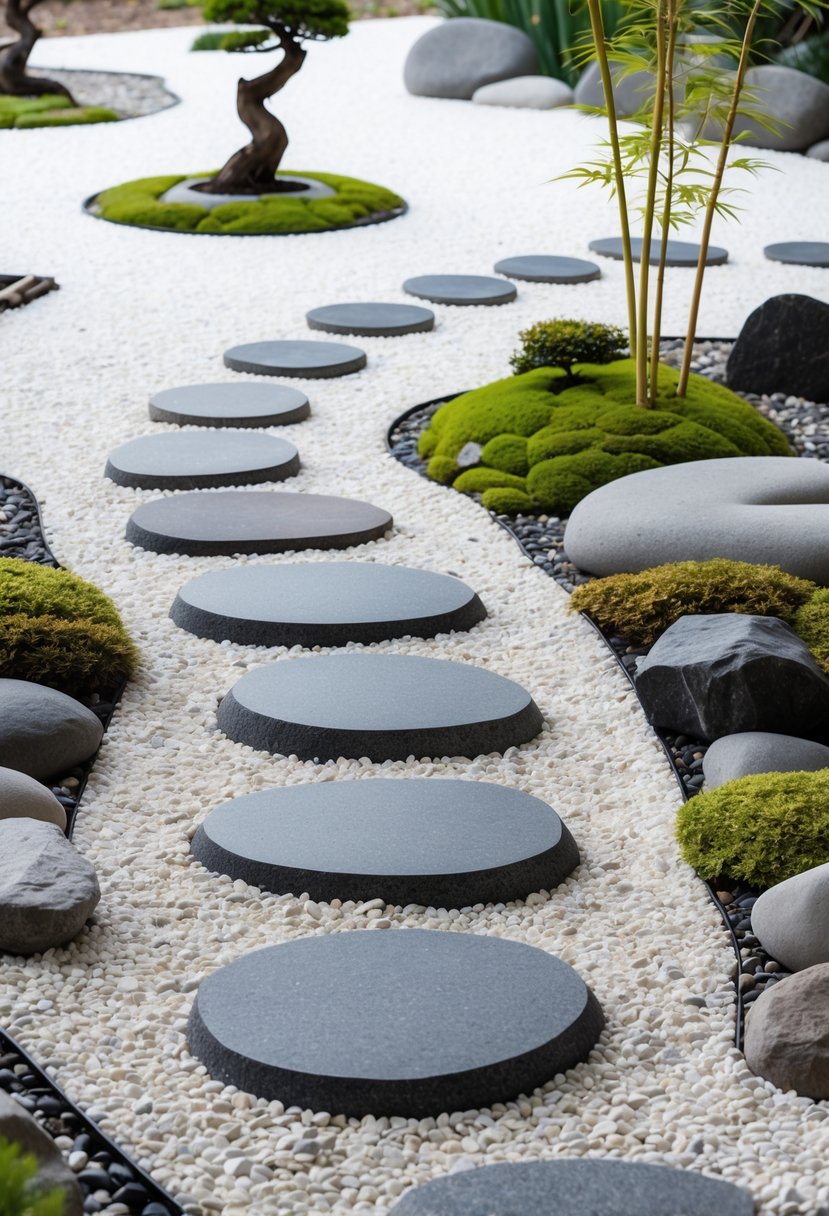
Flat stepping stones help define a clear path through the garden. They add structure without taking up much space, making them perfect for small areas.
Using natural stone gives an authentic feel. Stones can be spaced to encourage slow, mindful walking.
This simple feature improves both the look and function of the garden. It also helps prevent soil compaction and keeps feet dry.
6. Build a compact wooden bridge over sand or stones
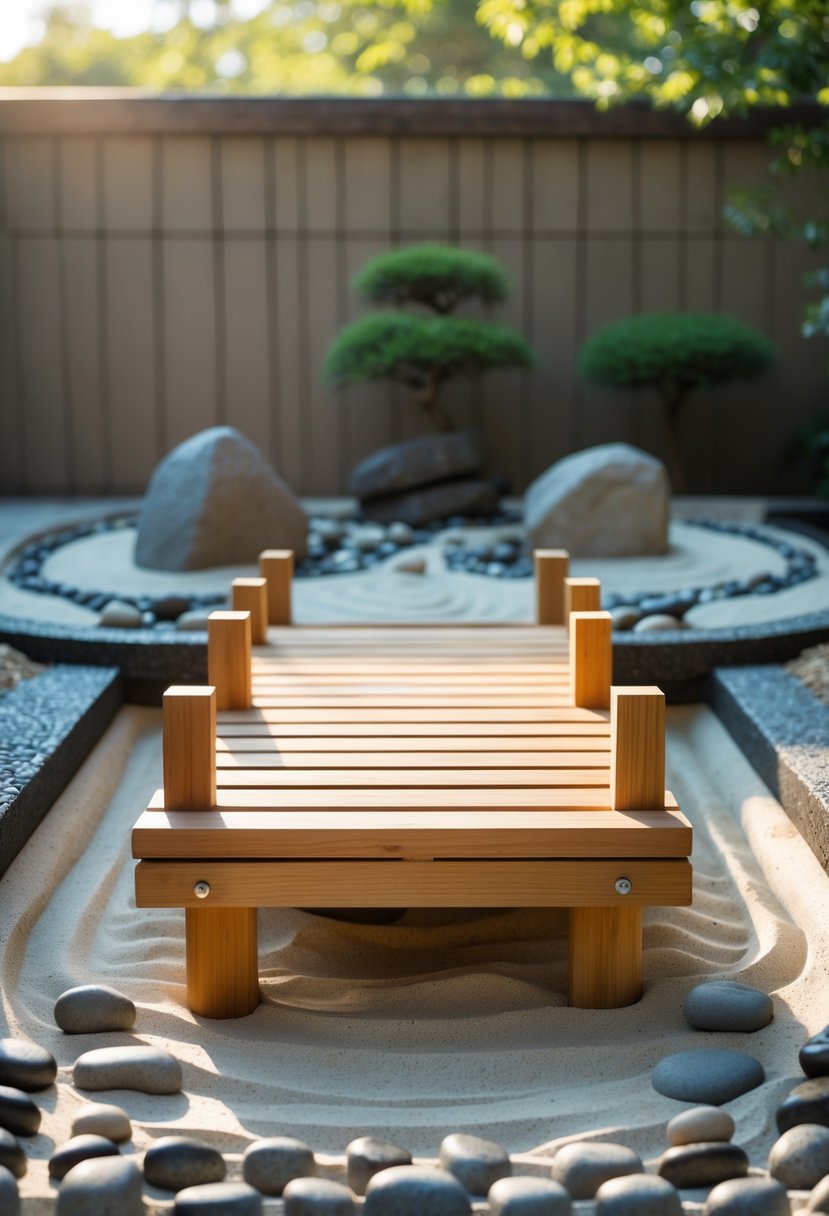
A small wooden bridge adds calm and structure to a Zen garden. It fits well over sand, stones, or dry riverbeds.
The bridge should be simple, with clean lines and a slight arch. Handrails are optional but can add balance to the design.
Using hardwood planks makes the bridge durable. It can be built with basic tools and does not need a lot of space.
7. Create a moss patch to add texture and color
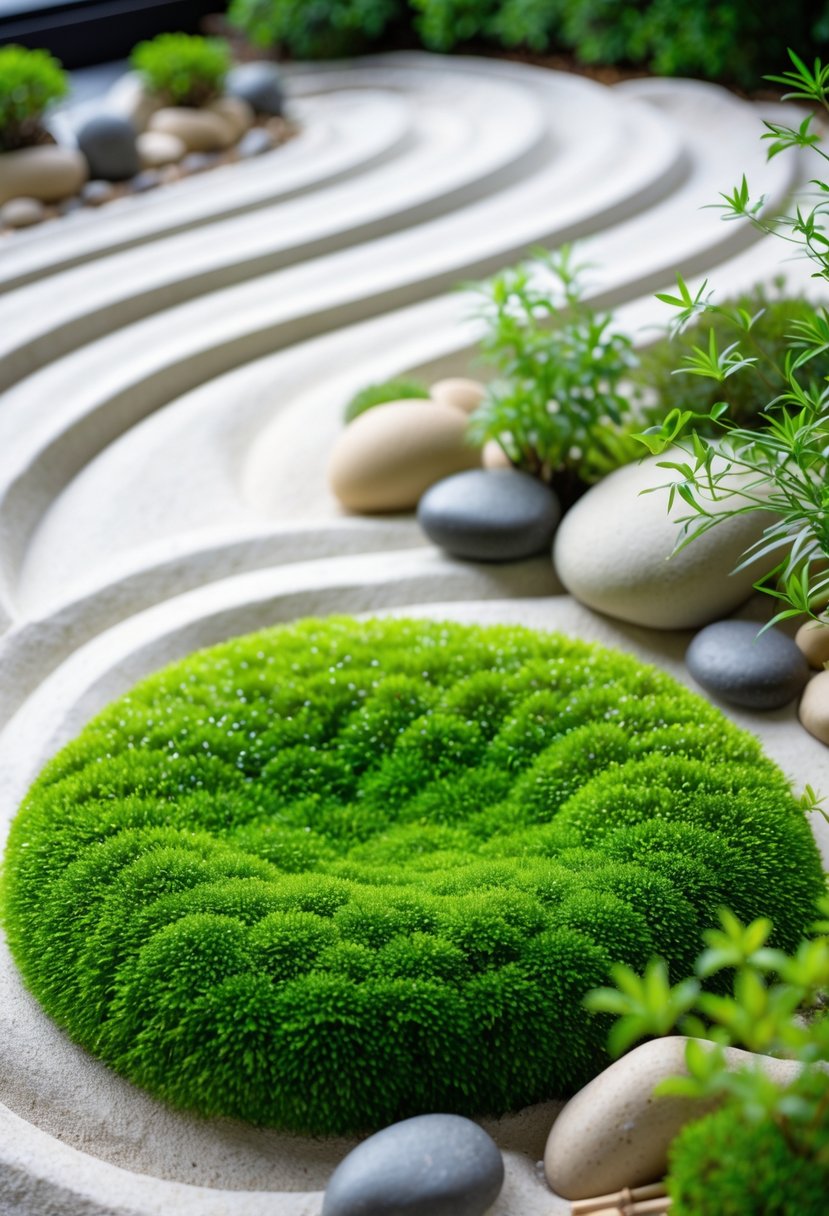
Adding a moss patch brings soft green texture to a small Zen garden. Moss grows well in shady, damp areas, making it easy to maintain.
It contrasts nicely with rocks and gravel, adding depth and calmness to the space. Different moss types offer varied shades of green, enriching the garden’s look.
A moss patch also symbolizes patience and age, fitting the tranquil spirit of a Zen garden. It requires little care but creates a lively, natural feel.
8. Install a simple stone lantern for traditional ambiance
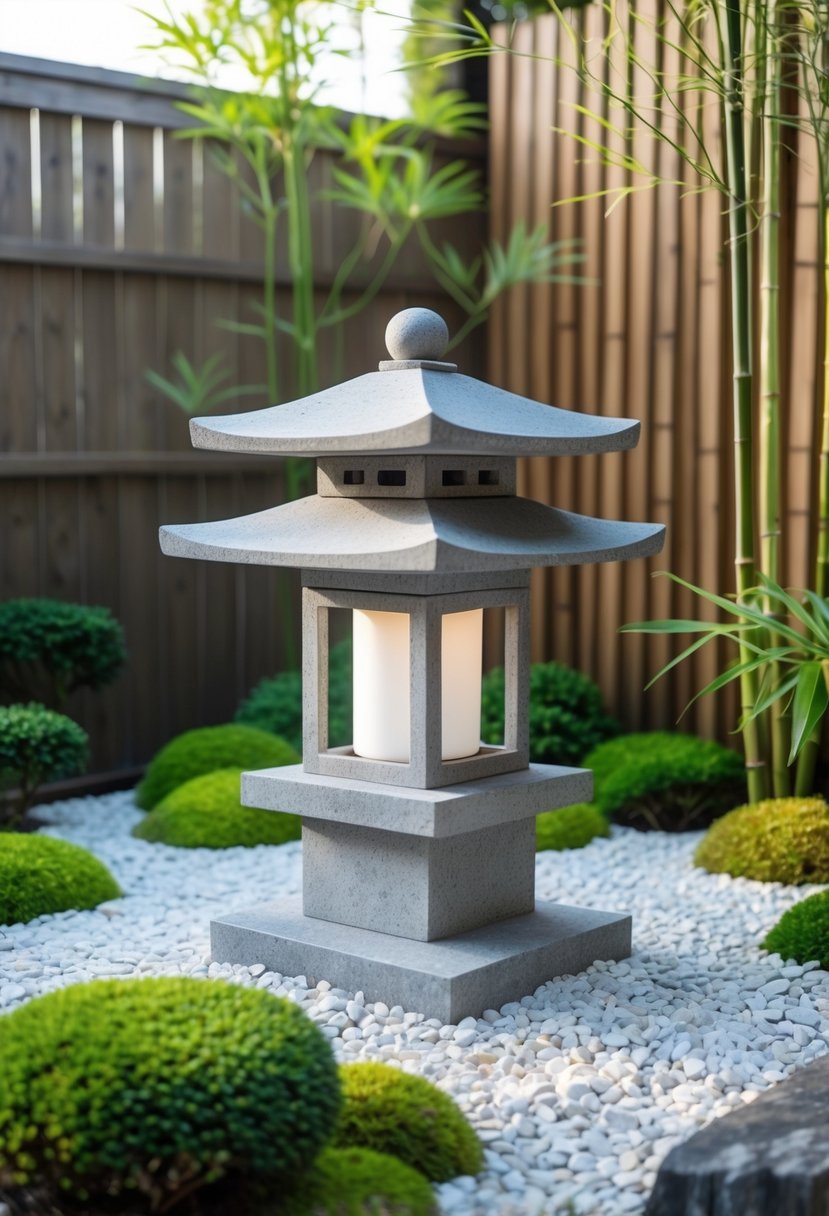
A stone lantern adds a calm and classic touch to a small Japanese Zen garden. It gives a soft light that creates a peaceful atmosphere in the evening.
Choosing a simple design helps keep the space from feeling crowded. The lantern can be placed near a path, pond, or quiet corner to highlight key areas.
Using a small stone lantern supports the garden’s traditional theme while fitting well into limited outdoor spaces. It is easy to install and maintain.
9. Use a shallow rectangular tray for tabletop gardens

A shallow rectangular tray works well for creating a simple tabletop Zen garden. It provides enough space for sand, rocks, and small plants without taking up much room.
The flat shape makes it easy to rake patterns in the sand, which helps with meditation and relaxation. The tray can fit neatly on desks, shelves, or coffee tables.
This type of garden is easy to move and maintain, making it ideal for small living areas or workspaces.
10. Integrate a natural driftwood centerpiece
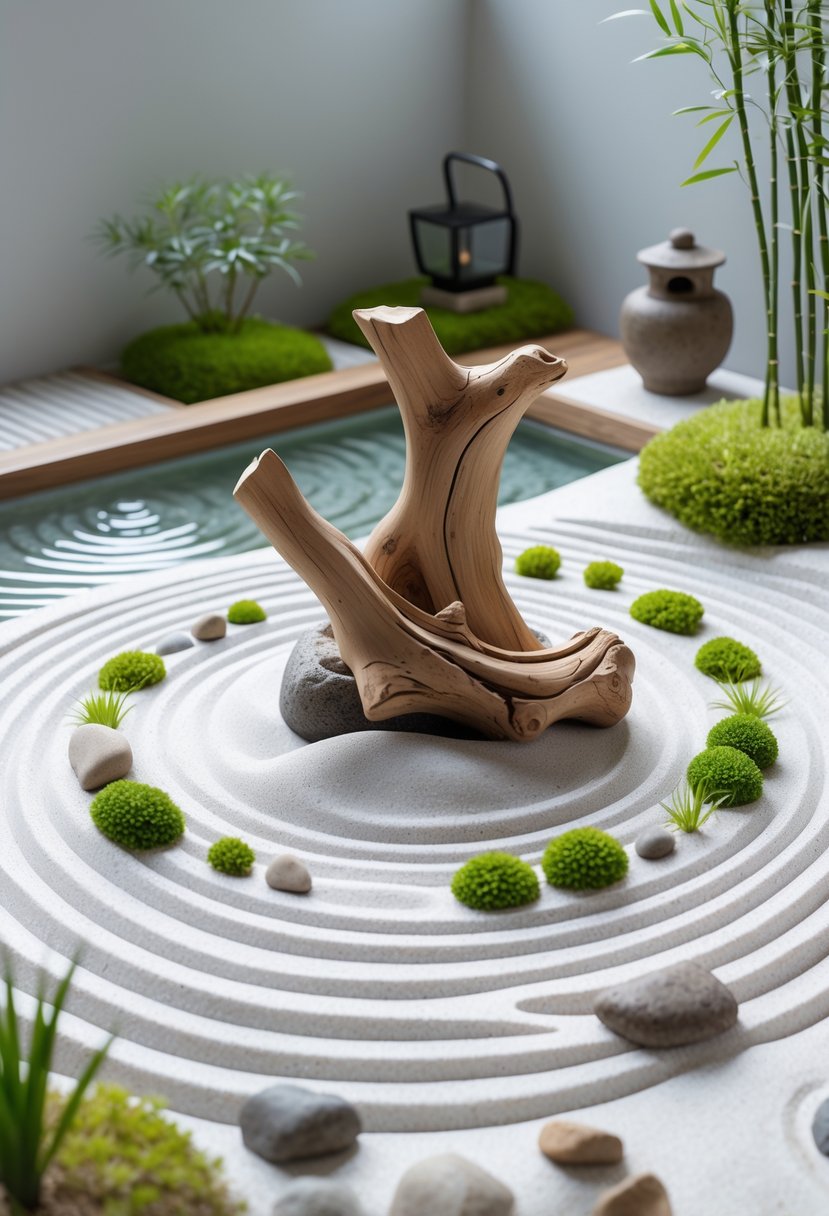
Driftwood adds a unique, natural look to a Zen garden. It creates an organic focal point that complements sand, stones, and plants.
Choosing a piece with interesting shapes or textures enhances the garden’s calm and simple beauty. Driftwood also fits well in small spaces without crowding them.
It requires little maintenance and blends naturally with other traditional Zen elements. This makes it a practical and peaceful choice for a small garden.
Essential Elements for a Zen Garden
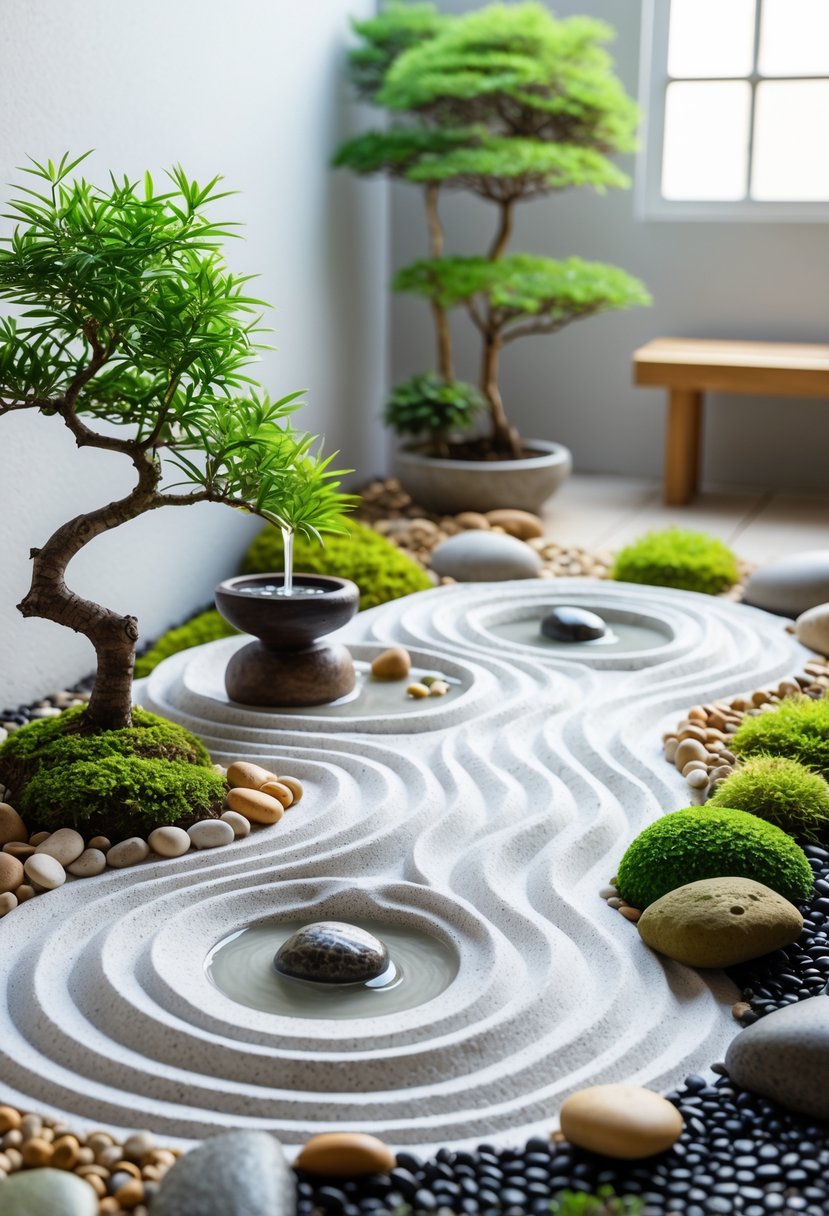
A Zen garden uses simple, natural features to create a peaceful space. Selecting the right materials and arranging them thoughtfully helps keep the design balanced and calming. Every item should have a purpose and fit the overall look.
Choosing the Right Materials
Gravel and sand are key materials in Zen gardens. They represent water and are often raked into patterns to show waves or ripples. Fine gravel works best for clear, neat lines.
Stones of different sizes add contrast and structure. Larger rocks act as focal points, while smaller ones fill spaces naturally. Moss is useful for soft texture and green color. It thrives in shade and low-maintenance areas.
Plants should be simple and evergreen, like bamboo or small Japanese maples. These maintain color year-round without overpowering the space.
Water features, if used, need to be minimal. A small basin or pond fits well. Lanterns or statues add quiet charm but should not crowd the garden.
Placement and Layout Tips
Balance and asymmetry are important in Zen garden layouts. Items should feel natural, not forced or overly symmetrical. Rocks are often placed in odd numbers to look more organic.
Leave spaces open to represent emptiness or calm. This empty space is as important as the filled space and helps create a peaceful feel.
Paths and walkways should be simple and narrow. They guide movement without breaking the quiet mood. Curved lines work better than straight ones in small areas.
Keep the garden tidy but avoid perfect neatness. Slight irregularities make the space feel alive and natural.
Using these principles ensures the garden stays calm, balanced, and inviting.
Conclusion
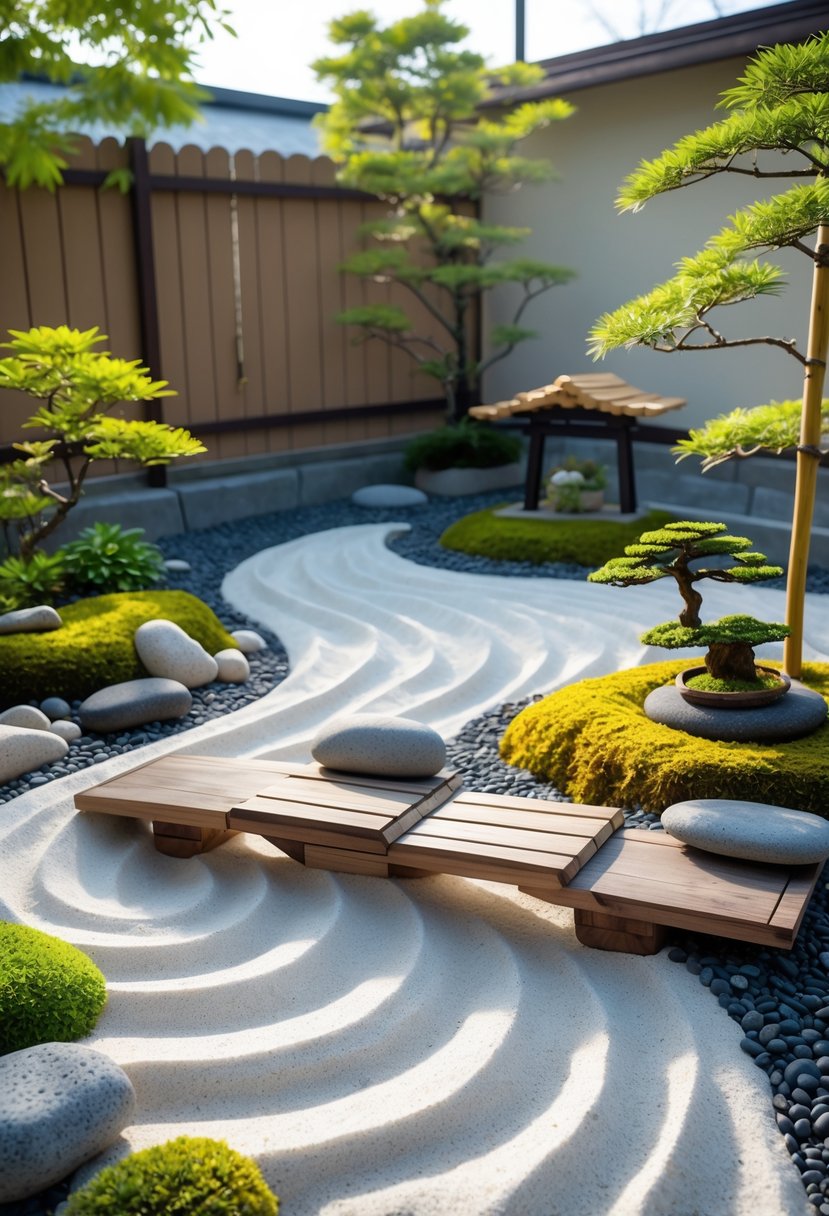
Creating a Japanese Zen garden in a small space is both practical and rewarding. It allows for a peaceful retreat without needing a large area or complex materials.
Simple elements like sand, stones, and plants can bring balance and calm. Using minimalist design helps keep the garden easy to maintain and visually clear.
DIY projects encourage creativity and personalization. Choosing features like bonsai trees, bamboo, or small water elements can enhance the feeling of tranquility.
It is important to plan carefully. Small spaces benefit from thoughtful placement and thoughtful choices to avoid clutter or overcrowding.
A well-designed Zen garden can improve mental clarity and offer a quiet place for reflection. Even compact corners can become serene escapes with the right approach.
Key points to remember:
- Use natural materials
- Emphasize simplicity
- Keep maintenance low
- Reflect personal style
- Prioritize calm and order
This approach helps anyone create a Zen garden that fits their space and lifestyle. With focus and care, small areas can become meaningful zones of relaxation and beauty.