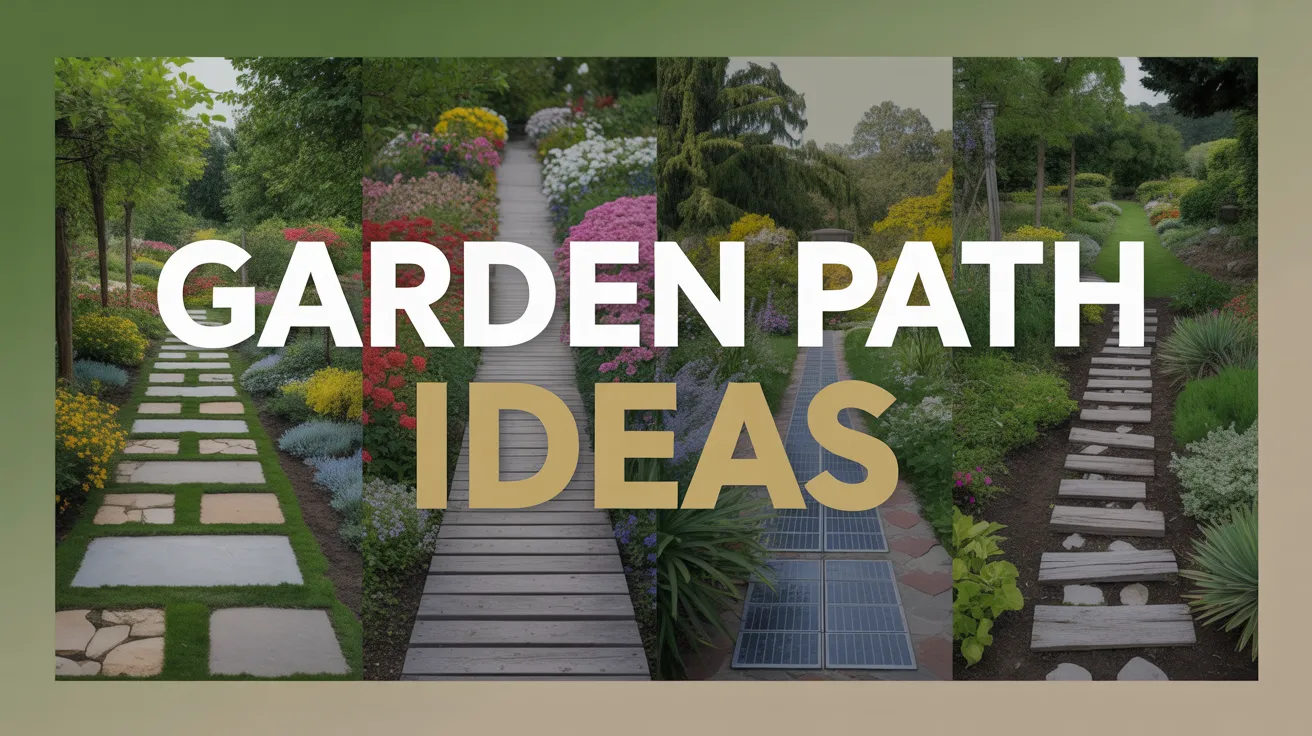
11 Garden Path Ideas to Enhance Your Outdoor Space With Style and Function
Garden paths add structure and charm to any outdoor space. They guide movement and create a clear walkway through gardens, making the area more enjoyable and functional. Choosing the right design for a garden path can also enhance the overall style of the yard.
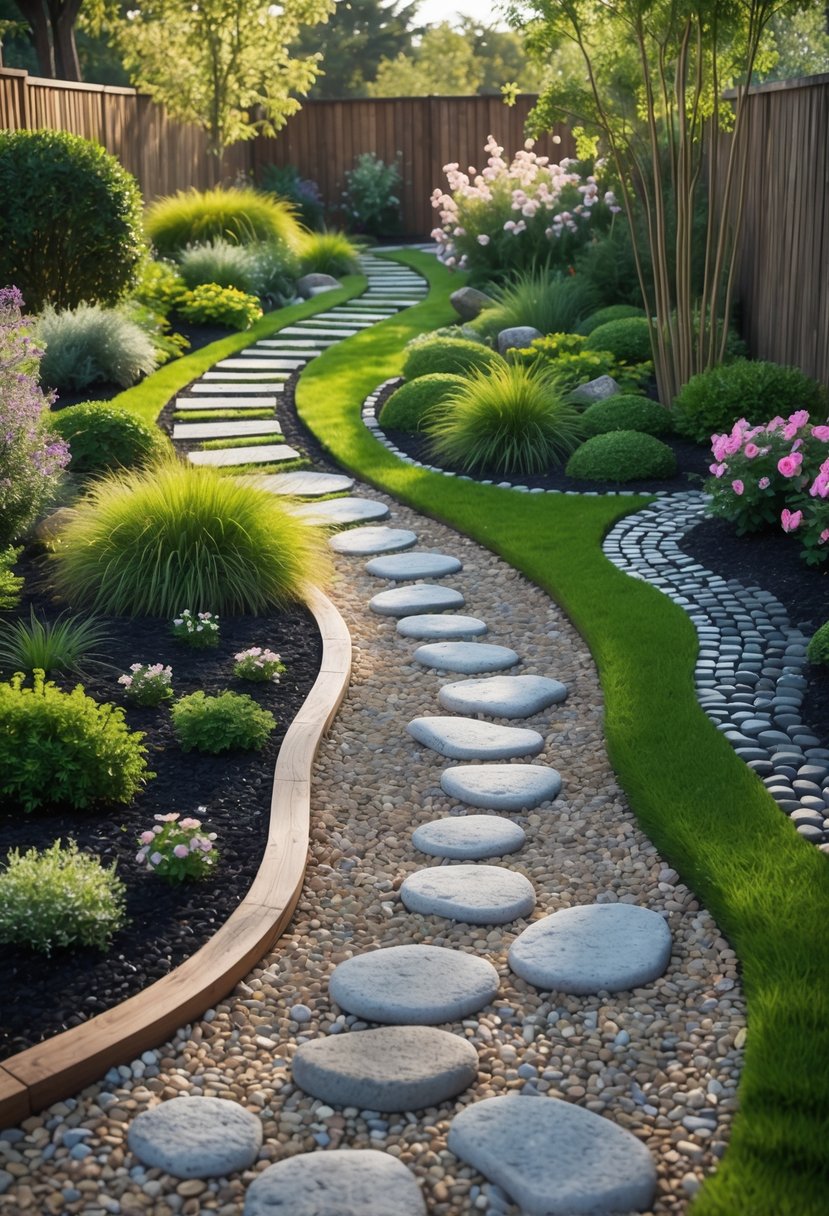
The best garden path ideas balance beauty, practicality, and fit the specific garden setting. These ideas can range from simple and affordable options to more detailed designs using different materials. A well-planned path can improve both the look and use of the garden.
Stepping stone paths with irregular natural stones
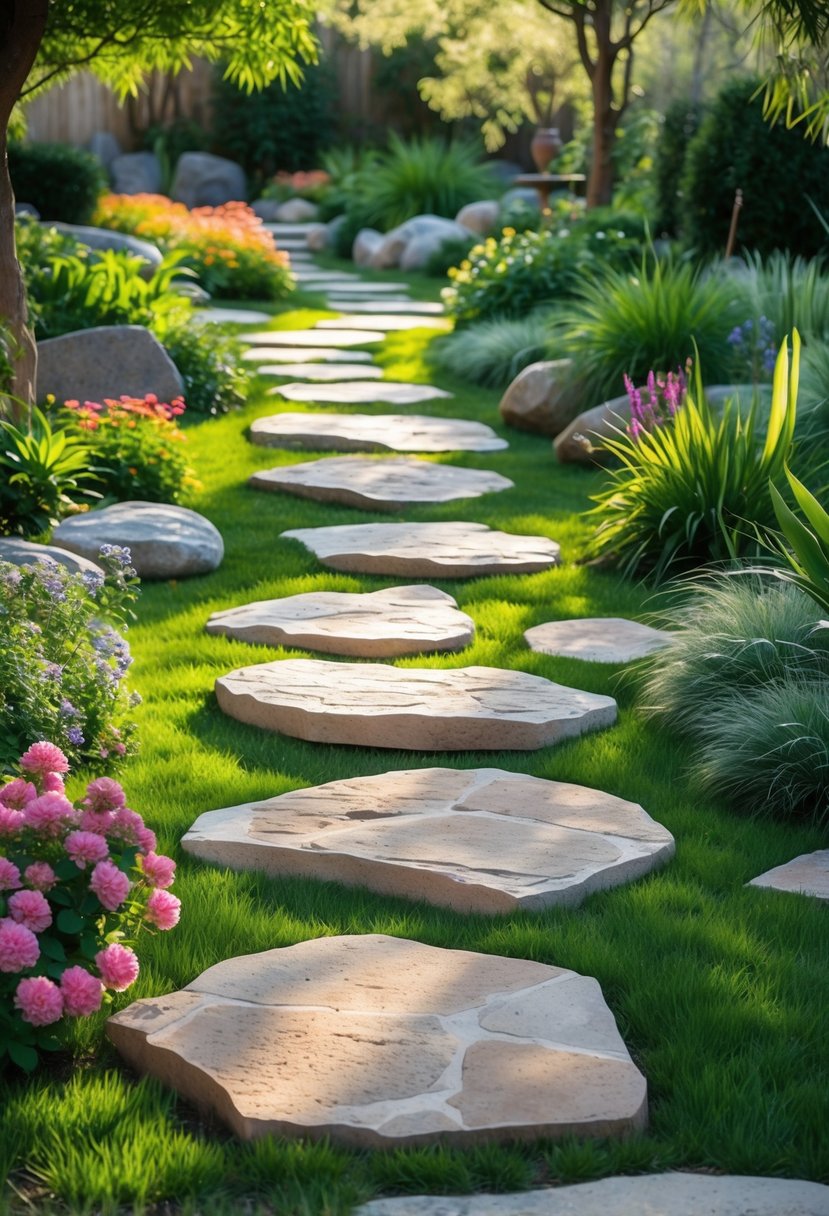
Stepping stone paths with irregular natural stones create a relaxed, organic look. These stones often vary in shape and size, mimicking nature’s randomness.
This style allows moss or ground cover to grow between the stones, adding texture and a soft, earthy feel. It works well in gardens aiming for a natural or rustic vibe.
Such paths blend hard materials with the garden’s greenery. They create a subtle, inviting way to move through outdoor spaces without feeling too structured or artificial.
Gravel walkway edged with bricks
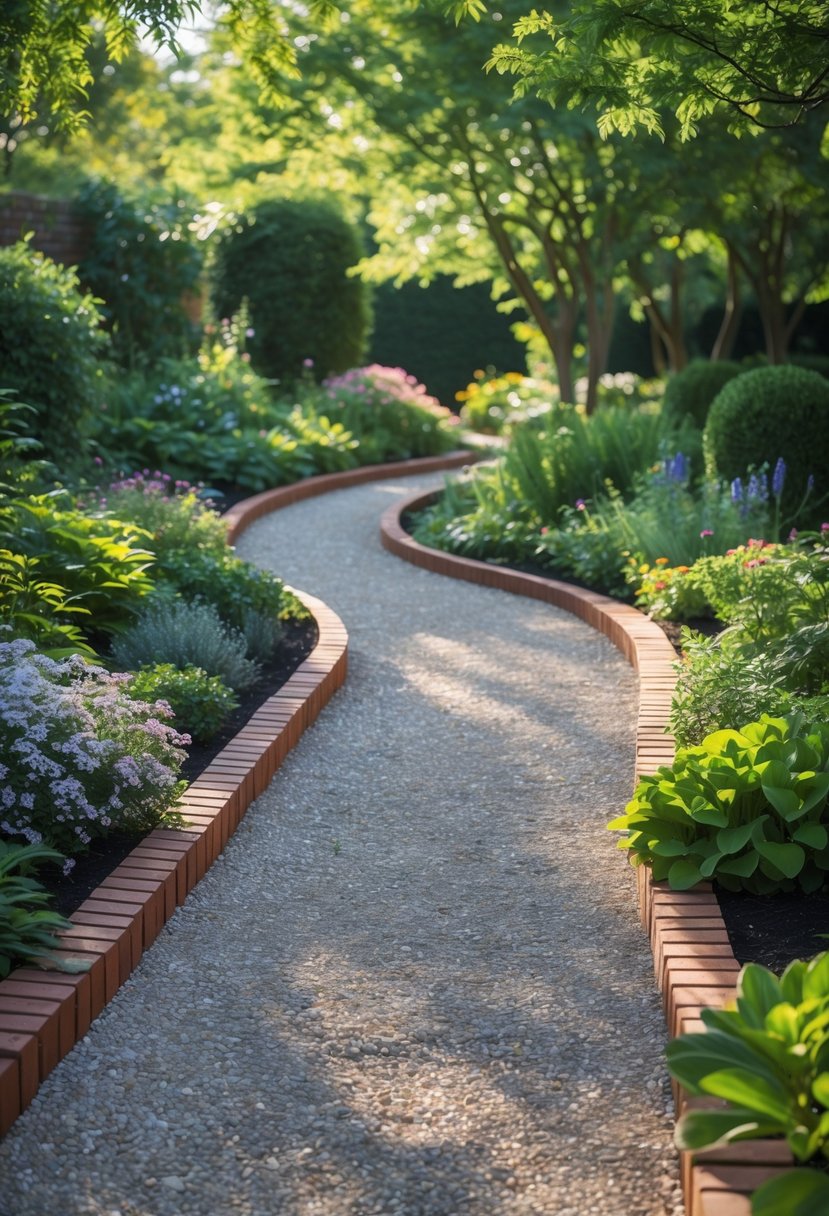
A gravel walkway edged with bricks offers a clean, defined look for any garden path. The bricks create a border that keeps gravel in place and stops it from spilling into the lawn or flower beds.
This design combines the natural feel of gravel with the sturdy structure of bricks. It is easy to install and maintain, and it works well with curved or straight paths.
The brick edging also adds a touch of style while protecting the gravel from spreading. It helps keep the walkway neat and safe to walk on.
Brick herringbone pattern path
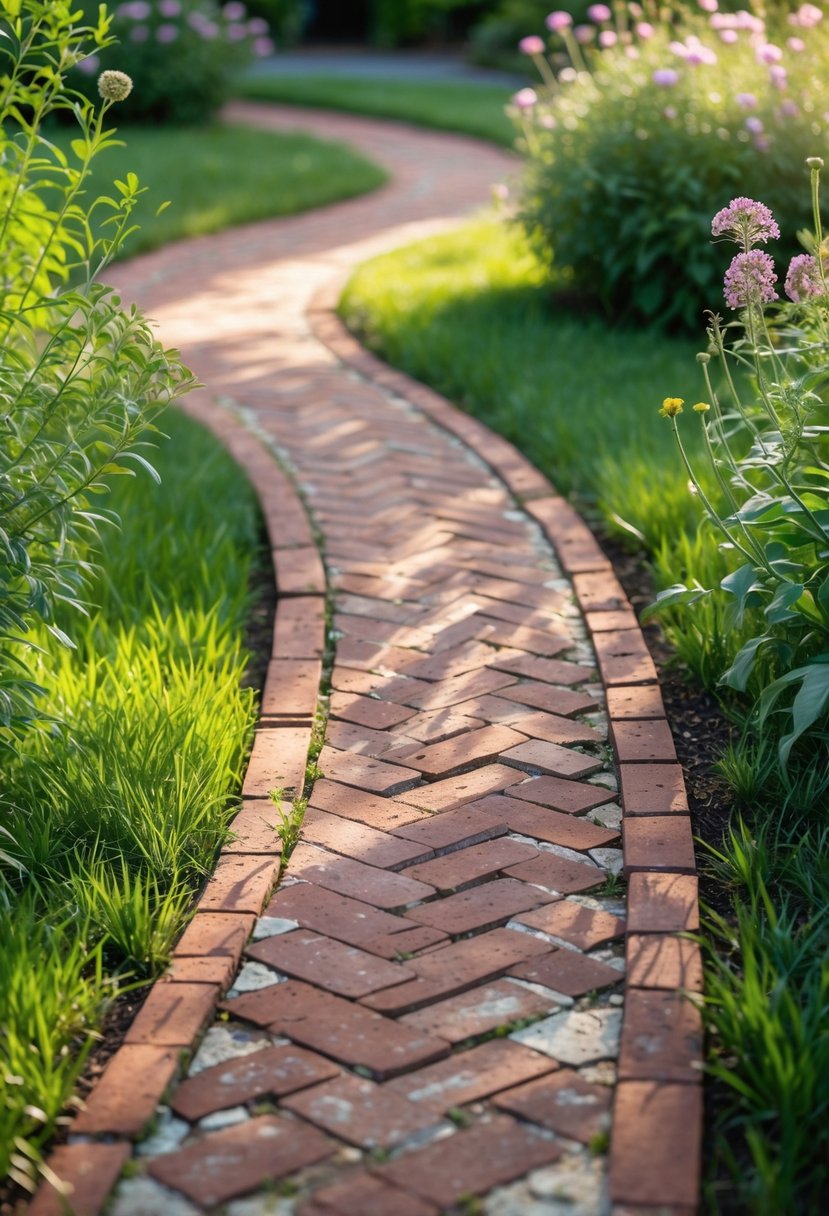
A brick herringbone pattern path uses bricks set at a 45-degree angle. This creates a strong, woven look that lasts over time.
The pattern is classic and adds structure to garden walkways. It helps bricks lock together, making the path durable.
This design works well in many garden styles. It offers a neat and elegant way to guide visitors through outdoor spaces.
Wood slice stepping stones
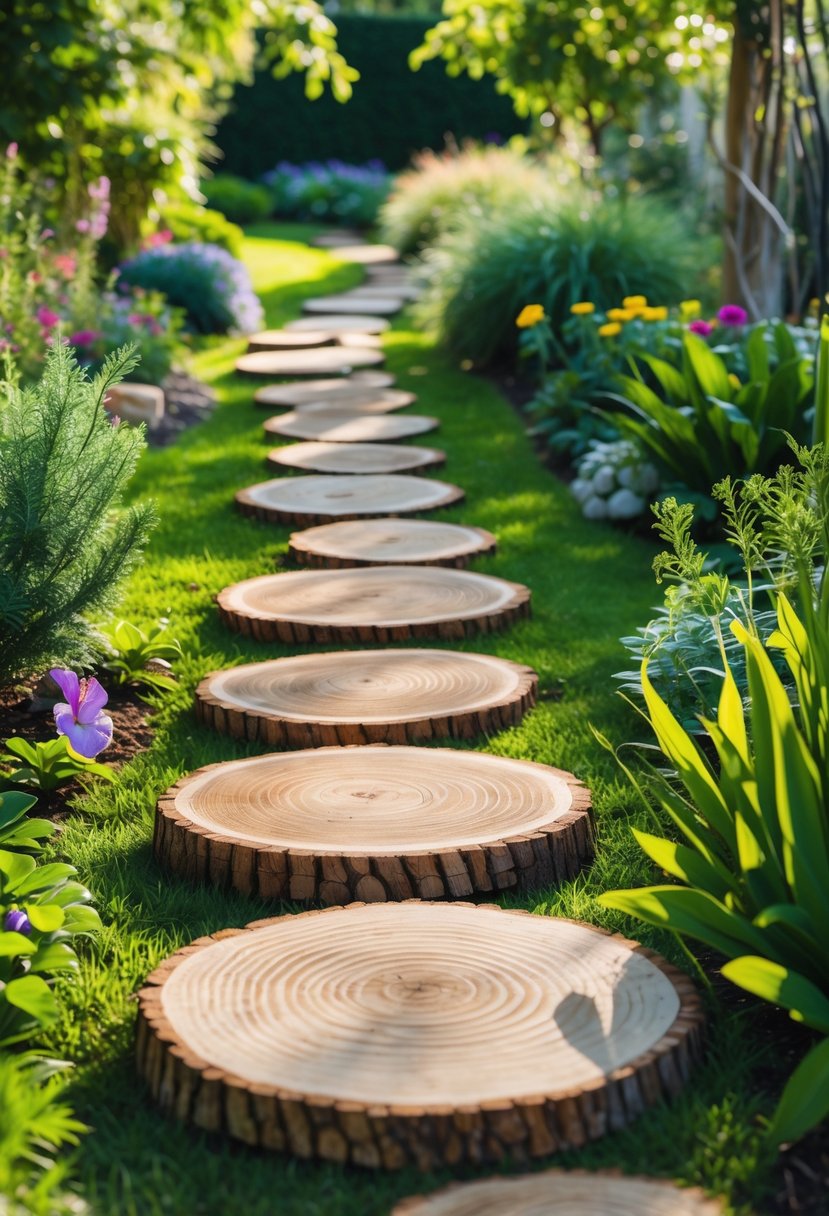
Wood slice stepping stones create a natural and rustic look for garden paths. Each slice shows unique growth rings and wood grain, adding visual interest.
They work well in muddy or uneven areas by providing stable spots to walk. Wood slices can come from different tree types, offering various colors and textures.
These stepping stones are easy to install. They can be placed directly on soil or gravel and even mowed over if set low enough. This makes them practical for many garden styles.
Flagstone path with moss in joints
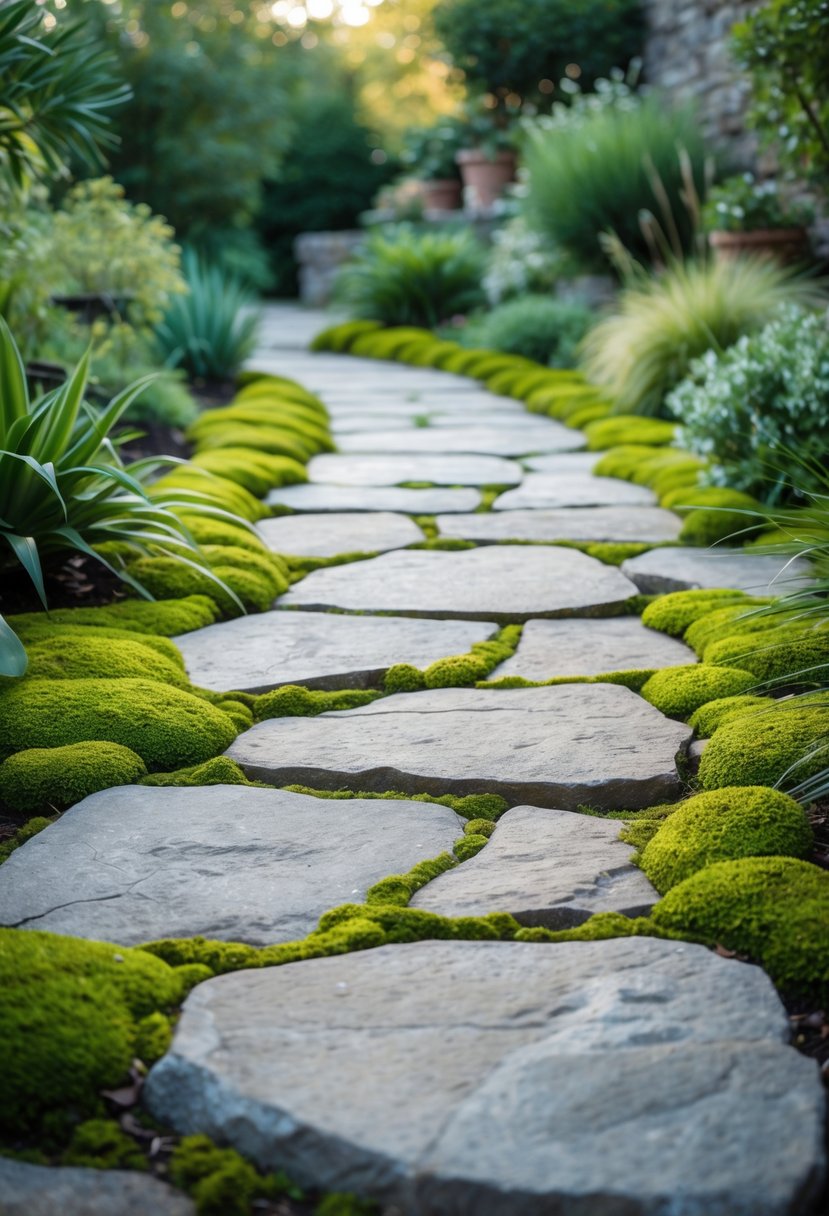
A flagstone path with moss in the joints creates a natural, rustic look. The moss grows between irregular stones, softening hard edges and adding texture.
This style works well in shaded or damp areas where moss thrives. It also helps prevent weeds from growing between stones.
Using moss in the joints gives the path a countryside feel. It blends the stone with the surrounding garden, making the walkway feel part of the natural landscape.
Pebble mosaic garden pathway
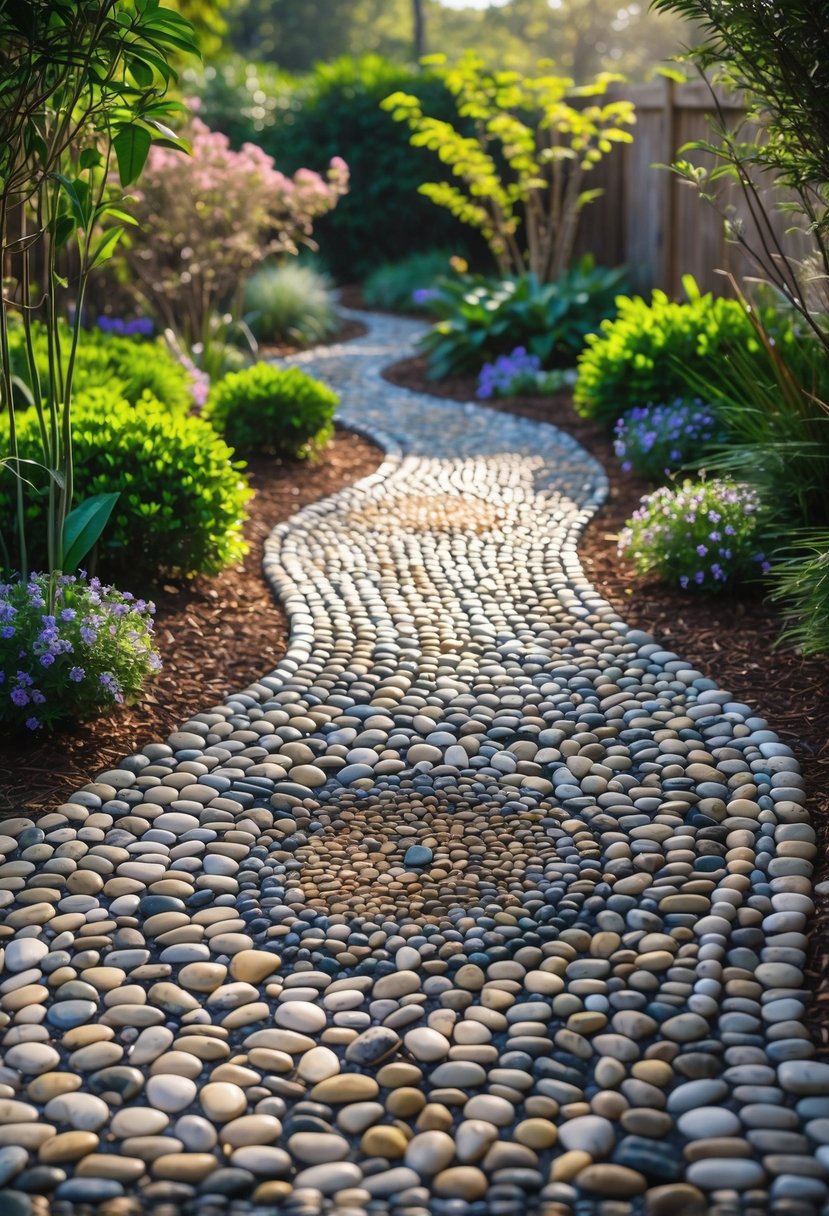
A pebble mosaic garden pathway adds a unique look to any outdoor space. It combines small stones in patterns or images, creating a durable and attractive surface.
The design can be simple or complex, depending on the style chosen. Using different colors and shapes of pebbles allows for creative expression.
Building a pebble mosaic path requires careful planning and patience. It often involves preparing a sturdy base and setting the pebbles in mortar or adhesive for stability.
This type of pathway can enhance a garden’s charm without needing expensive materials. It offers a blend of natural beauty and lasting function.
Mulch path bordered by low plants
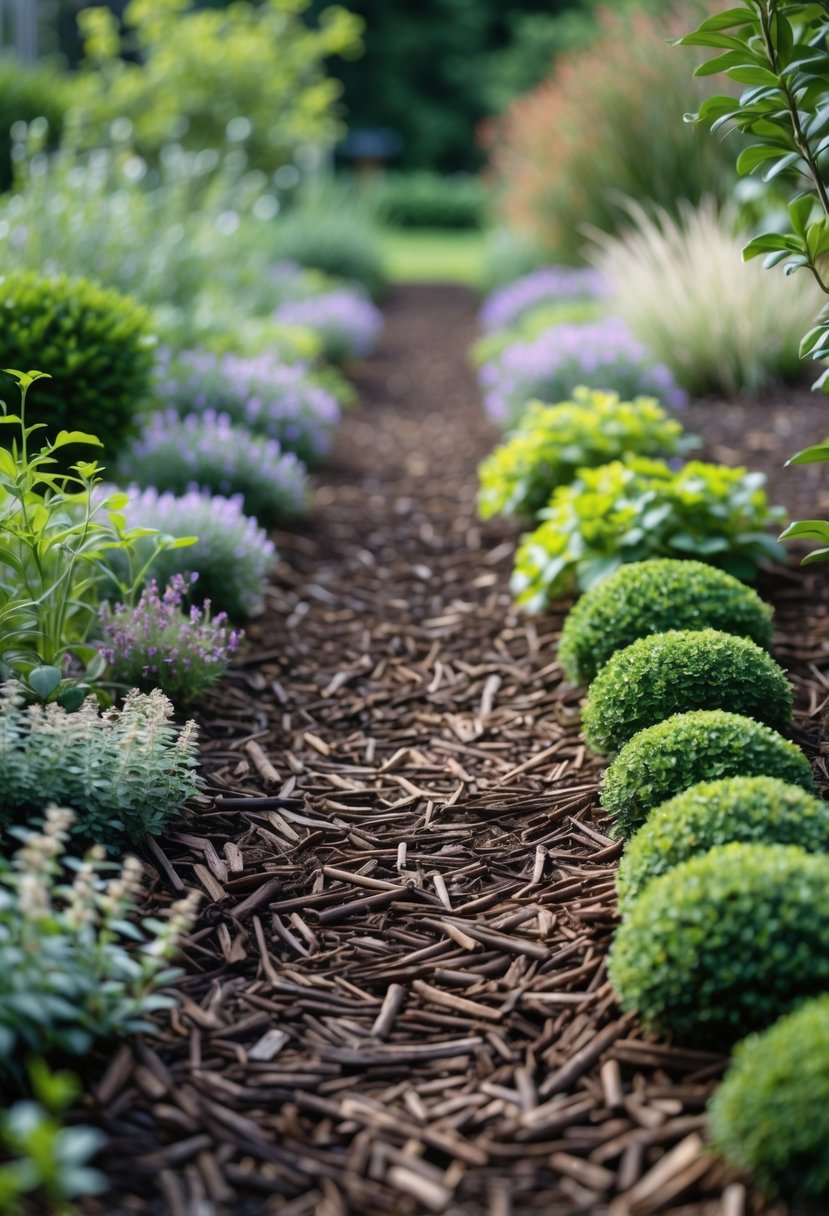
A mulch path lined with low plants creates a clean and natural edge. This design helps keep the path defined while adding texture and color.
Low-growing plants like creeping thyme or small flowering herbs work well. They stay compact and do not block the walkway.
The mulch offers a soft surface to walk on and improves soil moisture. At the same time, the plants can attract pollinators and beneficial insects.
This combination suits many garden styles, from rustic to modern. It is also easy to maintain with occasional trimming and mulching.
Concrete paver walkways
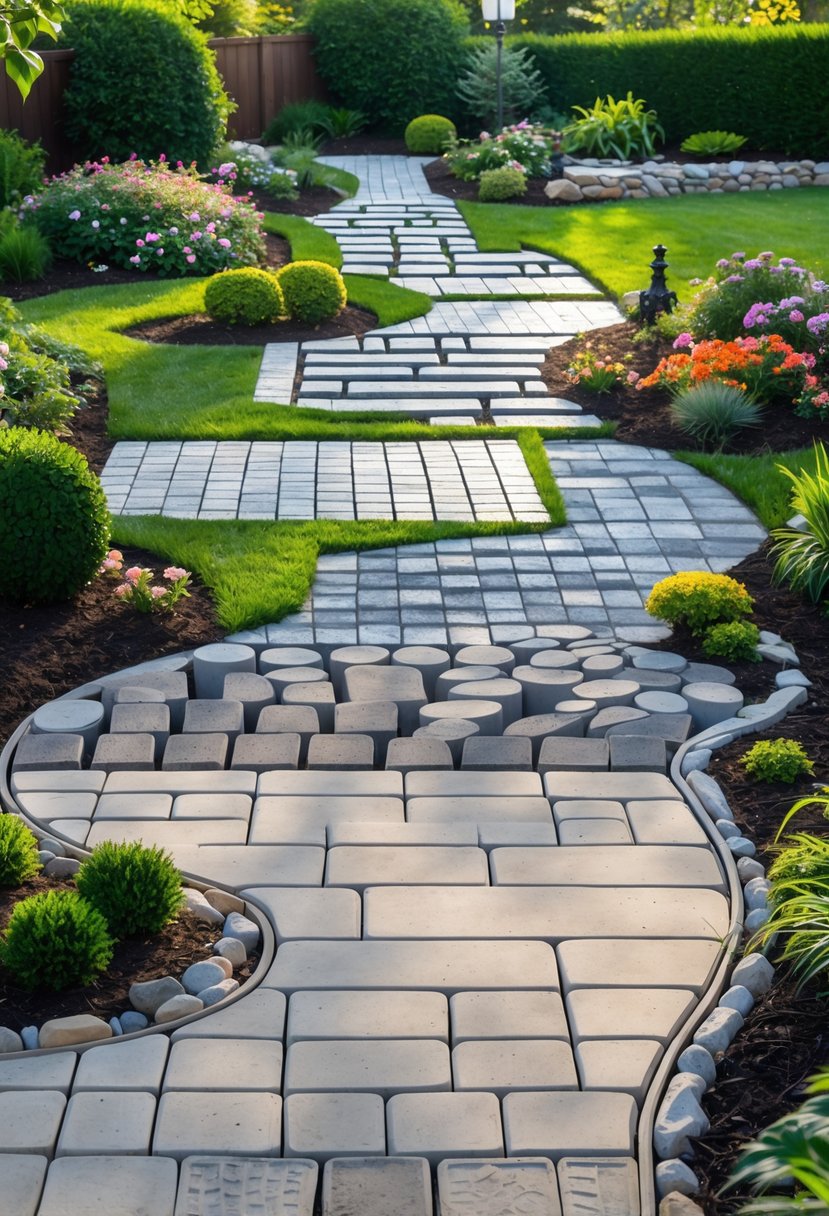
Concrete paver walkways offer a durable and versatile option for garden paths. They come in many shapes, colors, and sizes, allowing for creative designs.
These walkways are easy to install and maintain. They resist weather damage better than many other materials.
Adding mosaic designs or patterns can make concrete paver paths unique. This helps enhance the look of any outdoor space. They provide a clean and modern appearance that fits many garden styles.
Curved stone paths to add flow
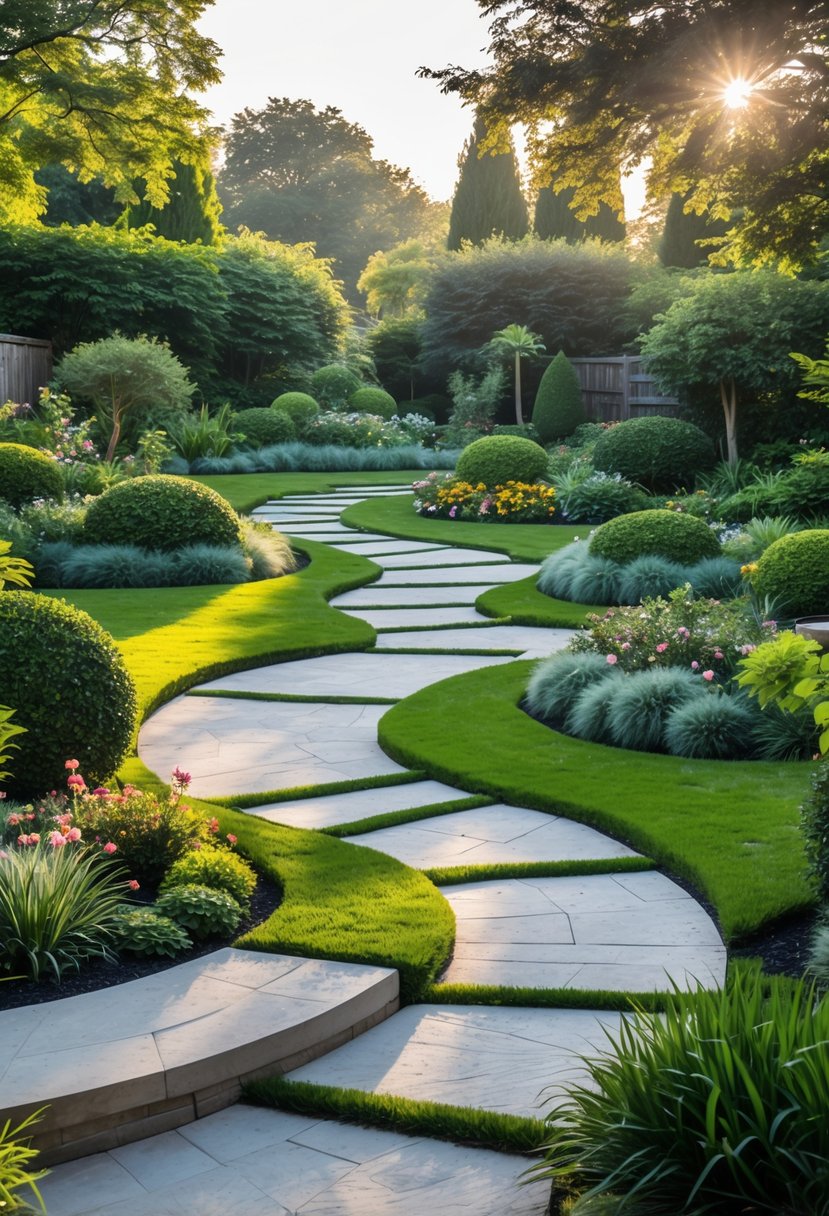
Curved stone paths bring a natural, soft look to any garden. They create a gentle flow that guides visitors through the space. This design breaks up rigid lines and makes the yard feel more inviting.
The stones used can vary in shape and size, adding texture and interest. Curves also help highlight plants and other garden features along the way. This type of path fits well in both modern and traditional garden styles.
By following natural shapes, curved stone paths blend easily with the landscape. They offer both beauty and function without looking forced or unnatural.
Rustic log border walkways
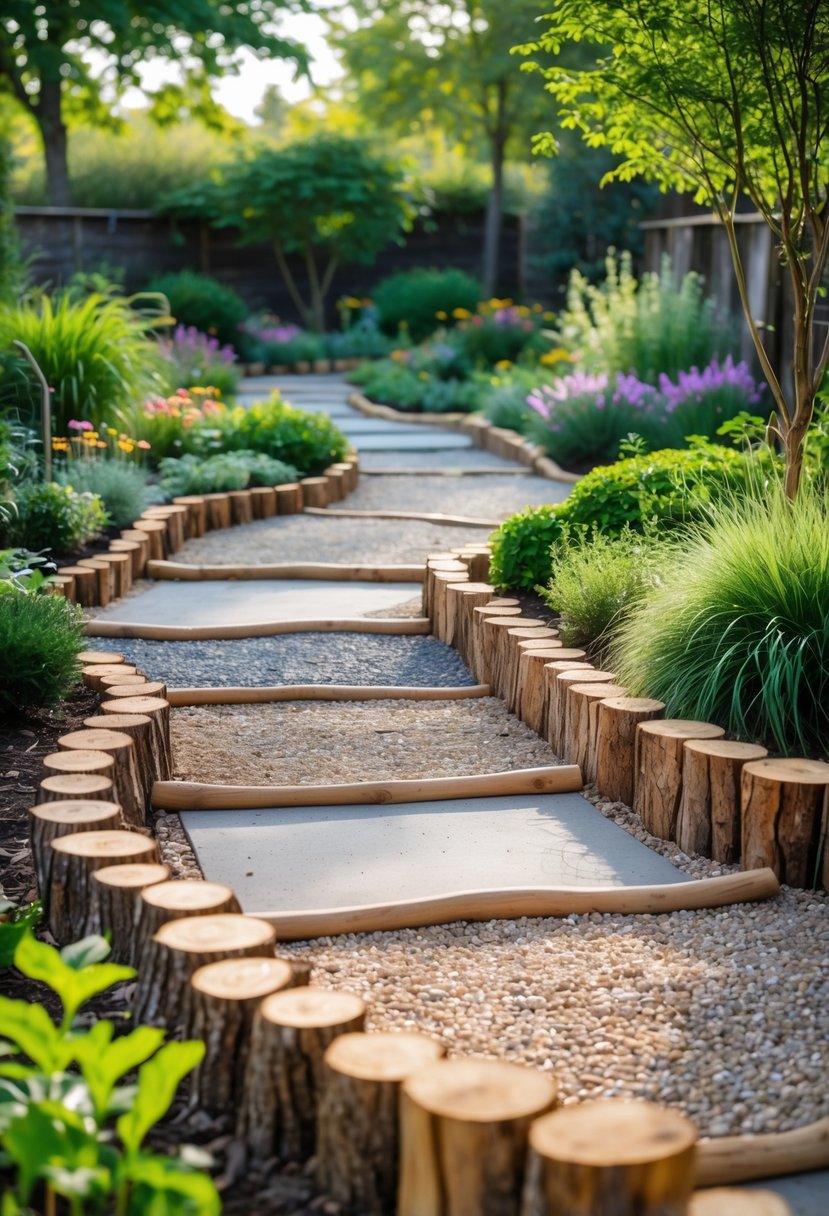
Rustic log borders add a natural, earthy look to garden paths. Using logs of different sizes, they create clear edges that help define walkways.
These borders work well with gravel or mulch paths. They keep materials contained and prevent spreading into the garden beds.
Logs are often left untreated to blend smoothly with the garden. This style suits outdoor spaces that emphasize simplicity and nature.
They offer durability and a straightforward way to separate the path from plantings. Logs can be easily arranged to follow curved or straight lines.
Concrete stamped stone patterns
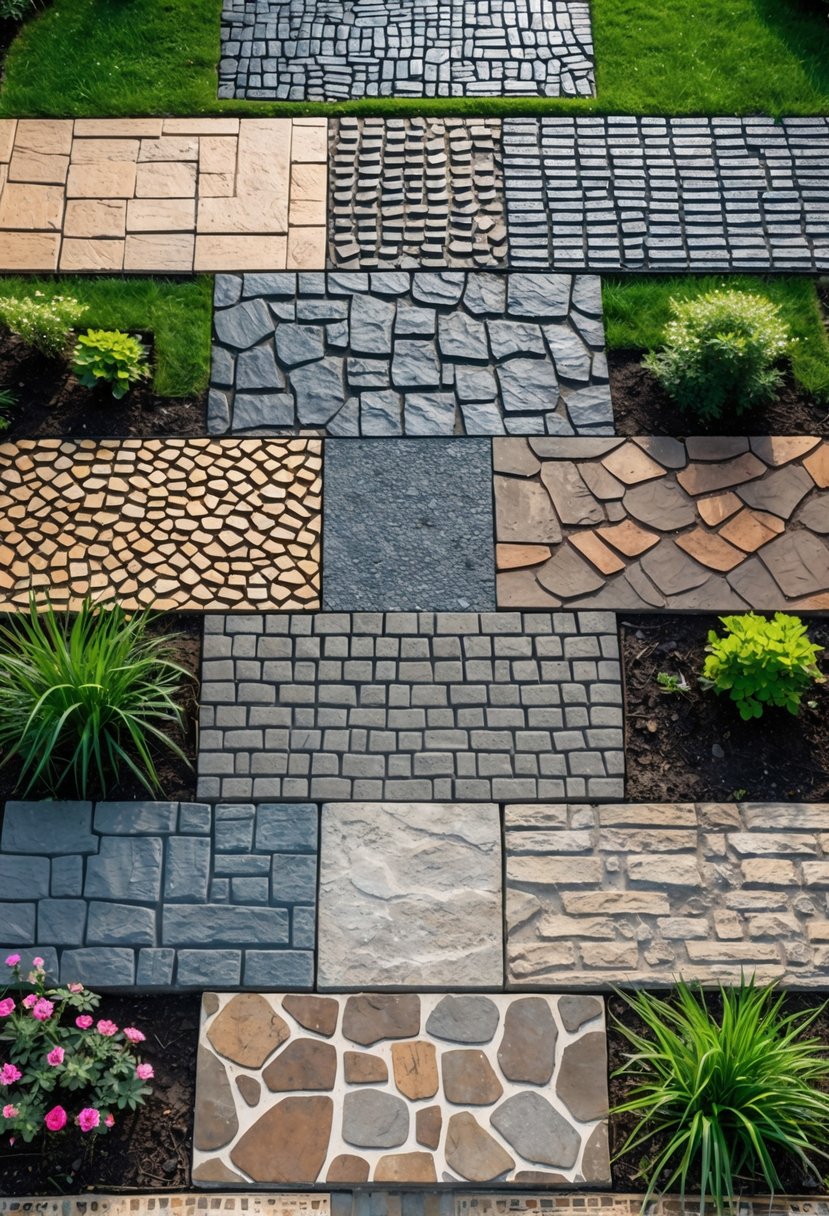
Stamped concrete can mimic the look of natural stone with added durability. It offers various patterns, from rough slate to smooth flagstone textures. This makes it a popular choice for garden paths.
Patterns are created by pressing molds into wet concrete. These shapes add texture and visual interest without the high cost of real stone.
Stamped concrete requires less maintenance than natural stone. It resists cracking and fading, making it practical for outdoor use.
The variety in patterns allows gardeners to customize paths to match their style. It combines function with the beauty of stone in a cost-effective way.
Final Thoughts
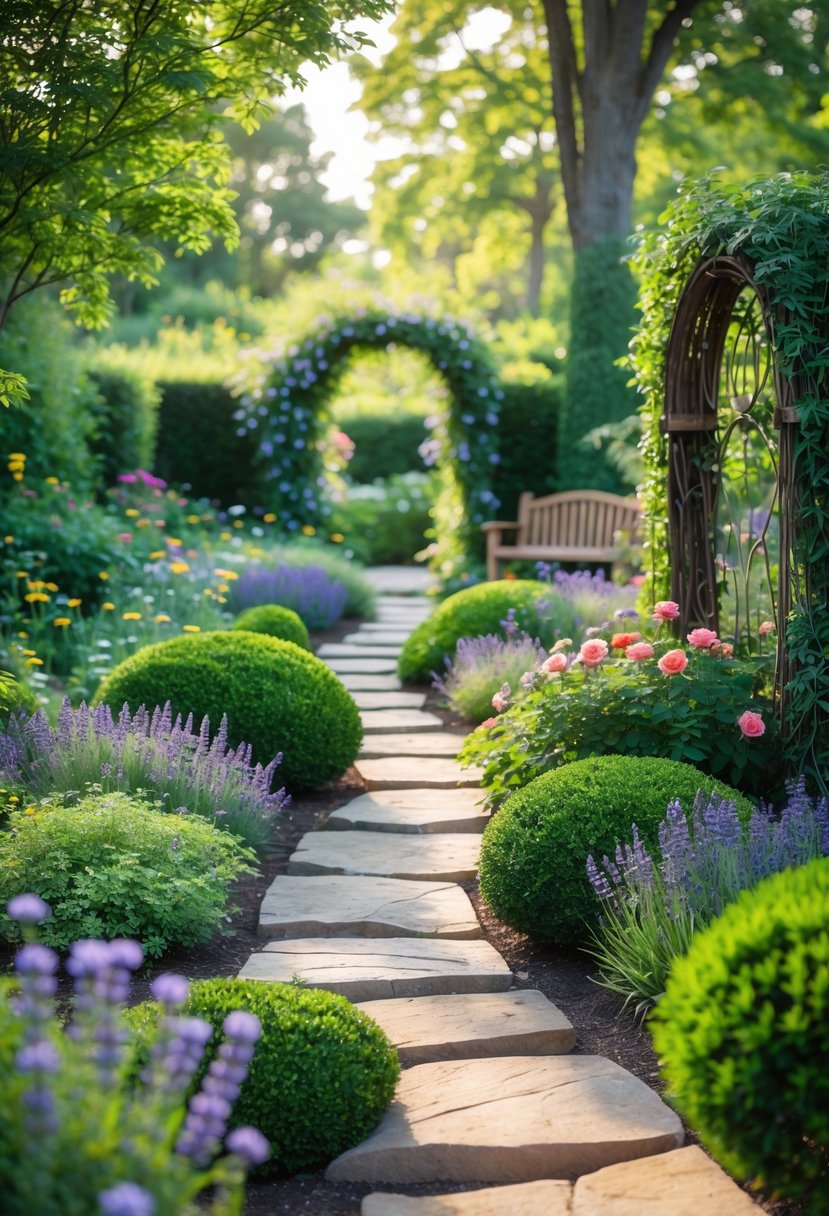
Garden paths serve both function and style in any outdoor space. They guide footsteps while adding visual interest. Choosing the right design depends on personal taste and the garden’s overall look.
Materials range from classic stone and brick to gravel and mixed elements. Each offers different textures and durability. Preparing a solid base is key for a path that lasts.
Simple layouts suit modern gardens, while winding paths fit rustic or woodland settings. Lighting can enhance safety and highlight the path’s beauty at night.
Budget is also important. There are options for every price range, from DIY gravel paths to professionally installed stone walkways.
Key points to consider:
- Match path style to garden theme
- Focus on strong base and drainage
- Use lighting for safety and ambiance
- Choose materials for durability and budget
A well-planned garden path can elevate the entire outdoor space. With many creative options available, it’s possible to find a design that fits both needs and style preferences. Taking time to plan ensures a rewarding and lasting feature.