
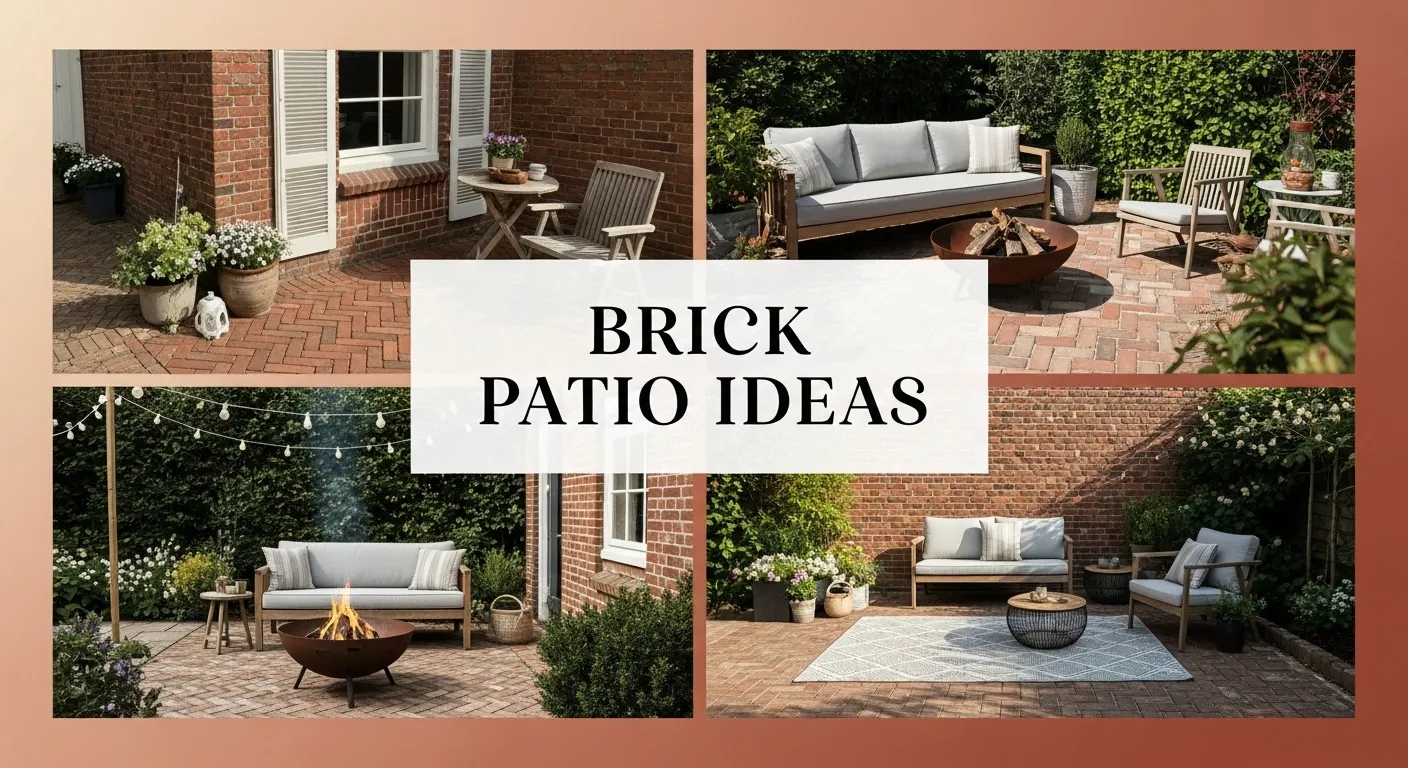
15 Brick Patio Ideas That Add Charm and Character to Any Home
Brick patios offer a classic way to improve outdoor spaces with style and function. They can fit many designs and settings, making them a popular choice for homeowners who want durable and attractive patios.
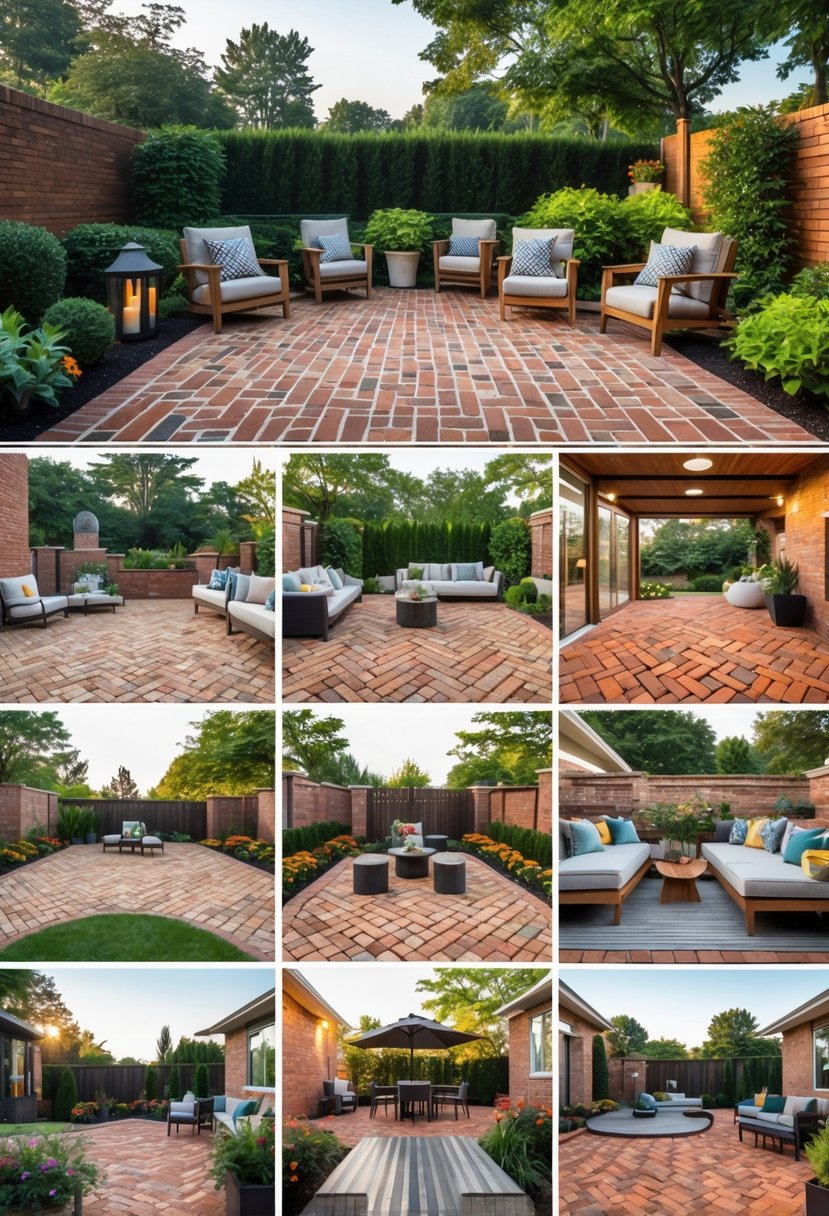
This article shares 15 brick patio ideas that help create inviting and practical outdoor areas. These ideas show different ways to use brick patterns, layouts, and features to suit various tastes and needs.
Classic Herringbone Pattern
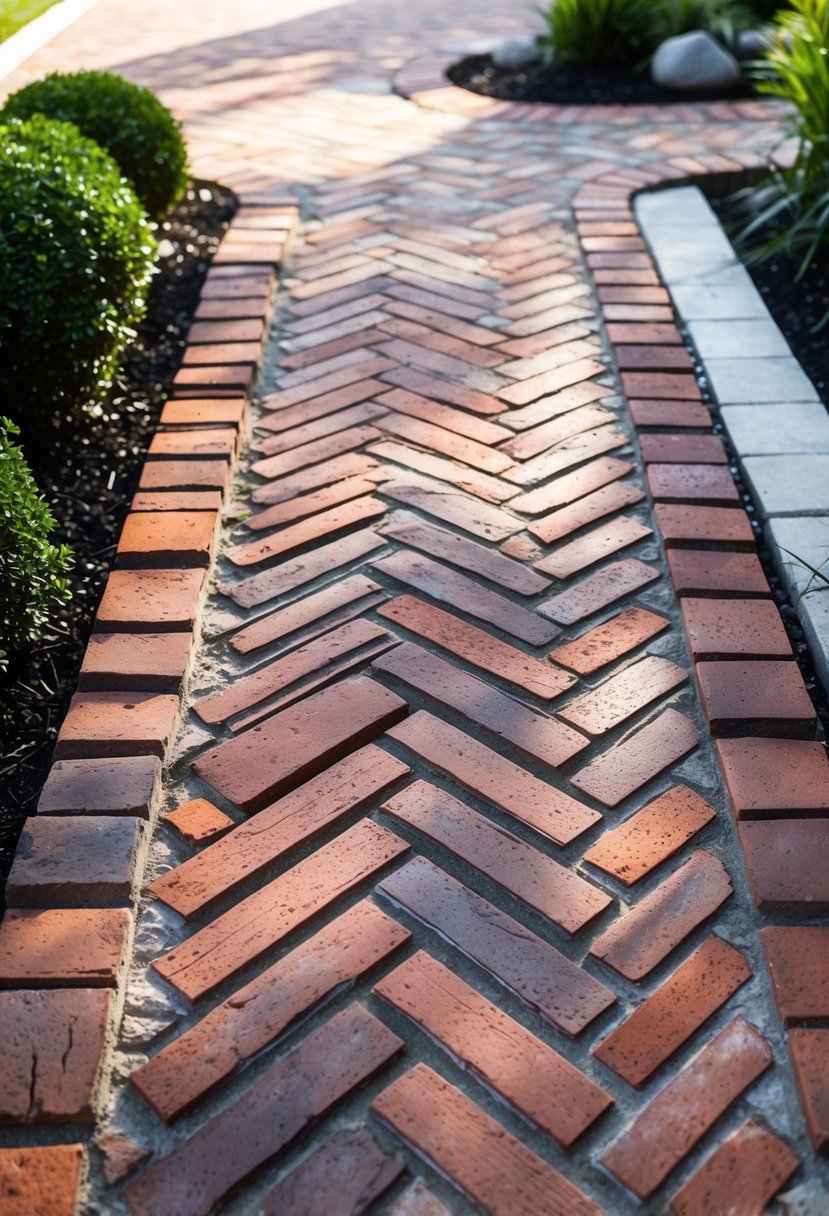
The herringbone pattern is a popular brick patio design known for its distinctive zigzag layout. It dates back to ancient times and is admired for both its style and durability.
This pattern uses rectangular bricks laid at 45 or 90 degrees to create a strong interlocking effect. It adds texture and visual interest without being too busy.
The design fits well with many architectural styles, from traditional to modern. It also provides excellent structural strength, making it a practical choice for outdoor patios.
Running Bond Layout
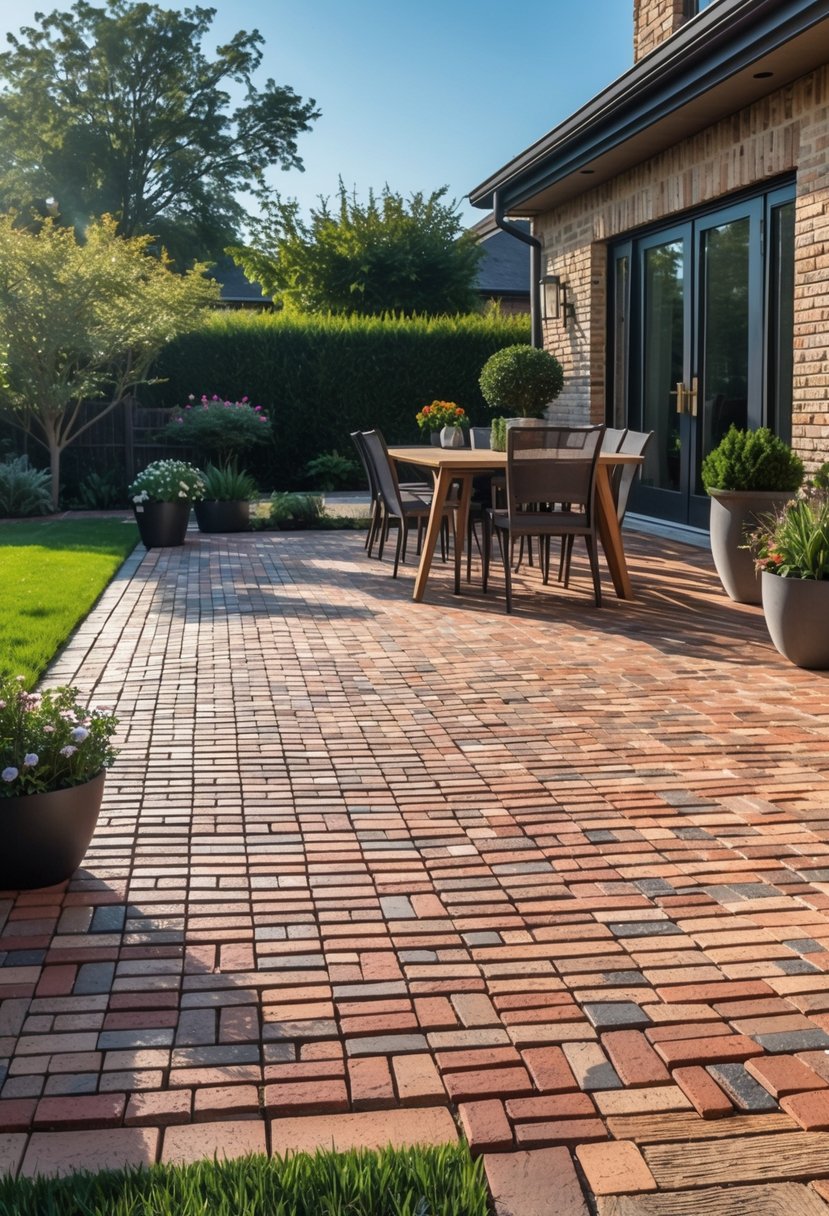
The running bond layout is one of the most common brick patterns. It consists of rows where each brick overlaps the one below by half its length. This creates a clean, staggered look that is simple and easy to install.
This pattern works well for many outdoor spaces because it offers durability and a classic style. It also helps create a seamless flow between patios and indoor areas when matched with interior flooring.
The design’s versatility allows it to fit both traditional and modern settings without drawing too much attention. Many homeowners choose it for its straightforward and balanced appearance.
Basketweave Design
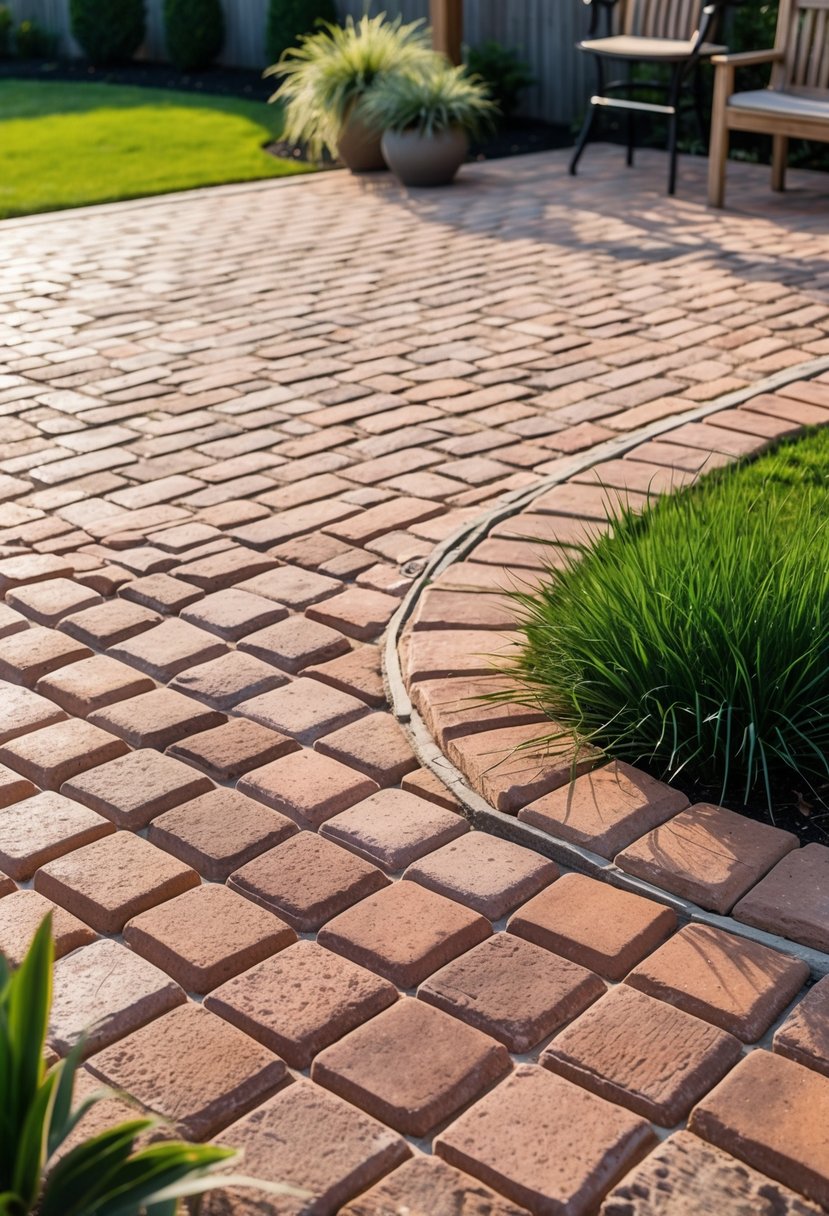
The basketweave pattern uses pairs of bricks laid at right angles, creating a woven look. It offers a timeless and classic style that works well for patios and walkways.
This design is simple but adds texture and interest to outdoor spaces. It is also durable and easy to maintain.
The basketweave can be done with standard bricks or mixed colors for variation. It fits both traditional and modern settings without overpowering the overall design.
Diagonal Brick Pattern
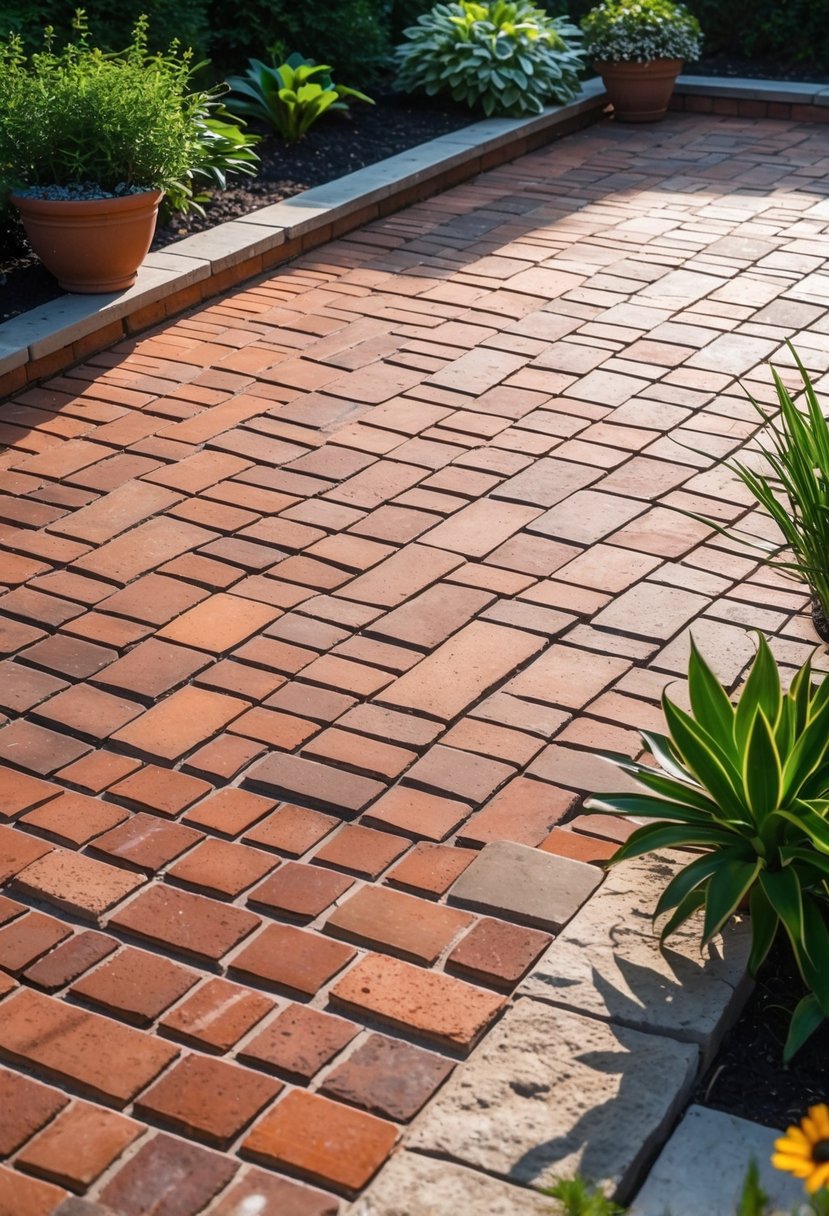
The diagonal brick pattern adds a unique look to any patio. It places bricks at a 45-degree angle, creating a sense of movement and style.
This pattern fits well in both small and large outdoor areas. It can make a simple patio look more elegant without being too complex.
Laying bricks diagonally takes extra care to keep lines straight. It works well as a main design or a border around a concrete slab.
The pattern pairs nicely with different brick colors. It brings structure and a classic feel that suits many home styles.
Circular Patio with Brick Border
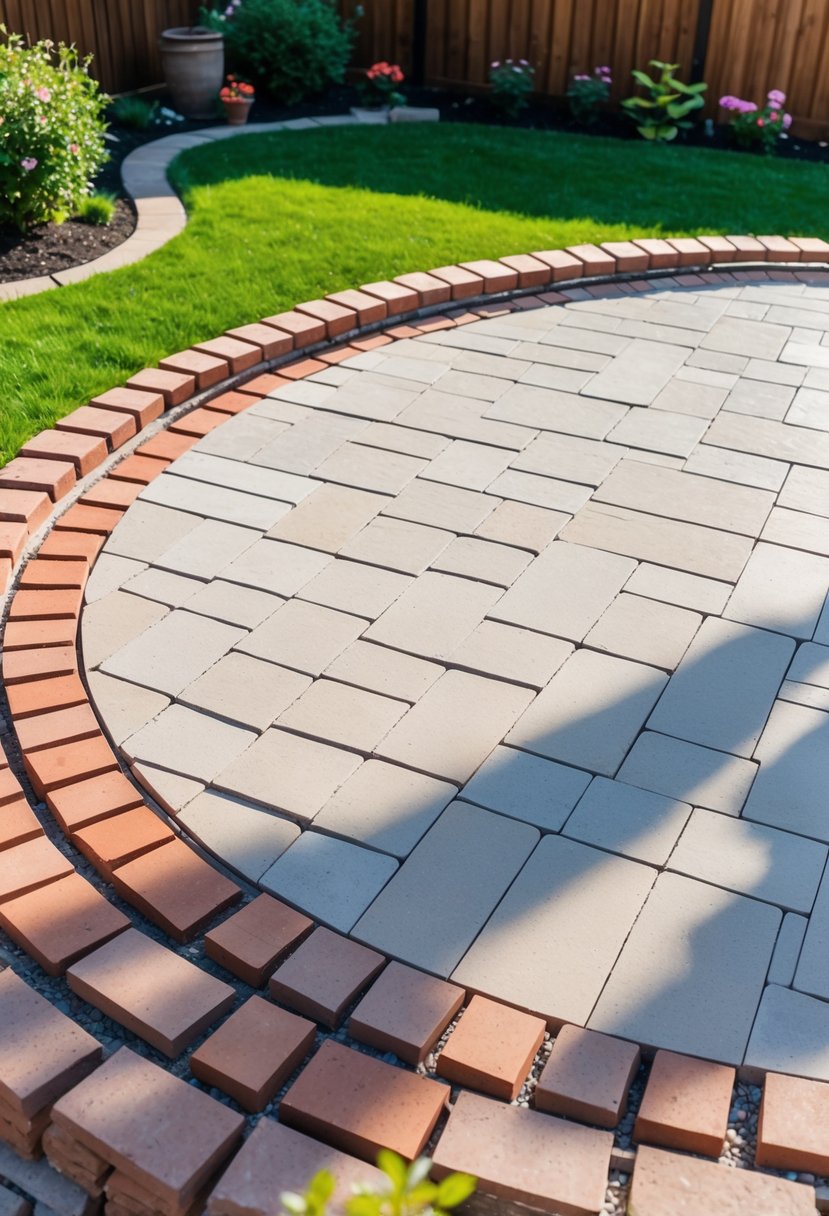
A circular patio with a brick border adds a clean and polished look to outdoor spaces. The round shape creates a natural gathering spot, often enhanced by a defined edge made from bricks.
This border helps hold the patio bricks in place and adds contrast to the pattern inside. It can be made with soldier course bricks or a different color to highlight the circle.
The design works well with fire pits, seating areas, or garden features at the center. It balances style and function, making the space both attractive and stable.
Mixed Brick and Natural Stone
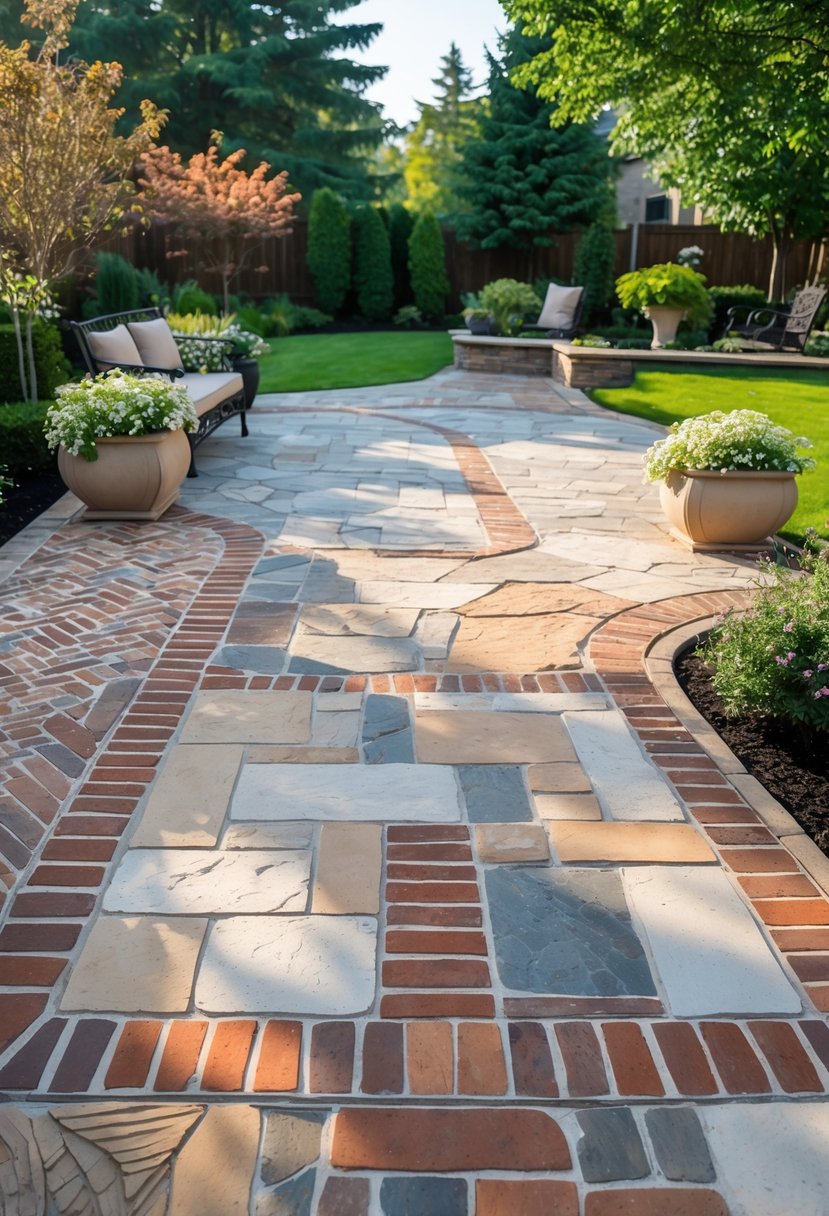
Combining brick and natural stone creates a balanced look for patios. The contrast between rough stone and smooth brick adds visual interest.
This mix works well for both traditional and modern styles. Stone pieces can be used as borders or accents among the brick pattern.
Using natural stone with brick also brings texture and depth. It can break the uniformity of large brick surfaces, making the patio feel more inviting.
Stone pillars or flagstone inserts within brick layouts are popular choices. These elements add strength and a natural feel to outdoor spaces.
Curved Brick Edging
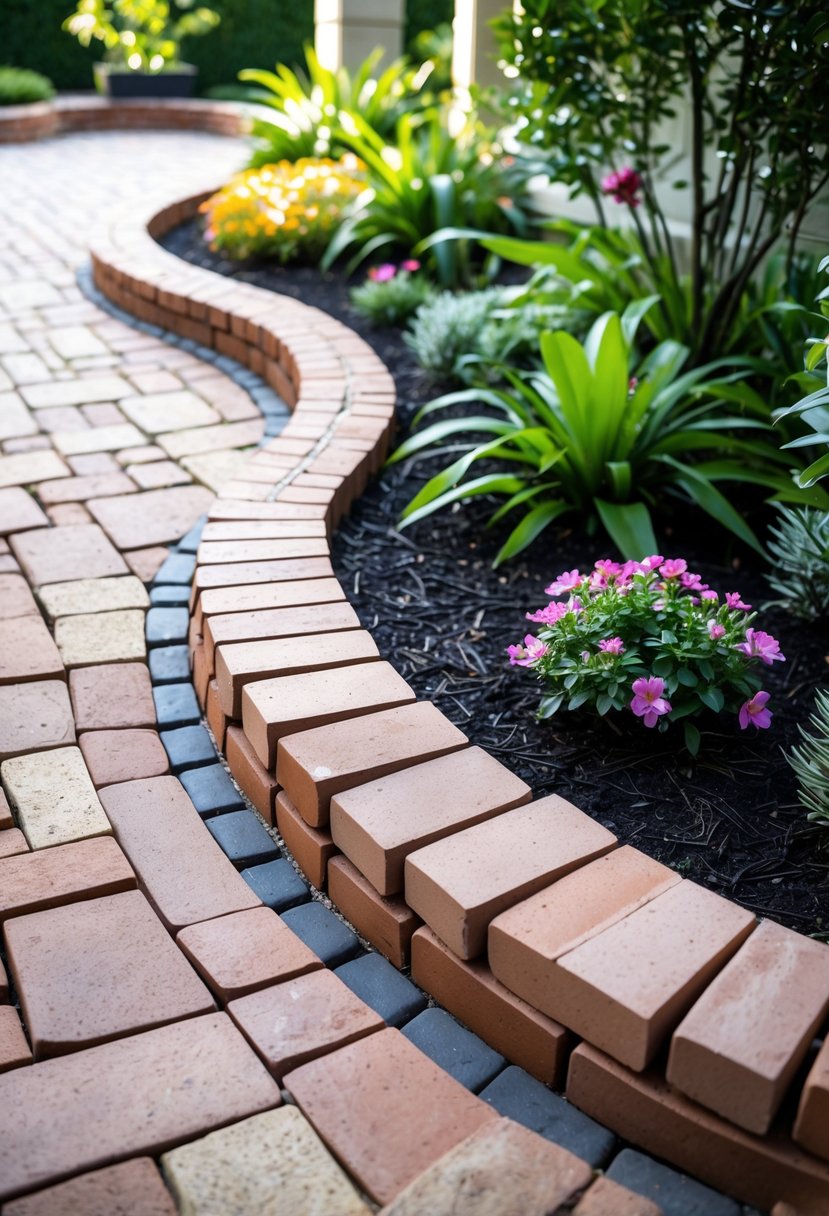
Curved brick edging adds a smooth and natural flow to any patio design. It softens hard lines and creates a more inviting outdoor space.
This style works well around garden beds and walkways, guiding the eye gently. Using durable bricks ensures the edging lasts through weather changes.
Installing curved brick edges requires careful planning to keep the shape even. It can blend classic and modern looks, making it a popular choice for many patios.
Brick Mosaic Inlays
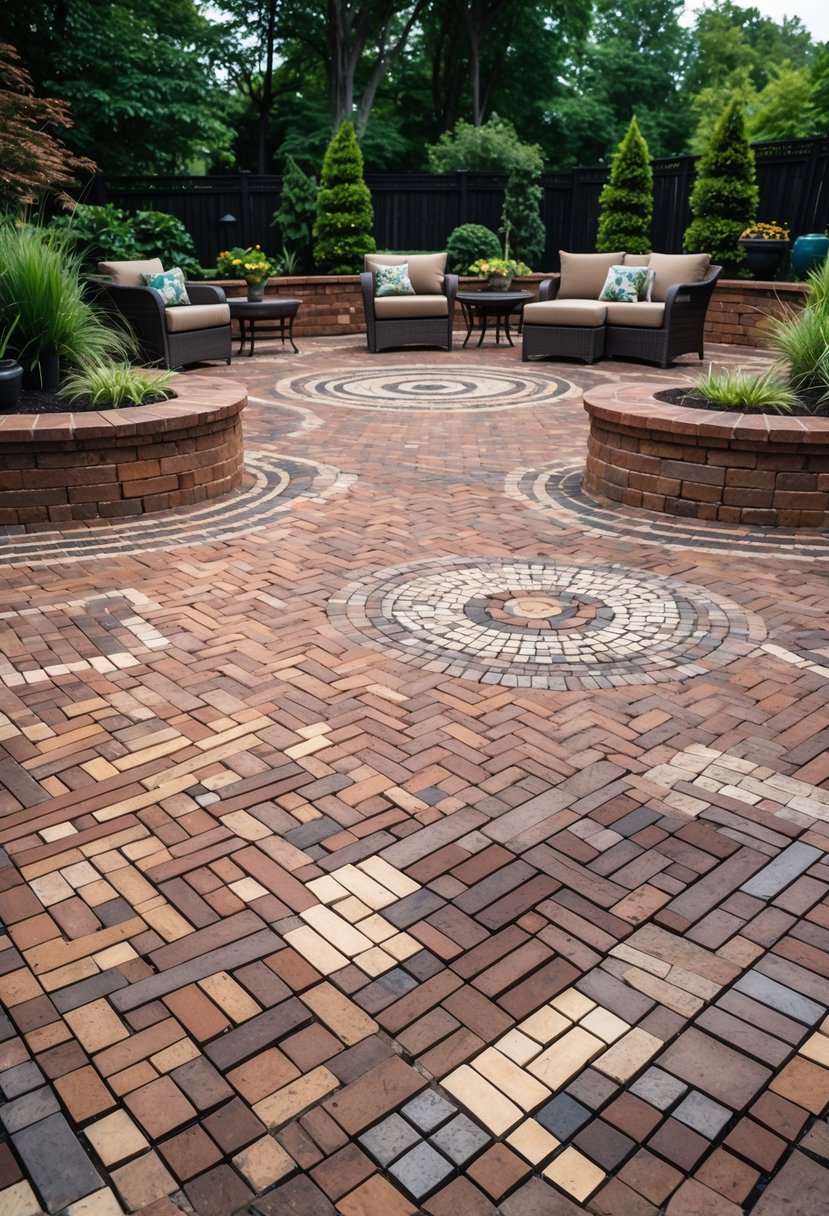
Brick mosaic inlays add an artistic touch to patios by embedding colorful tiles into the brickwork. This technique creates patterns and designs that stand out while blending well with the overall patio.
They allow for custom shapes and colors, making the patio unique and personalized. Mosaic inlays work well for borders, focal points, or entire sections within the patio.
This method can enhance both traditional and modern patios. It requires careful planning and skilled installation to ensure the design is clear and durable over time.
Multi-Color Brick Palette
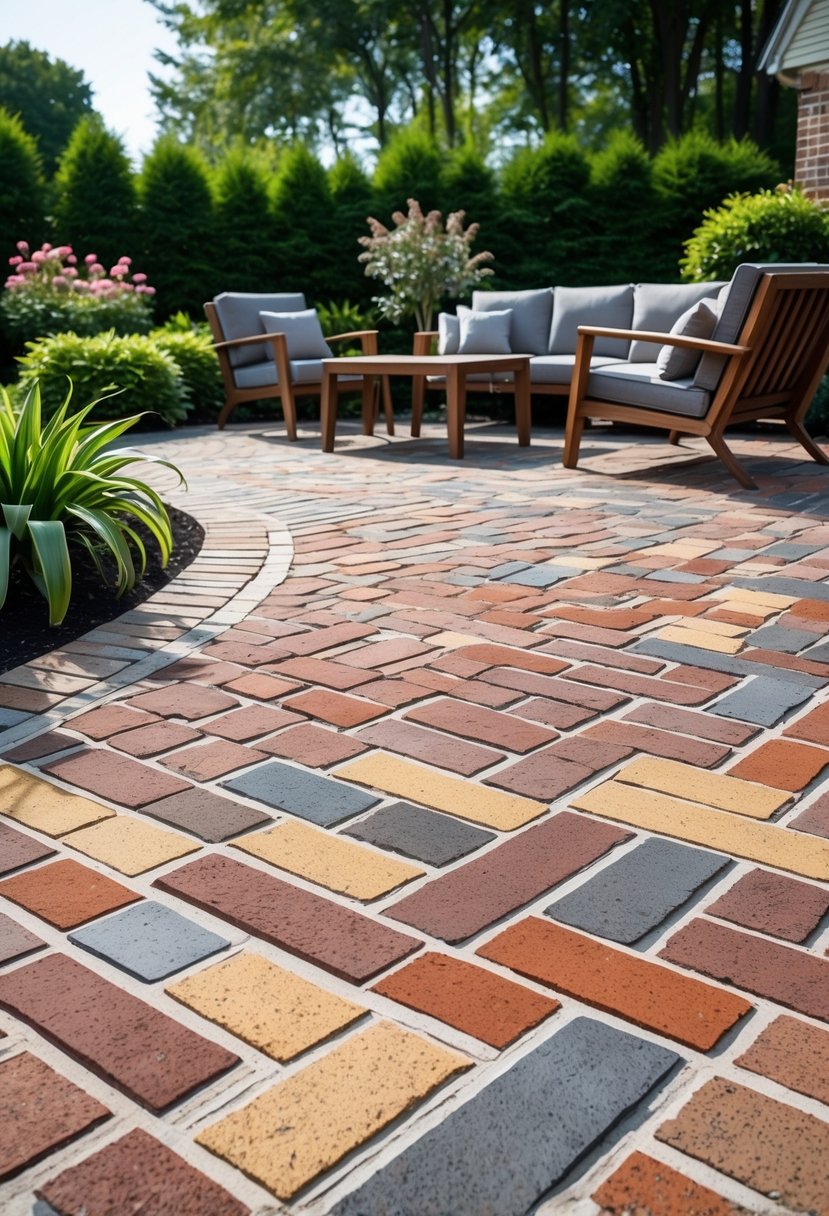
A multi-color brick palette adds depth and visual interest to a patio. Using bricks in different shades, like red, brown, and cream, creates a natural and varied look. This approach helps break up large areas and makes the space feel more dynamic.
Mixing colors also allows for creative patterns that highlight the shapes and layout of the bricks. It can complement surrounding outdoor furniture and landscaping.
Choosing a balanced color combination ensures the design stays harmonious, not chaotic. This technique is popular for both modern and traditional patios.
Brick with Cement Sand Base
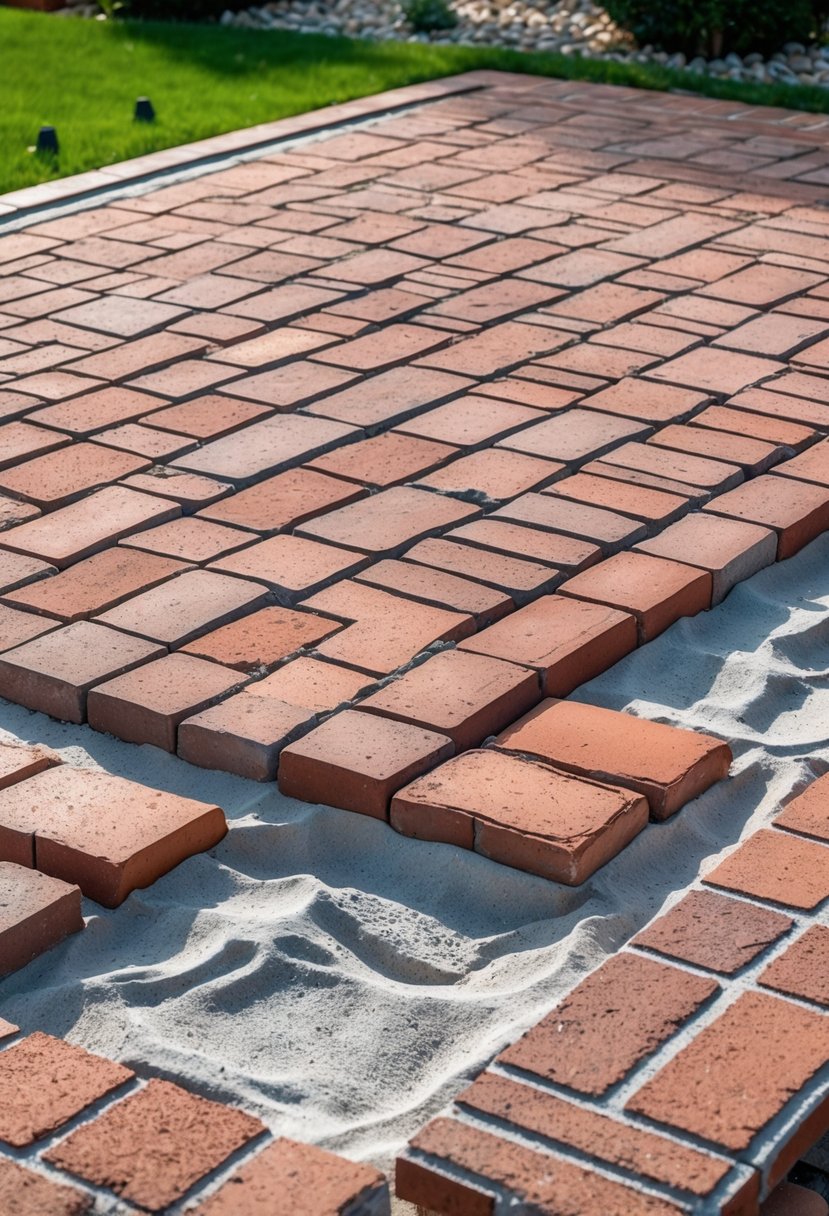
A brick patio laid on a cement sand base offers strong stability and long-lasting support. This method creates a solid foundation that prevents bricks from shifting over time.
The cement sand mix binds the bricks firmly while allowing some drainage. It also helps keep the surface even and level.
This base is ideal for areas with heavy foot traffic or where extra durability is needed. It requires more preparation than a simple sand base but delivers better strength.
Proper mixing and curing are important to avoid cracking. Once set, the patio surface is durable and easy to maintain.
Mortar-Set Brick Patio
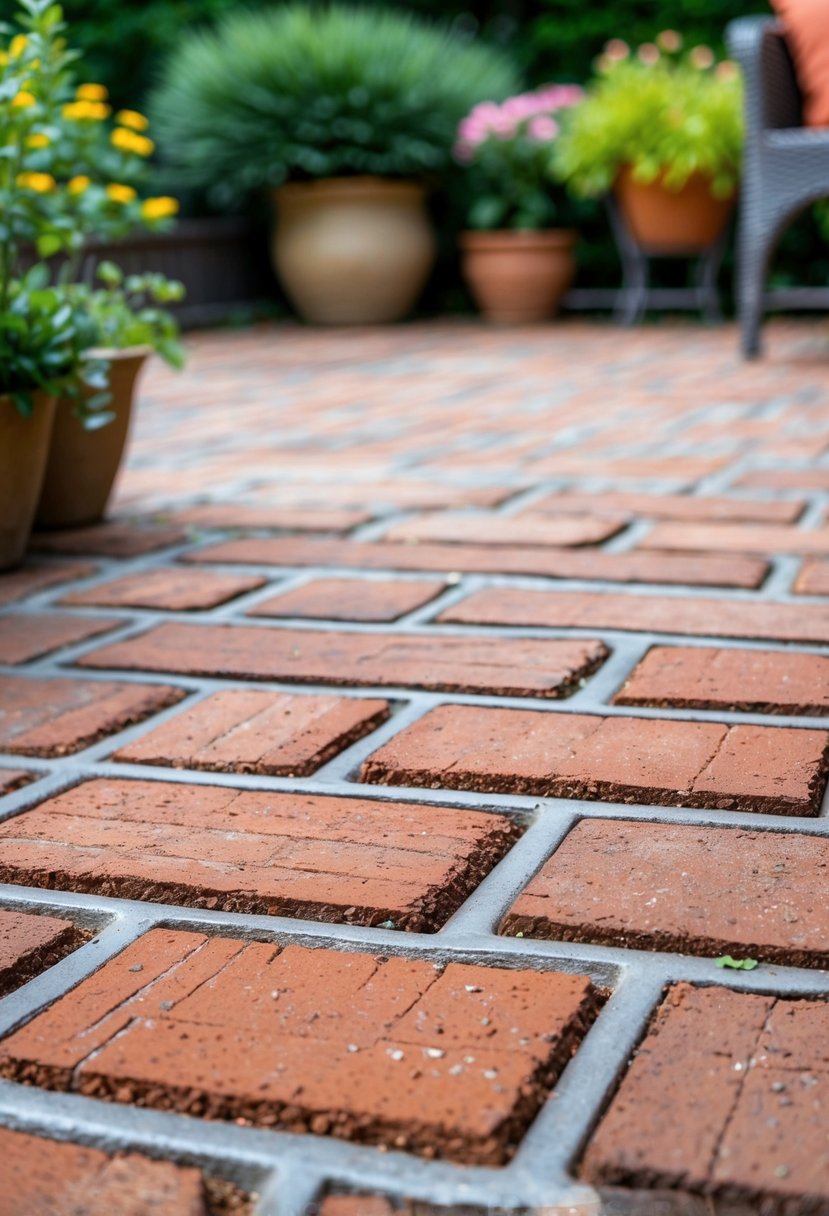
A mortar-set brick patio uses mortar to secure bricks tightly together. This method creates a solid, durable surface that can last many years.
Mortar helps prevent weeds from growing between bricks and reduces shifting over time. This makes it a good choice for areas with heavy foot traffic or uneven ground.
Installing a mortar-set patio takes more skill and time than laying bricks on sand. Proper planning and careful work are important to achieve a clean, lasting finish.
Rustic Red Brick Finish
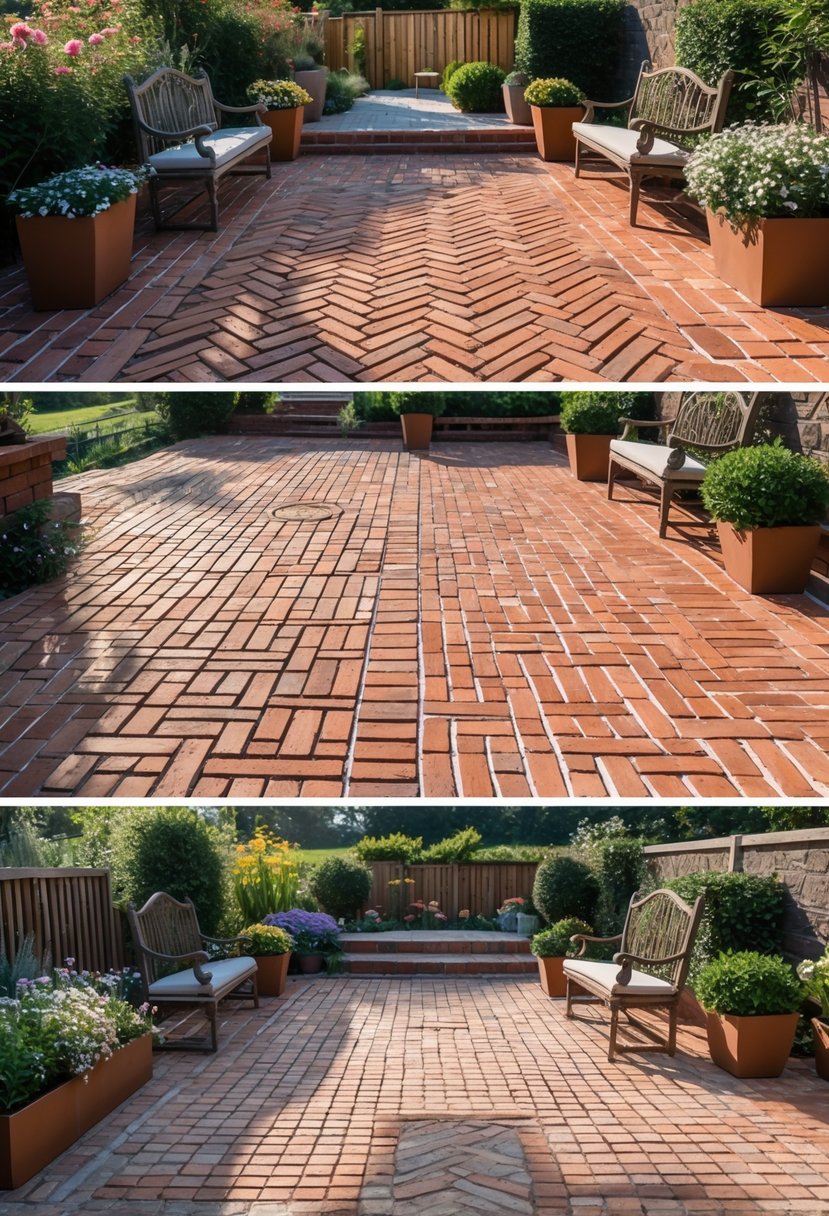
A rustic red brick finish adds a warm and natural feel to any patio. The uneven tones and textures of the bricks create an inviting, lived-in look.
This style works well with outdoor furniture made from wood or metal. It also blends nicely with plants and natural surroundings.
Textured bricks give depth and character to the space. They offer a slip-resistant surface that is both practical and attractive.
This finish suits people who want a timeless, durable patio with a simple, classic style. Maintenance usually involves occasional sealing to protect the bricks.
Modern Geometric Brick Design
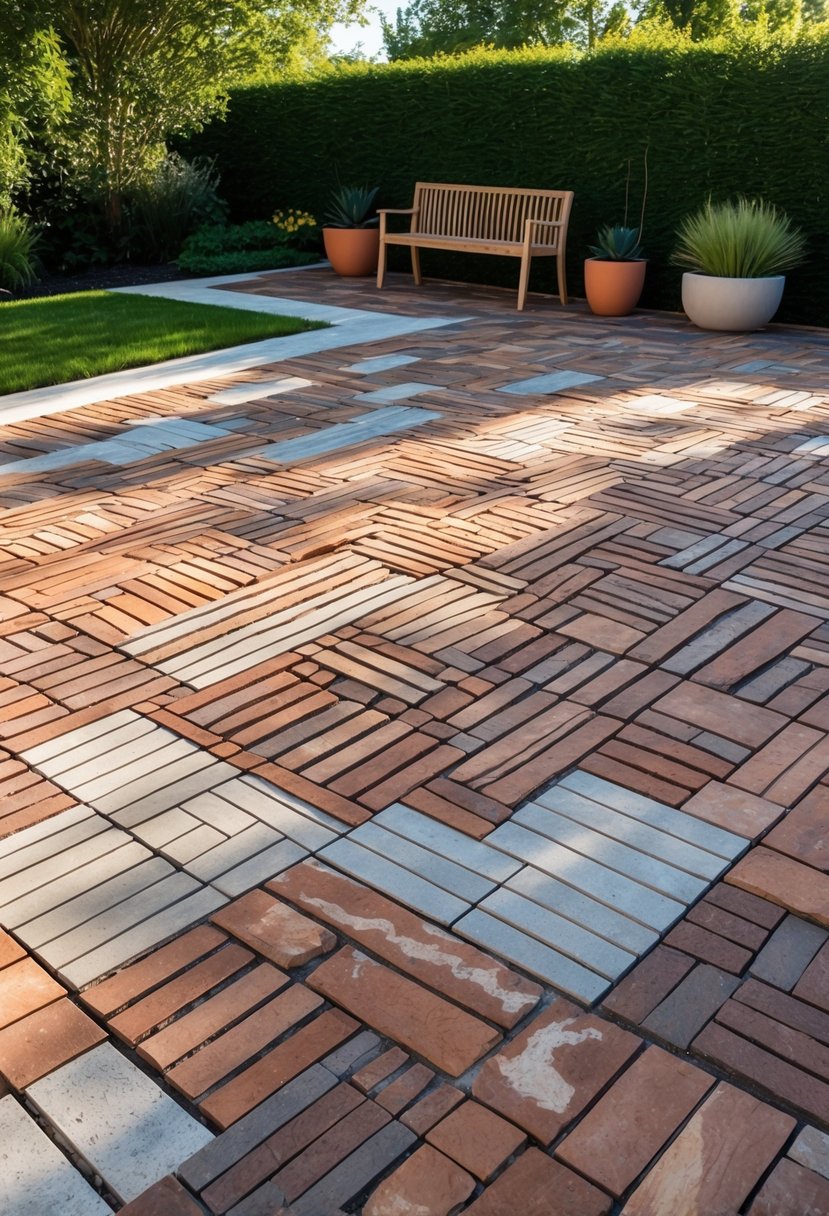
Modern geometric brick designs use clean lines and sharp shapes to create a sleek look. These patios often feature patterns like squares, triangles, or diamonds arranged in a precise way.
This style works well for those who want a contemporary feel outside. It can make a small space appear more structured and organized.
Using contrasting brick colors can highlight the geometric shapes. This adds visual interest without being too busy. Modern geometric brick patios combine style with simplicity for a polished outdoor area.
Brick Patio with Built-In Fire Pit
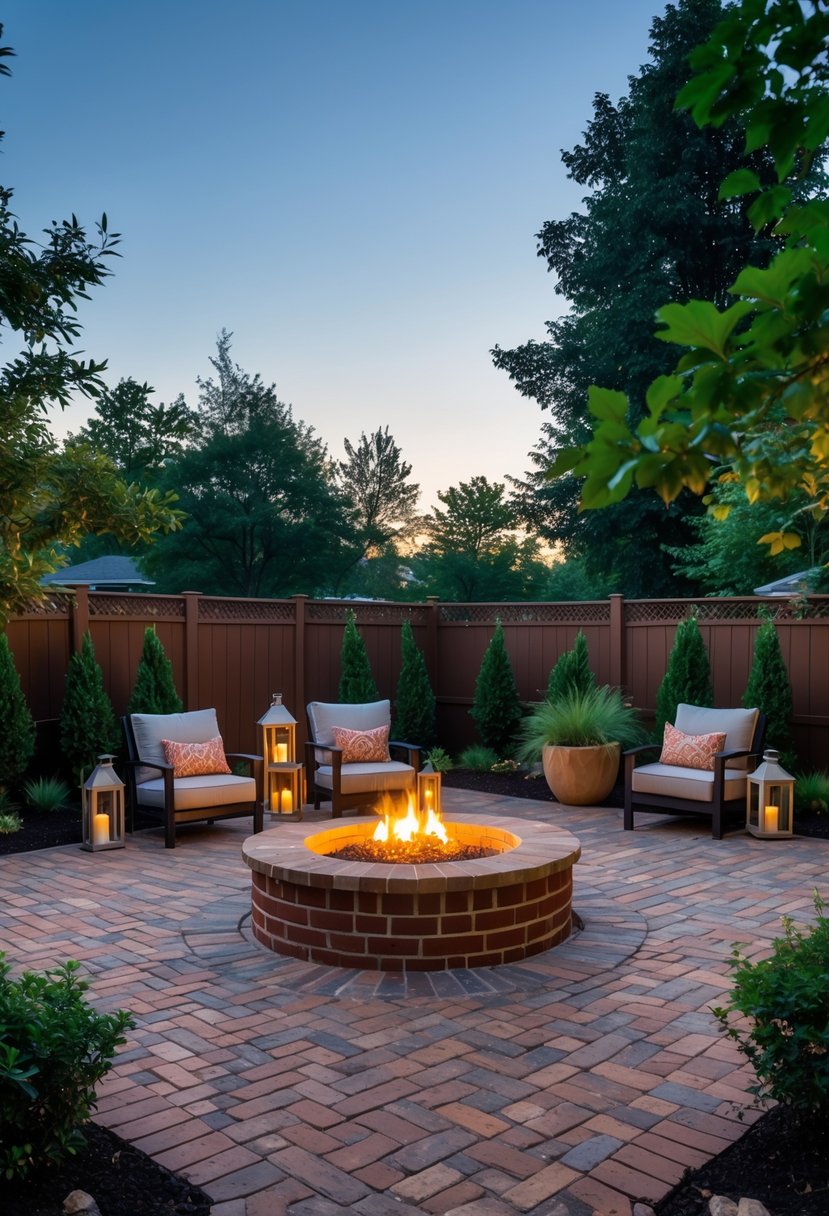
A brick patio with a built-in fire pit creates a defined space for relaxing or socializing. The fire pit can be round, square, or custom-shaped, fitting the style of the patio.
Built-in fire pits offer durability and a clean look. They often come with features like stone borders or brick façades that match the patio design.
This setup improves outdoor living by providing warmth and a gathering spot. It also adds value by making the area more inviting and functional year-round.
Raised Brick Patio Platform
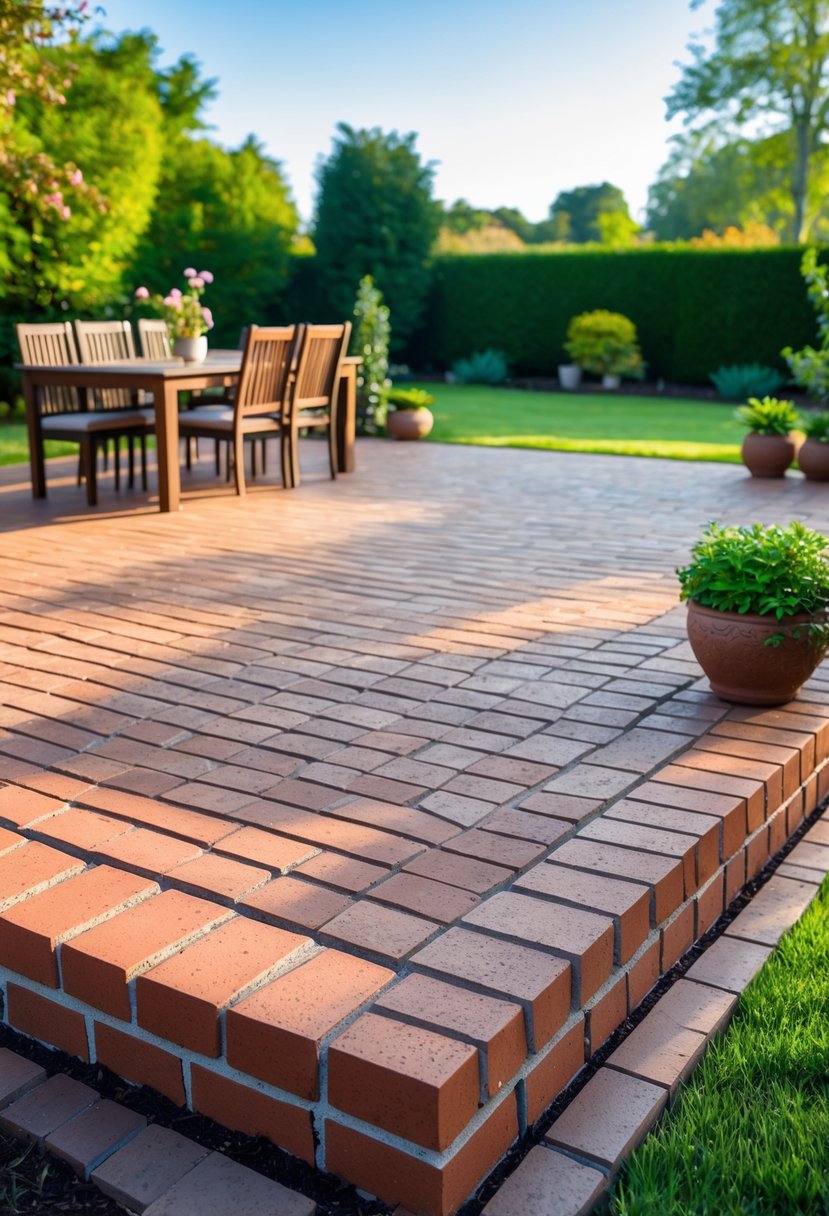
A raised brick patio platform adds height and structure to an outdoor space. It creates distinct zones for seating, dining, or planting without the need for walls or railings.
Typically, these platforms sit 12 to 24 inches above the ground. This elevation improves drainage and offers better views of the yard.
The raised design helps separate the patio from surrounding lawns and gardens. It also adds visual interest while keeping the area open and accessible.
Conclusion
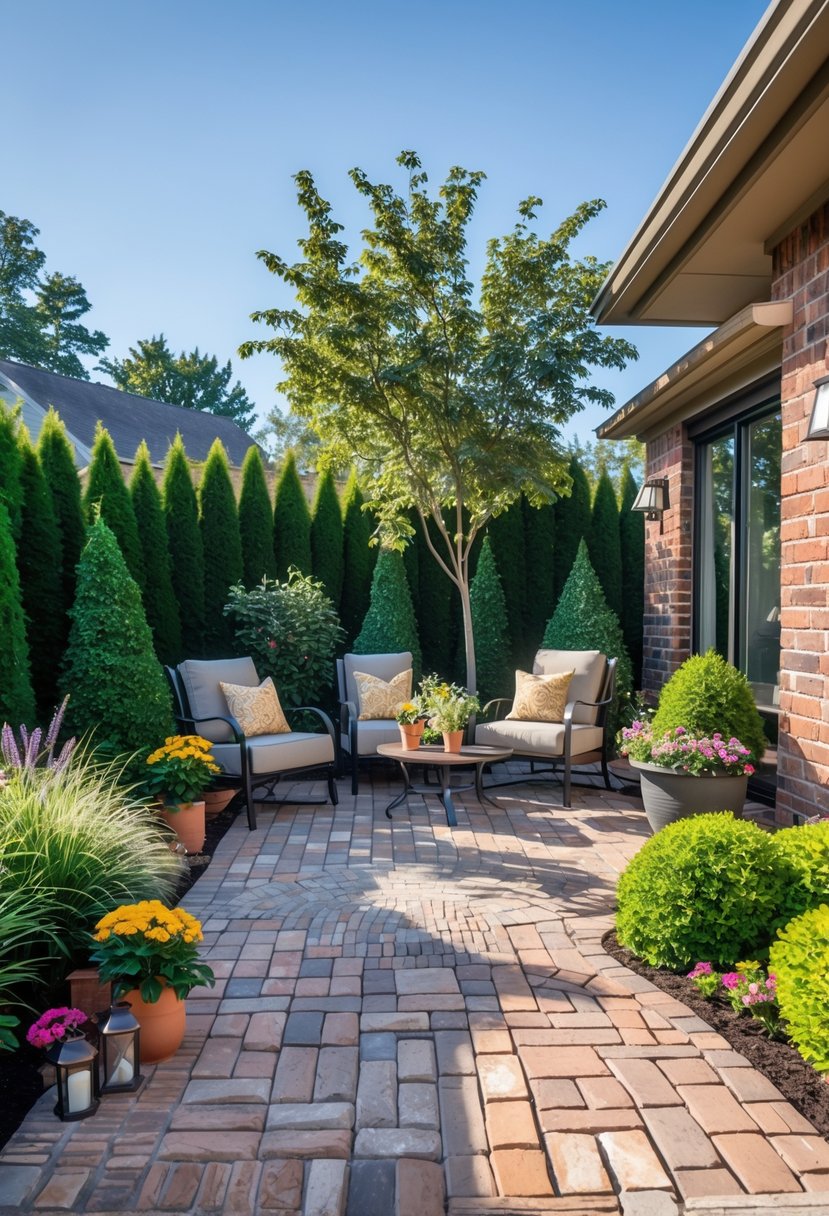
Brick patios offer a durable and timeless option for outdoor living spaces. They suit many styles, from traditional to modern designs.
Choosing the right pattern, such as herringbone or geometric, can change the feel of the patio. It can make the space look classic or contemporary.
Materials and installation methods also affect the patio’s longevity. Whether using sand or mortar bases, brick provides a strong surface for years of use.
Adding complementary features like wooden fences or garden beds enhances the overall look. The right combination creates warmth and character.
With these 15 ideas, anyone can create a stylish and practical outdoor space. Brick patios add value and comfort without being overly complex to design or maintain.