15 Mediterranean Garden Design Ideas for Creating Elegant Outdoor Spaces
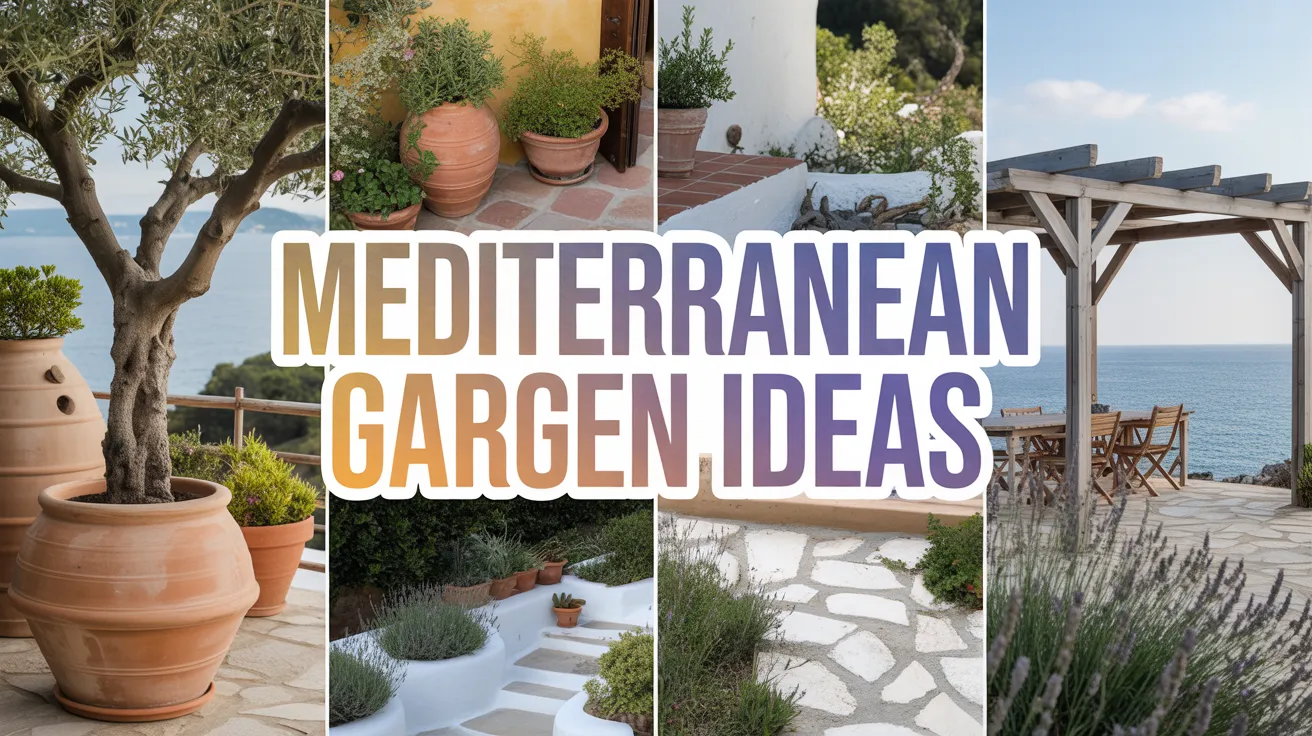
A Mediterranean garden offers a timeless and relaxed outdoor space inspired by the landscapes of Southern Europe. It often features drought-tolerant plants, natural stones, and elements that create a warm and inviting atmosphere. This style fits well with changing climates and smaller outdoor areas.
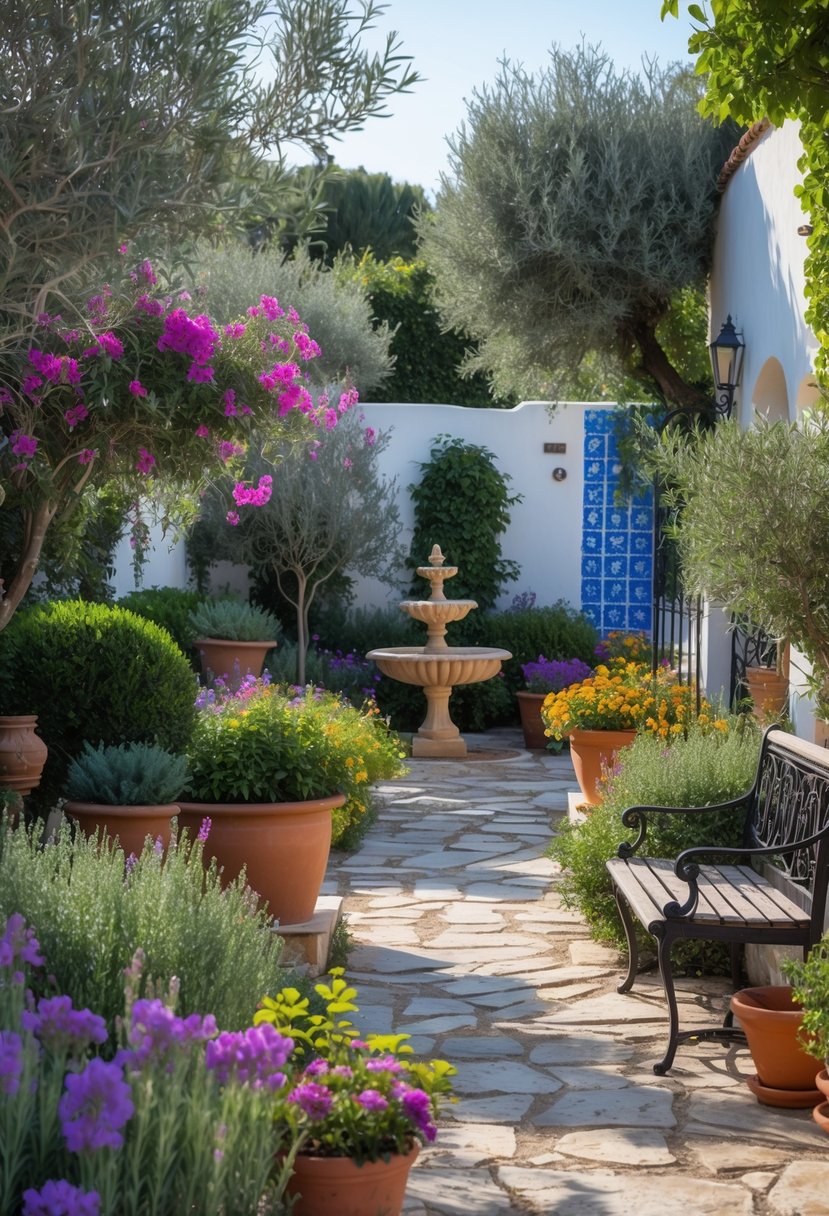
These 15 Mediterranean garden design ideas provide practical ways to bring beauty, functionality, and a peaceful vibe to any garden. They focus on using natural materials and easy-care plants to create a space that feels both elegant and comfortable.
Clipped hornbeam hedge for structured greenery
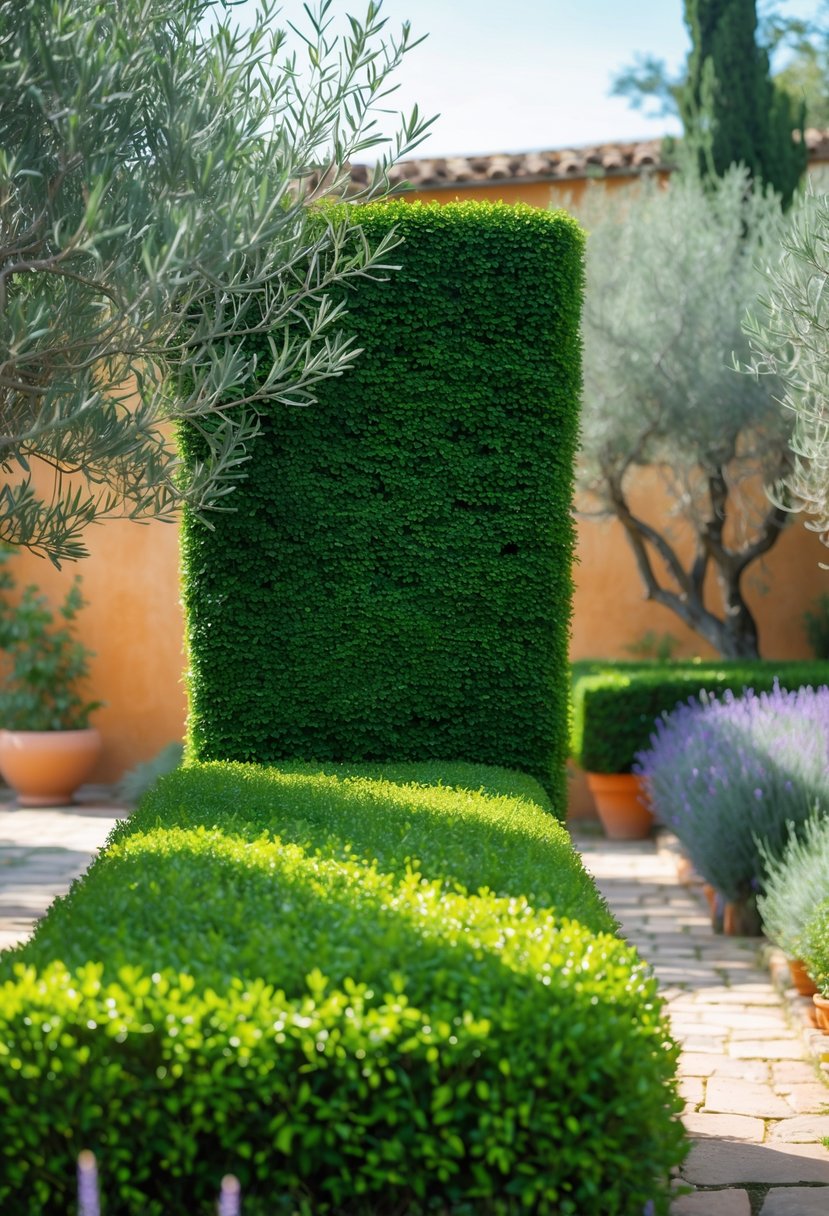
A clipped hornbeam hedge offers clean lines and neat structure to a Mediterranean garden. It creates a solid green wall that defines spaces without overwhelming the area.
Hornbeams hold their golden-brown leaves into winter, adding year-round interest and texture. They are easy to shape and maintain at different heights, ranging from 4 to 15 feet tall.
This hedge works well in small or large gardens, providing privacy while keeping a natural feel. Using hornbeam helps bring order to the garden’s design with simple, elegant greenery.
Potted palms to enhance Mediterranean feel
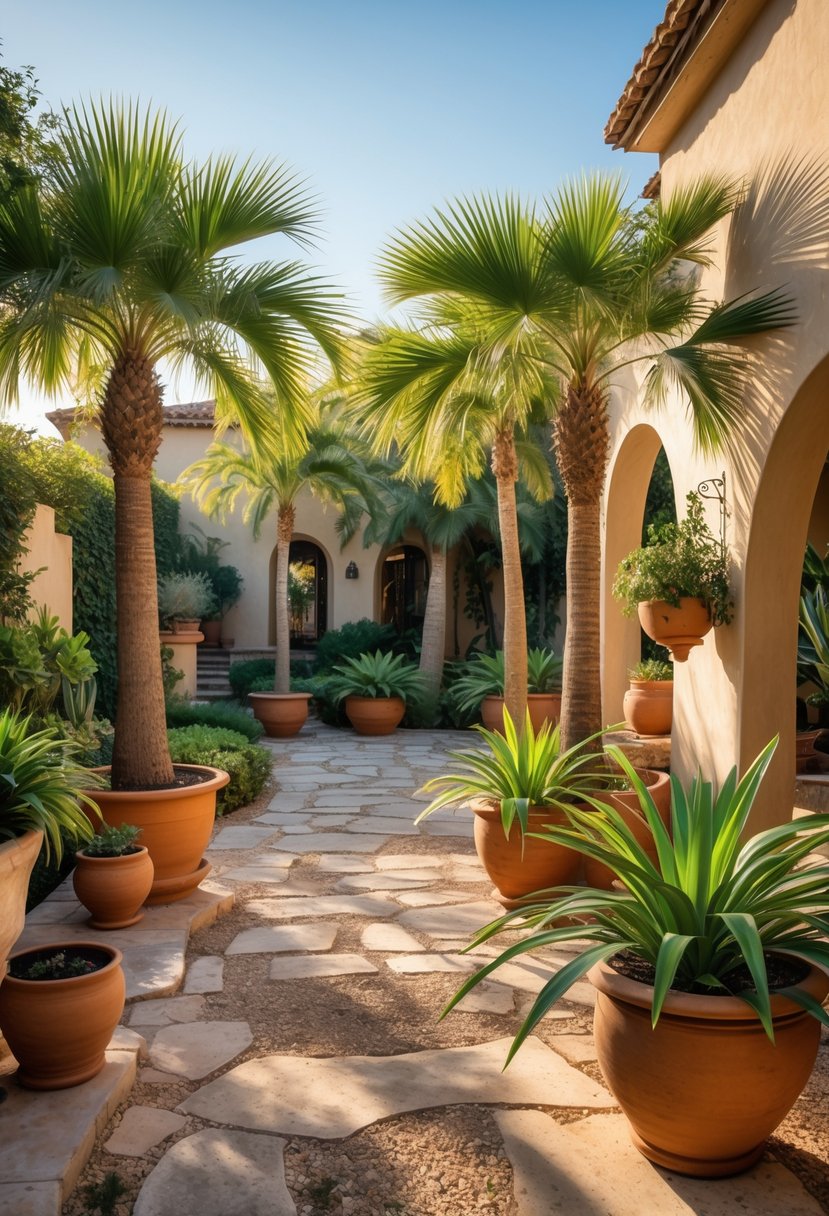
Potted palms bring a strong Mediterranean vibe to any garden. They work well in large containers, which need good drainage to keep palms healthy.
These palms add height and texture, making outdoor spaces feel lush but neat.
The containers can be moved, allowing flexibility in garden design. Palms like the Mediterranean fan palm are popular for this style.
Using potted palms near patios or seating areas helps create a relaxing, sun-soaked atmosphere common in Mediterranean gardens.
Gravel pathways for texture and drainage
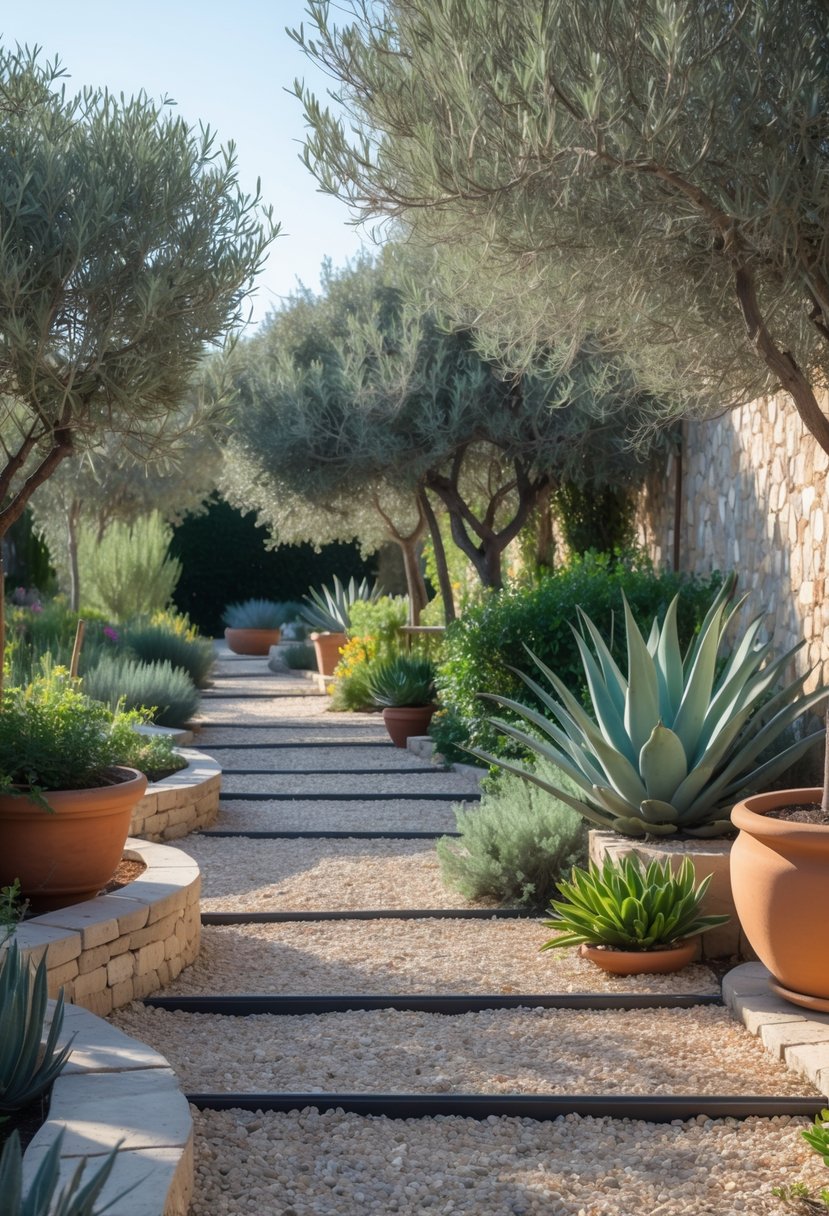
Gravel pathways add a natural texture that fits well with Mediterranean garden styles. They offer a simple way to create walkways that blend with plants and stone elements.
These paths help with drainage by allowing water to flow through, preventing puddles and soggy ground. This feature makes them ideal for dry climates.
Using curved designs and mixing gravel with larger stones can improve the look and feel. The gravel also reduces weeds and keeps soil moist, supporting drought-tolerant plants common in Mediterranean gardens.
Terracotta pots for authentic container planting
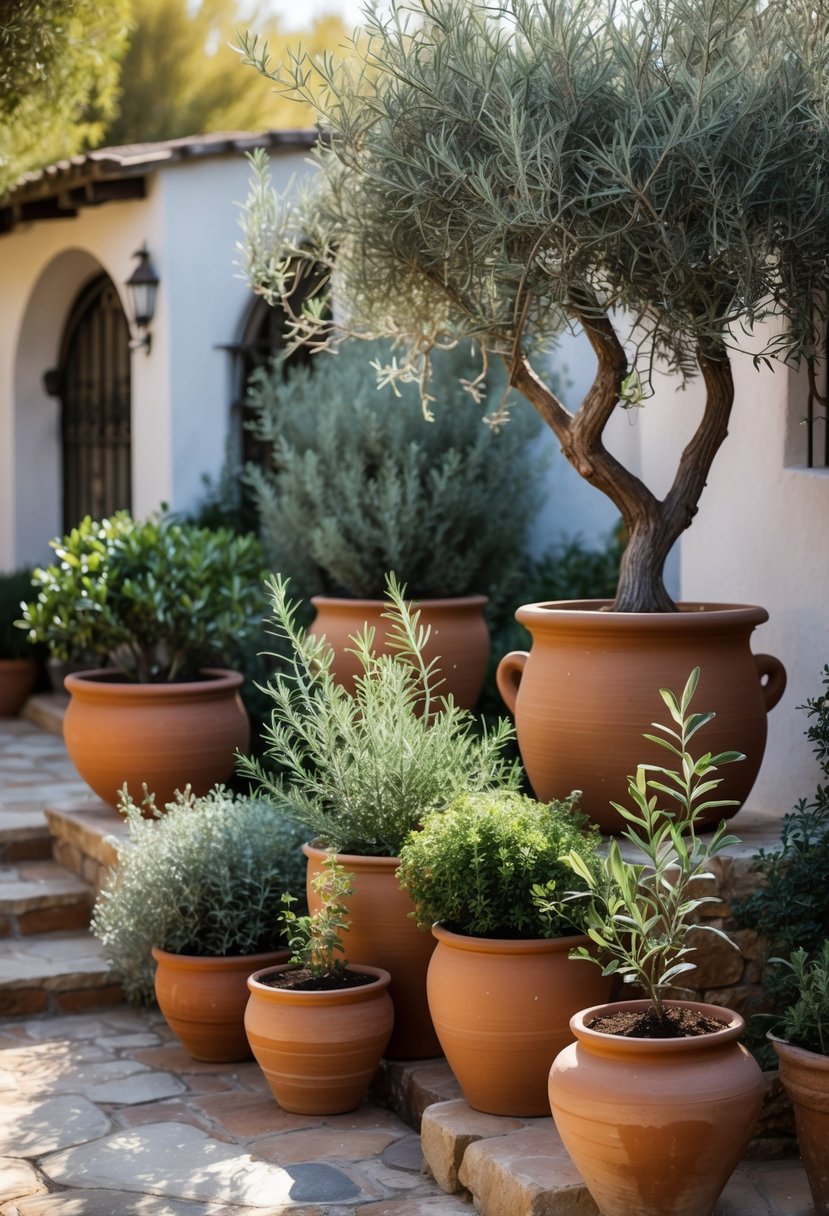
Terracotta pots are a key feature in Mediterranean garden design. Their natural clay material allows air and water to flow, creating a healthy environment for plants.
These pots bring a warm, earthy tone that fits well with outdoor spaces. Their rustic look adds simple charm without overpowering the garden.
Terracotta containers work well for herbs, flowers, and small trees. They are durable and support plants that thrive in dry, sunny conditions typical of Mediterranean climates.
Lavender as a fragrant, drought-resistant staple
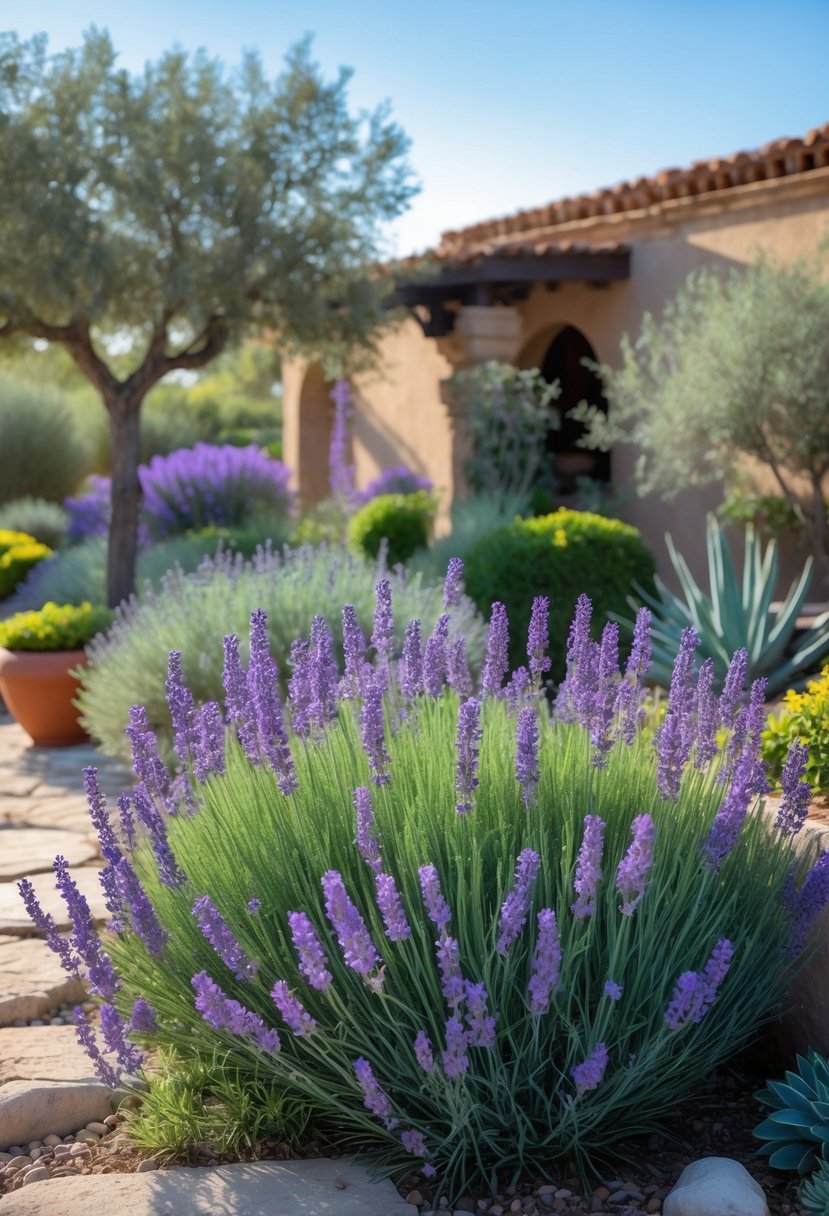
Lavender is a key plant in Mediterranean garden design. It thrives in dry, sunny conditions and requires little water, making it ideal for drought-prone areas.
This shrub offers both fragrance and color throughout the growing season. Its scent adds a calming, pleasant atmosphere to outdoor spaces.
Lavender also handles well-drained soil and heat, which fits the Mediterranean climate. It can be used as hedges, borders, or in rock gardens.
Because of its low maintenance and strong scent, many gardeners choose lavender to create lasting charm while saving water.
Succulents for low-maintenance ground cover
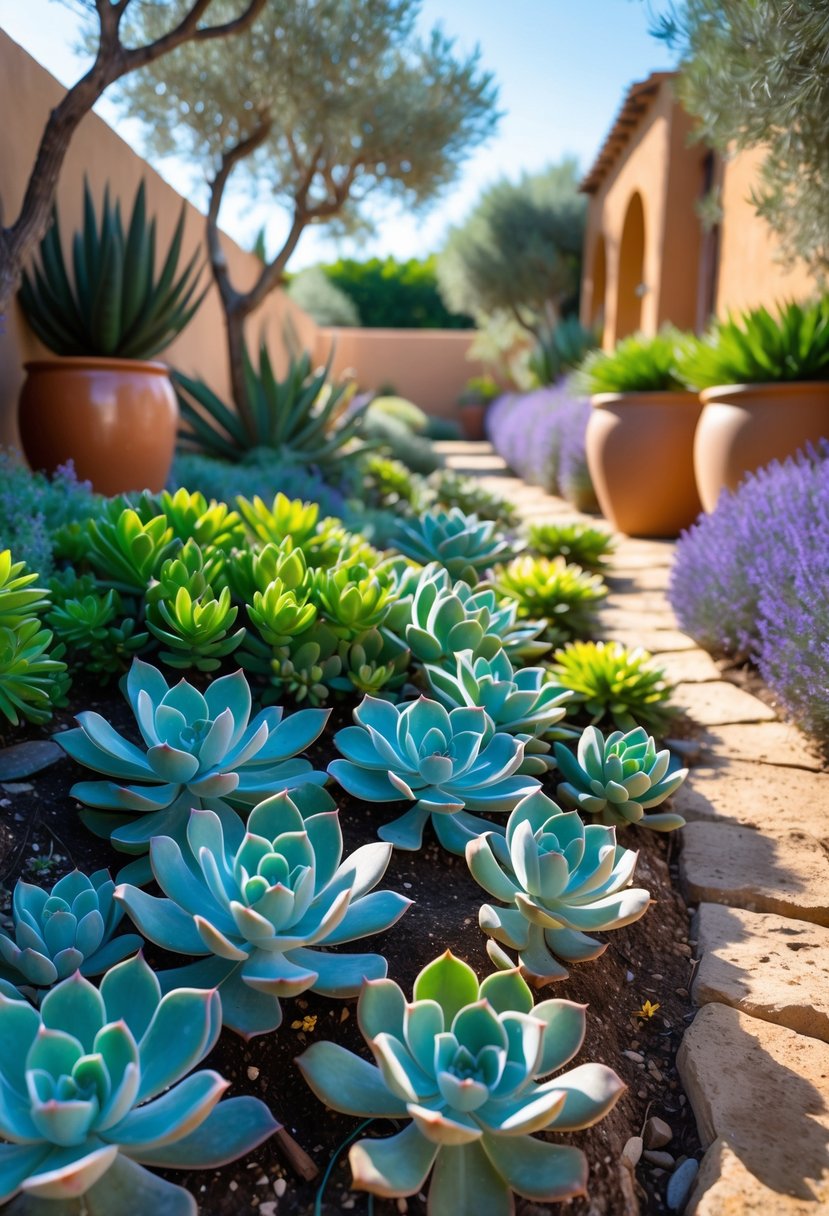
Succulents are ideal for Mediterranean gardens because they need little water and are easy to care for. They work well as ground cover, spreading quickly to fill bare spots.
Plants like sedum, ice plant, and creeping jade provide color and texture. Succulents thrive in well-drained soil and full sun.
They help reduce garden upkeep by limiting weeds and conserving moisture. Using succulents as ground cover creates a clean, attractive look with minimal effort.
Natural stone walls or fences for architectural interest
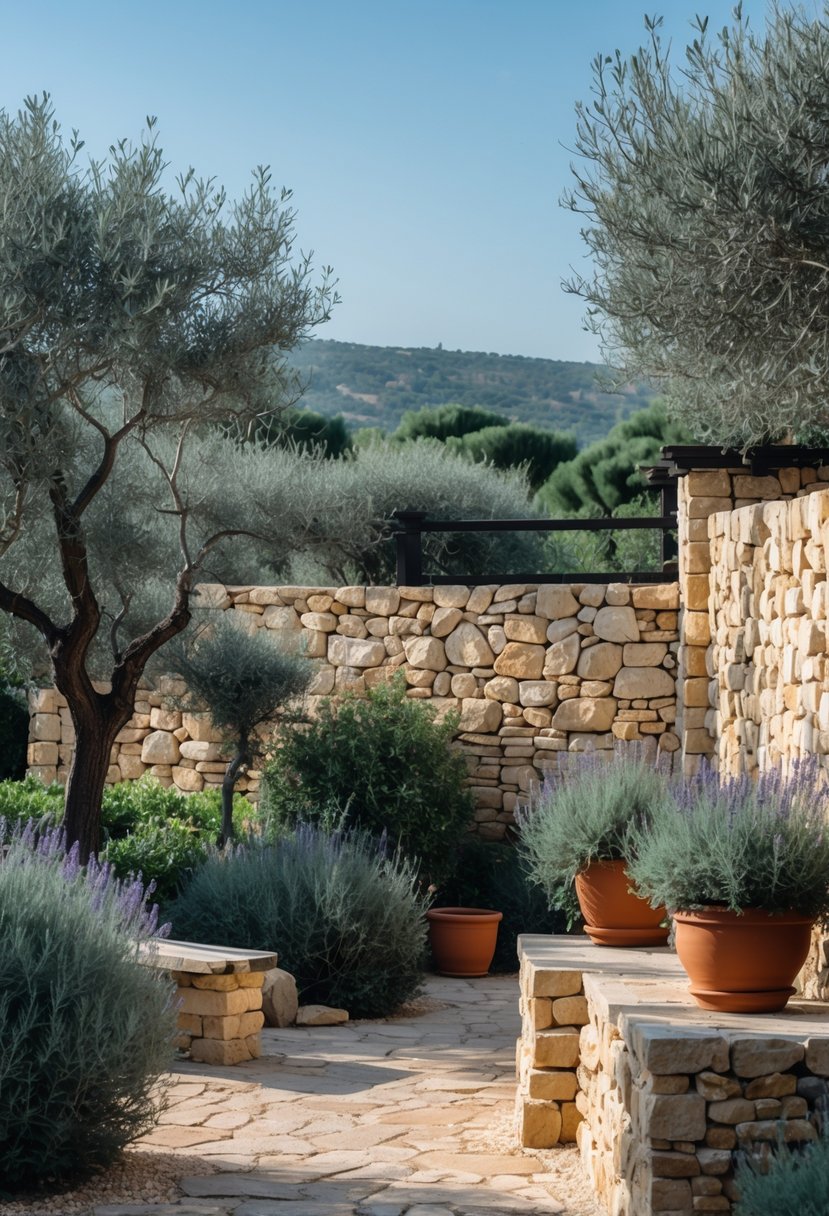
Natural stone walls add a strong visual element to Mediterranean gardens. They create a rustic, timeless look that fits well with the style’s warm, earthy tones.
Stone fences can be used as boundaries or to separate garden areas. Their texture and color bring depth and character to outdoor spaces.
Using natural stone also adds durability. These walls often require little maintenance and can last for many years while enhancing the garden’s overall design.
Bocce court for a classic Mediterranean feature
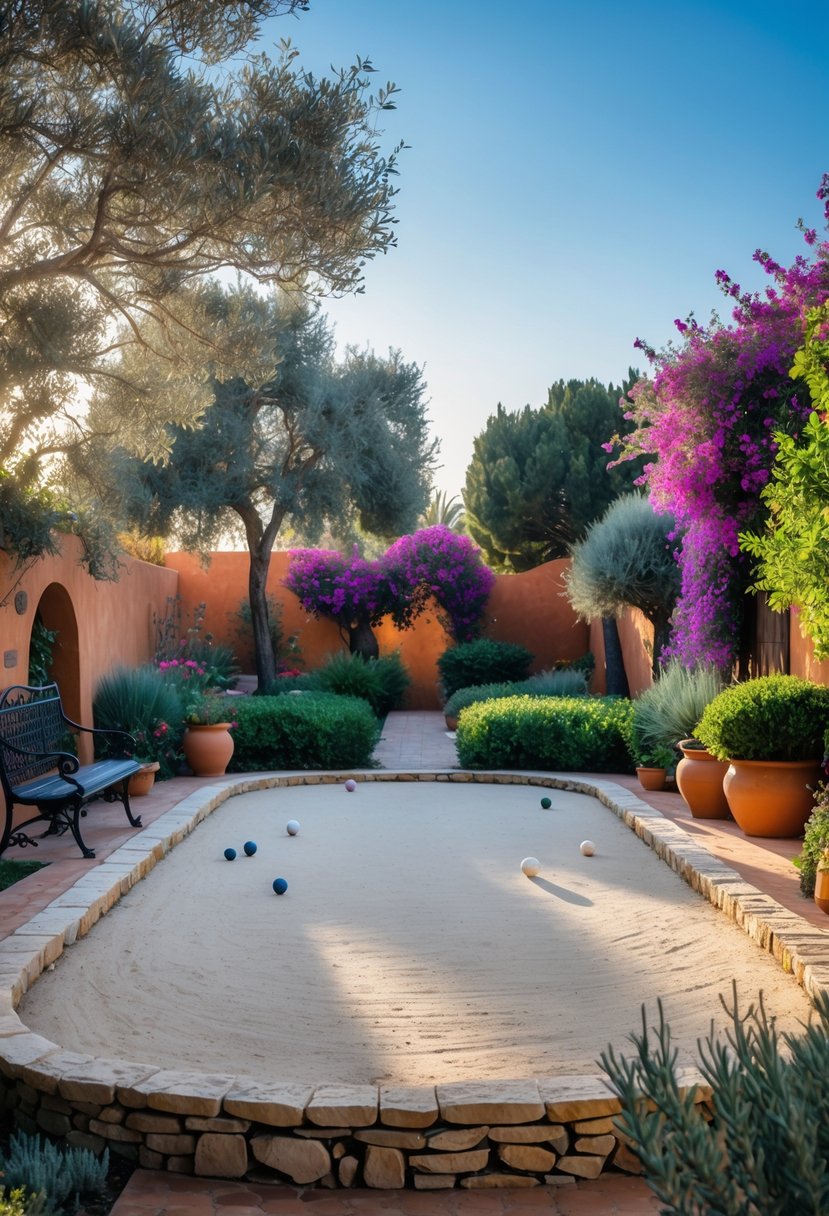
A bocce court adds a timeless and social element to a Mediterranean garden. It fits well with natural materials like gravel and stone, blending with the rustic charm of the landscape.
The court is usually surrounded by drought-tolerant plants such as lavender or olive trees, creating a peaceful setting.
It offers both a functional space for play and a beautiful garden centerpiece. Bocce courts invite gatherings and leisure, reflecting the relaxed lifestyle of Mediterranean culture.
Rosemary shrubs for aroma and culinary use
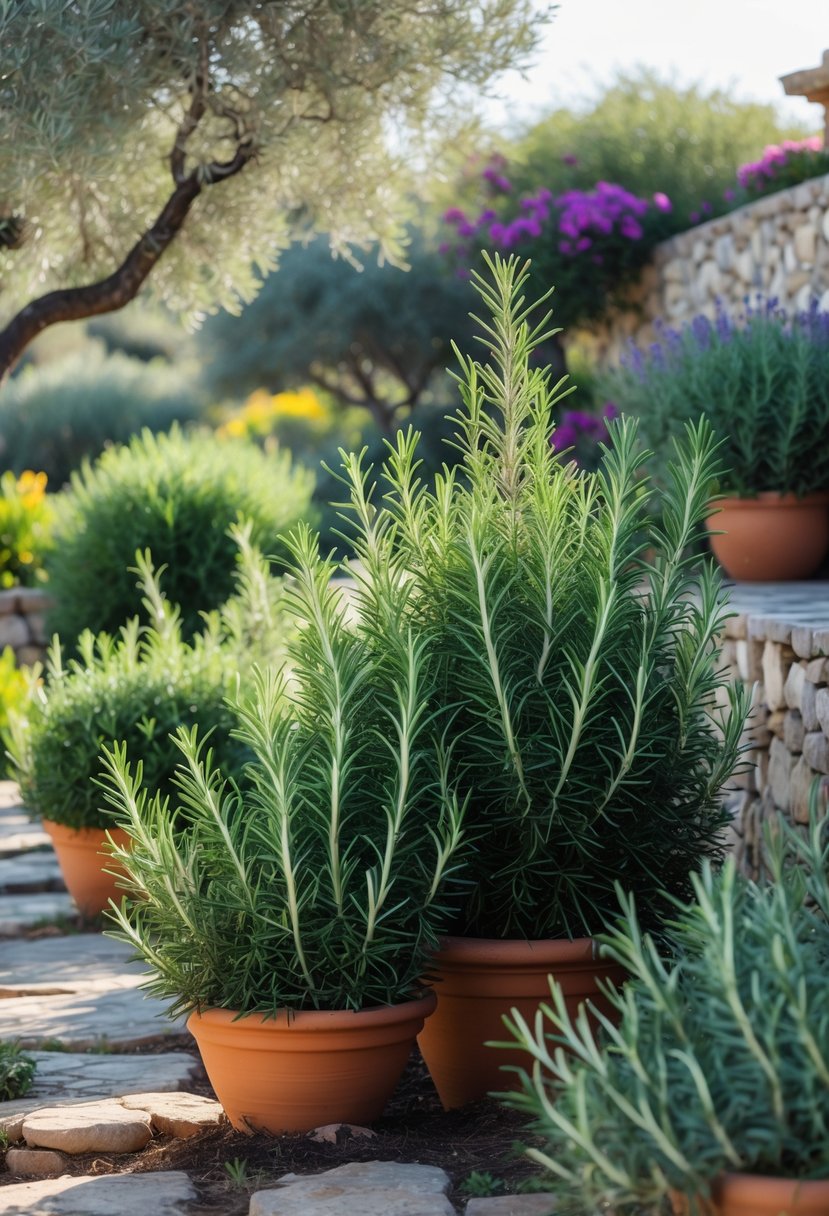
Rosemary is a popular shrub in Mediterranean gardens. It offers a strong, pleasant aroma that adds fragrance to outdoor spaces.
The plant is easy to grow and needs little care once established. It tolerates heat and drought well, making it suitable for dry climates.
Rosemary leaves are also used in cooking. Chefs value its flavor for seasoning meats, vegetables, and sauces.
Its evergreen nature provides year-round green structure, and planting it near paths releases its scent when brushed against.
Water features like fountains for cooling effect
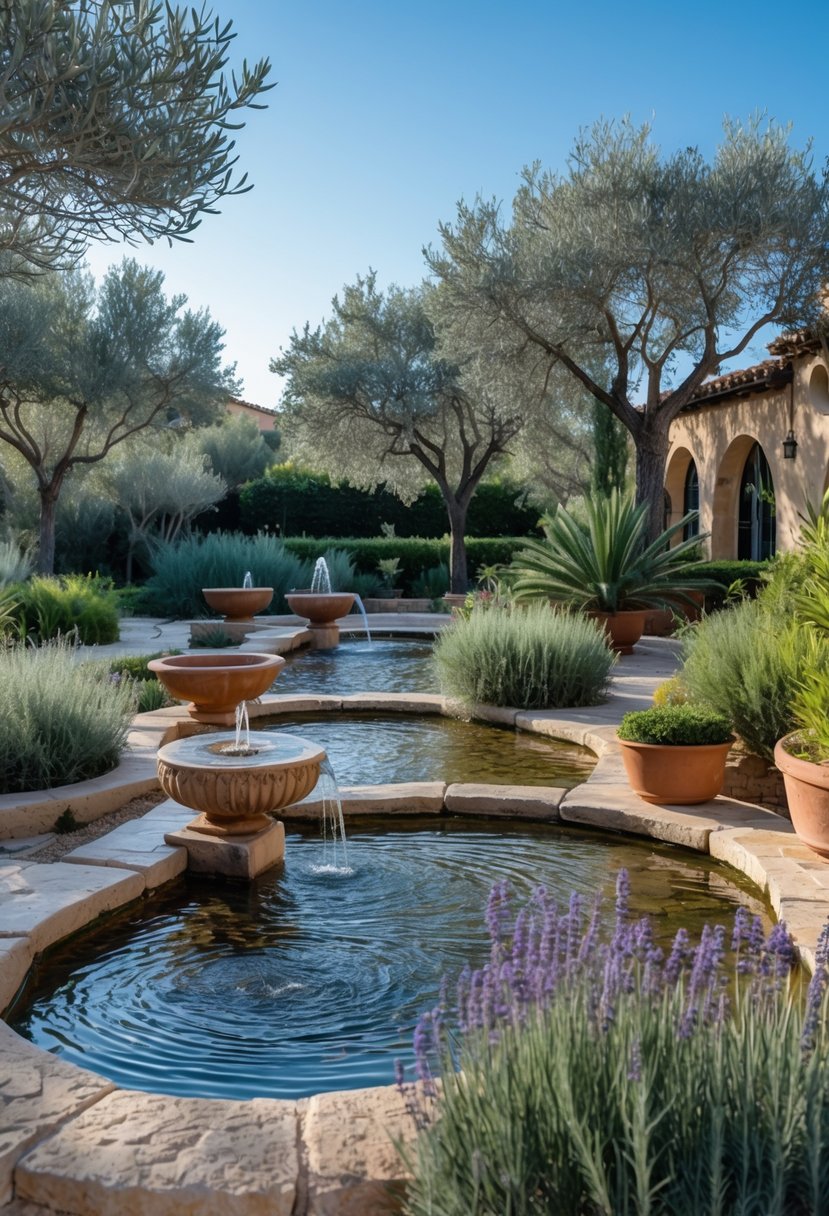
Water features are a key part of Mediterranean garden design. Fountains and small basins add a cooling effect, making outdoor spaces feel more comfortable on hot days.
The sound of flowing water also brings a calming atmosphere. It helps create a peaceful retreat in the garden.
Simple stone fountains or classic designs fit well with Mediterranean plants like ferns and moss. These features provide both visual interest and sensory refreshment.
They work well in patios or quiet corners where people gather. Water features support the laid-back, relaxing style typical of Mediterranean gardens.
Sea Holly for unique, architectural flowers
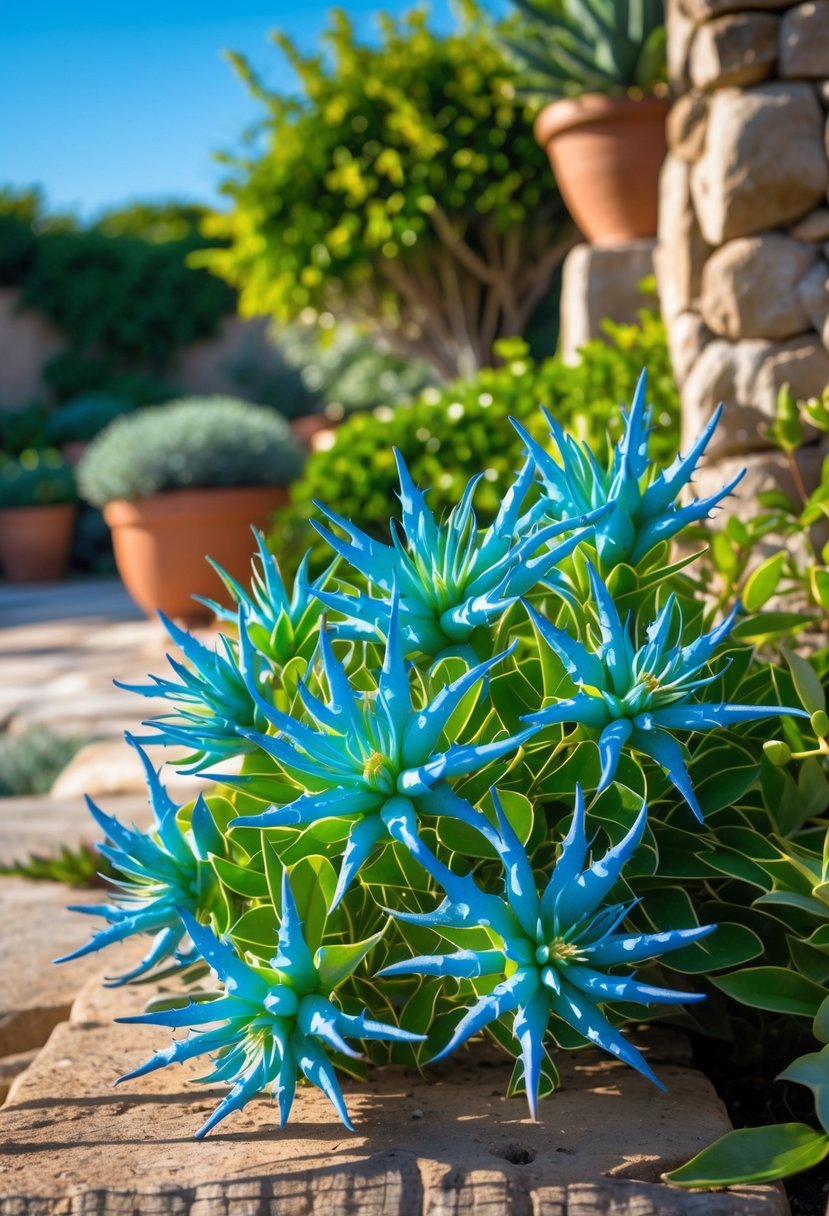
Sea Holly stands out with its spiky, thistle-like flowers in metallic blue and silver tones. It adds a strong architectural shape to any garden.
This plant thrives in dry, sunny spots and poor soils, making it ideal for Mediterranean gardens. Its silvery foliage adds a cool contrast to warmer colors.
Gardeners value Sea Holly for its low maintenance and bold appearance. It works well in mixed containers or as a striking garden focal point.
Santolina (Cotton Lavender) with yellow blooms
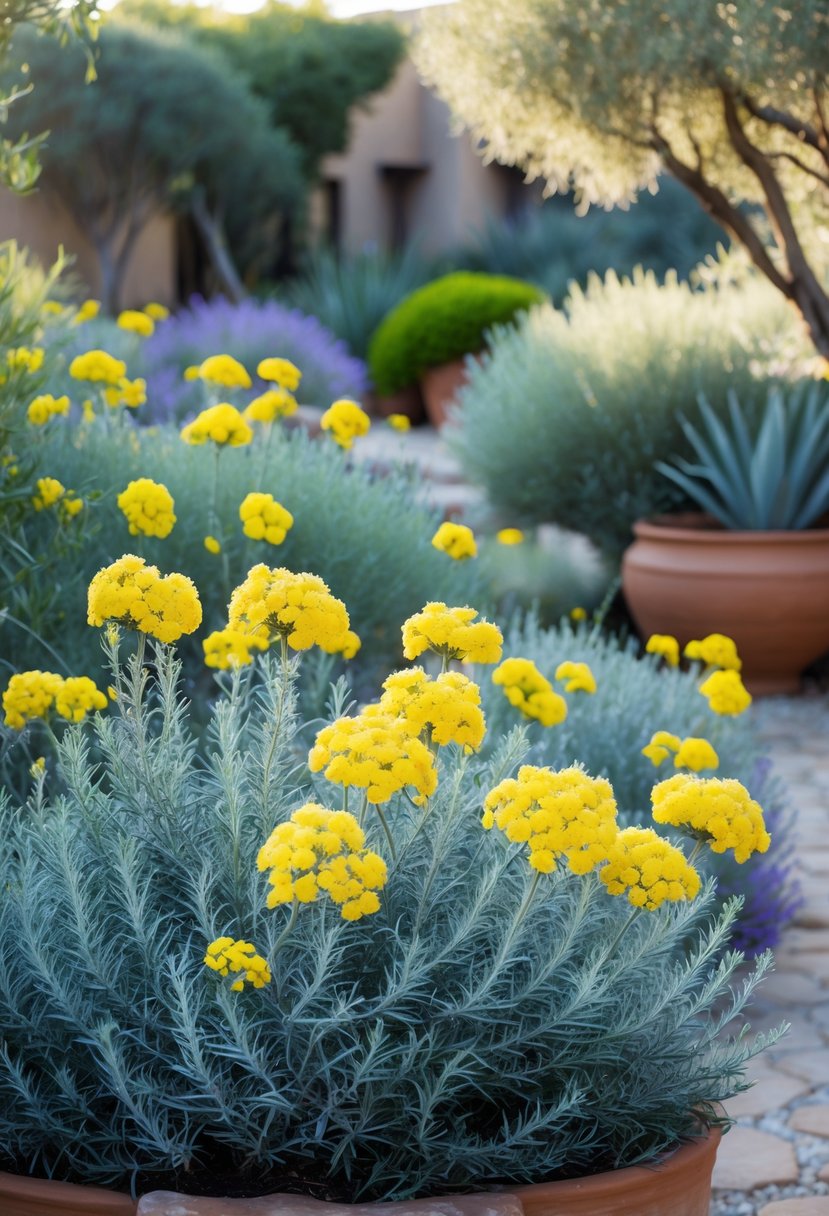
Santolina, also called Cotton Lavender, is a small evergreen shrub ideal for Mediterranean gardens. It has silver-gray foliage that stays dense year-round.
In summer, it produces bright yellow, button-shaped flowers that add color and contrast. The plant is drought-tolerant and grows well in poor, sunny soil.
It also resists deer and rabbits, making it low-maintenance. Santolina works well as groundcover, edging, or in herb gardens. Its aromatic leaves can be used in sachets.
Crape myrtles for seasonal color
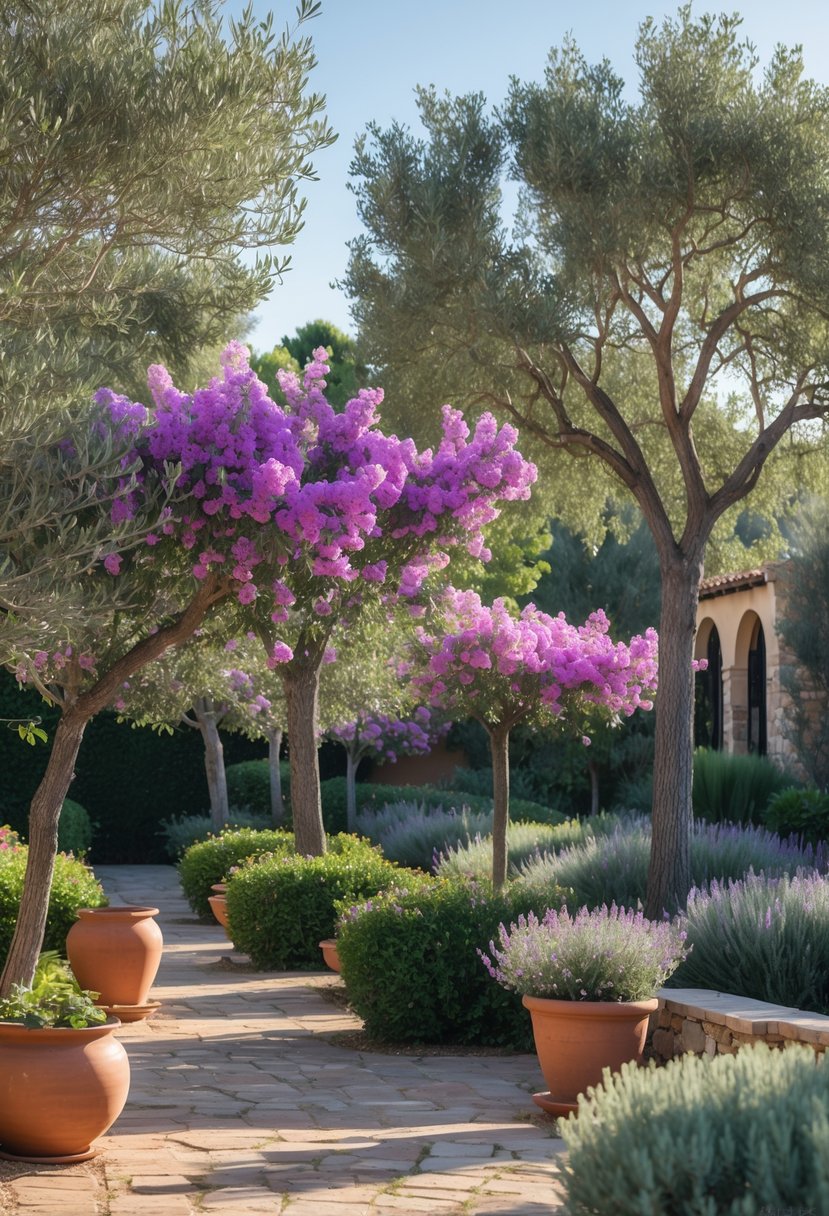
Crape myrtles bring color to a Mediterranean garden throughout the seasons. They bloom brightly in summer with long-lasting flowers.
Their bark adds interest during winter when leaves fall. Some varieties stay small, fitting well in borders or near walkways.
These trees are low-maintenance and can handle dry conditions common in Mediterranean climates. They work well as focal points or to add height and texture.
Use of drought-tolerant grasses
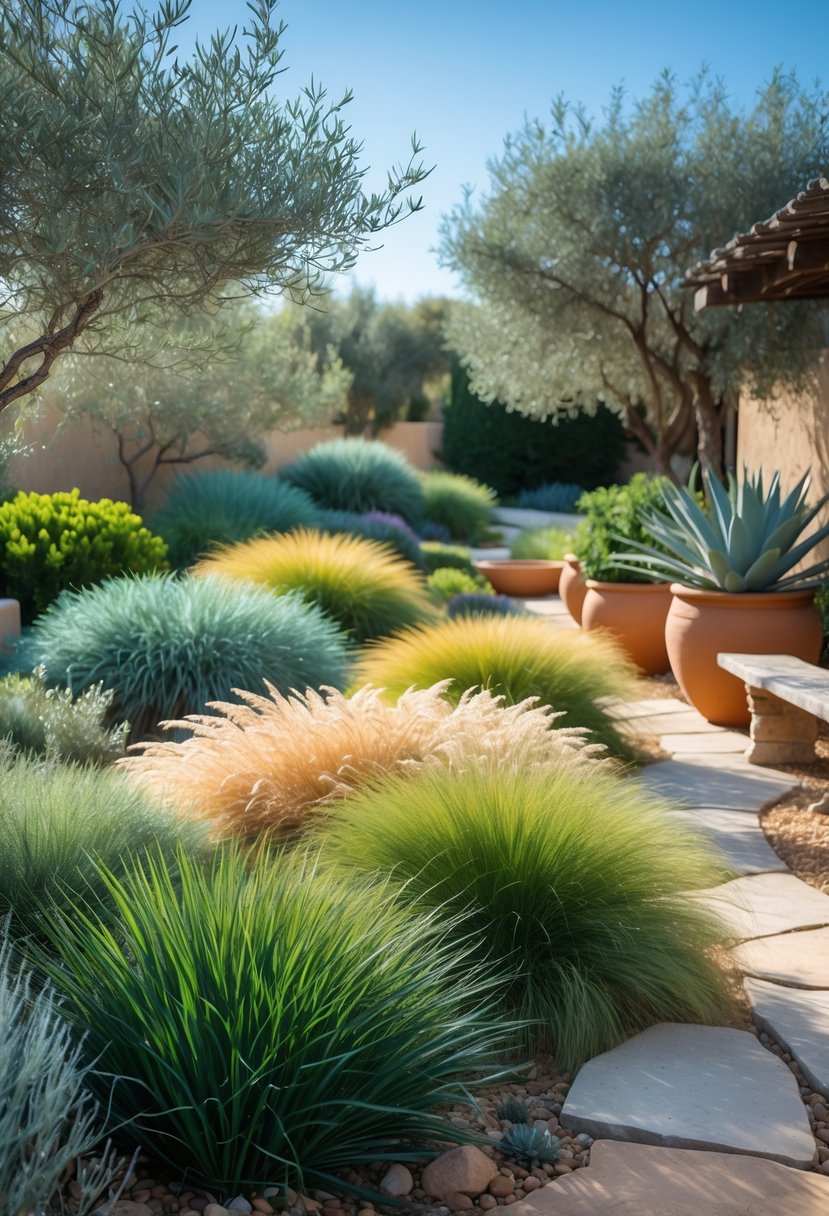
Drought-tolerant grasses are a smart choice for Mediterranean garden design. They need little water and can survive hot, dry conditions well.
These grasses add texture and color without requiring much care. They create a natural, flowing look that fits the relaxed style of Mediterranean landscapes.
Using drought-resistant grasses helps reduce water use. This makes the garden more eco-friendly and easier to maintain in dry climates.
Mix of perennials and shrubs for year-round interest
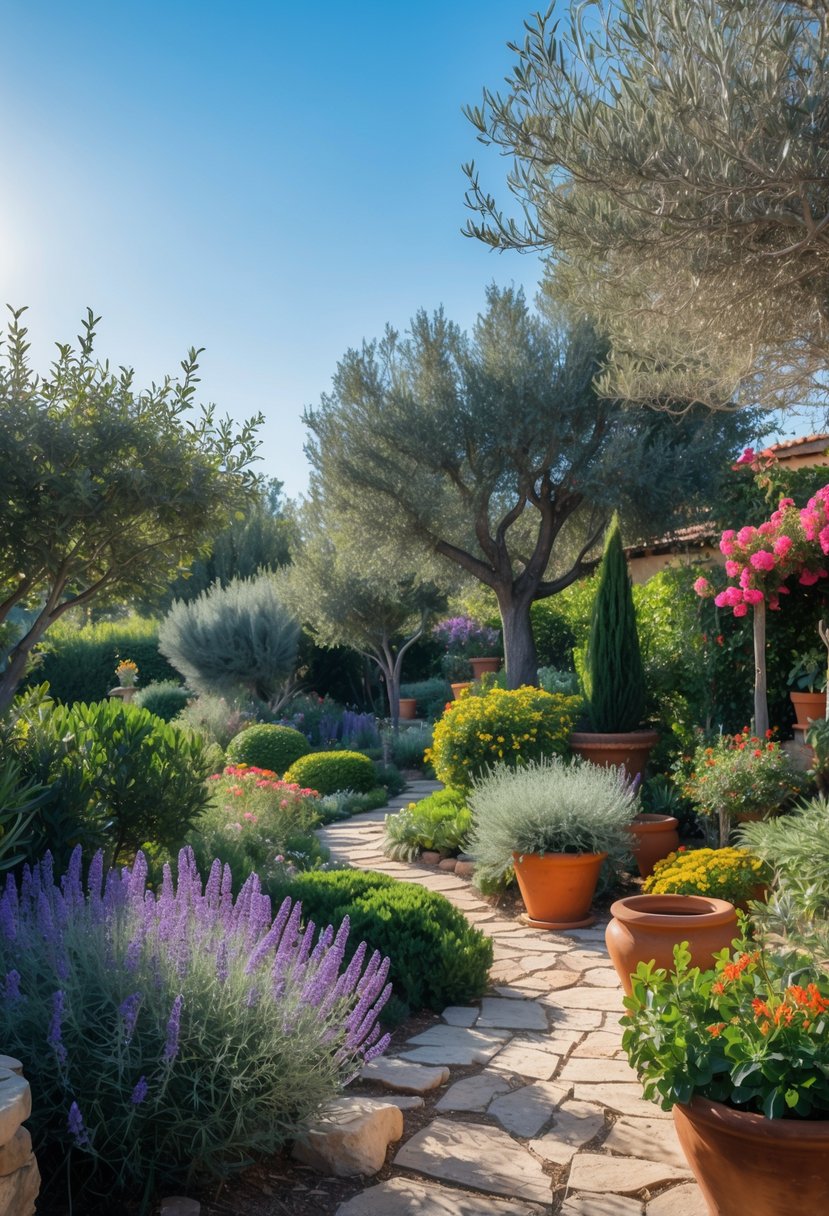
A Mediterranean garden benefits from combining perennials and shrubs to keep it lively all year. Shrubs like lavender and rosemary provide structure and scent, even in winter.
Perennials add color and texture during the growing seasons. Plants such as salvia and oregano bloom at different times, filling gaps in the garden.
Pairing these plants creates balance. Shrubs offer height and form, while perennials bring seasonal bursts of color. This mix also supports low maintenance, fitting the Mediterranean style’s practical nature.
Final Thoughts
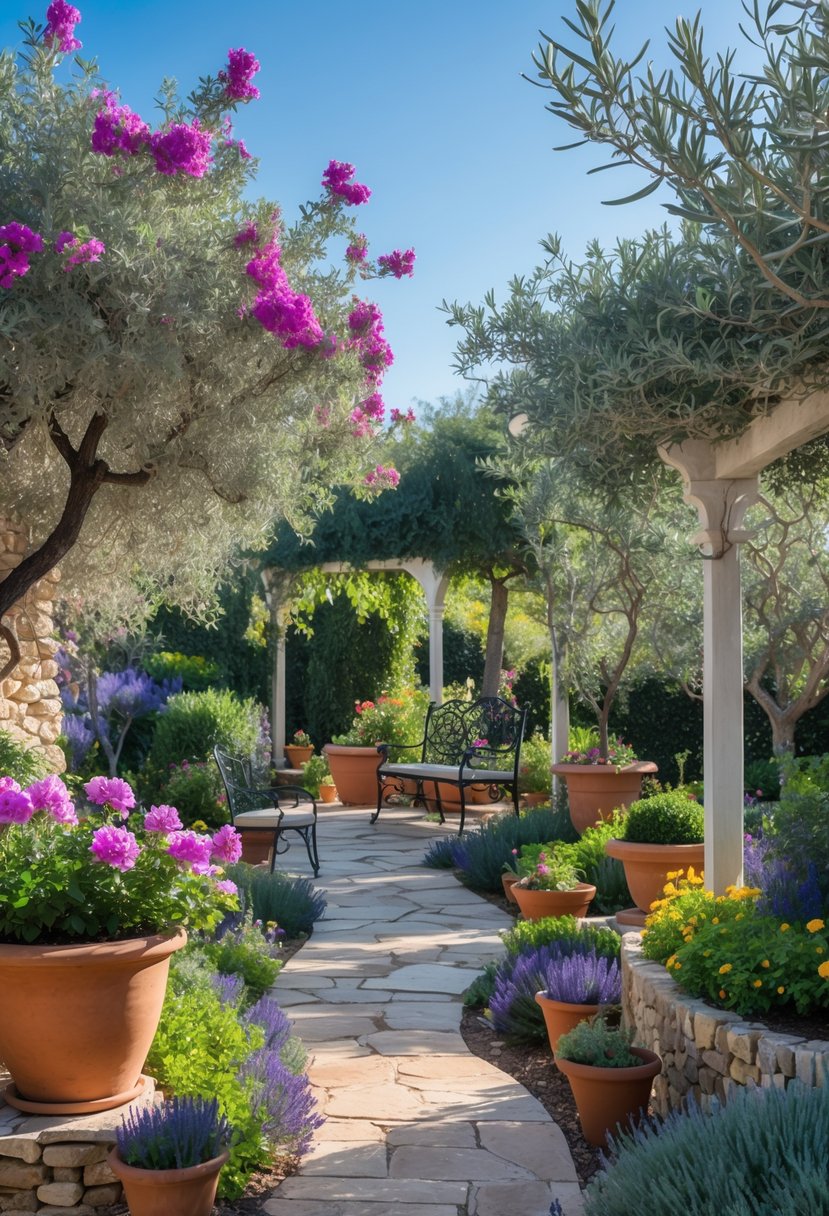
A Mediterranean garden blends natural beauty with practical design. It focuses on drought-resistant plants, earthy colors, and simple structures that create a peaceful outdoor space.
Key features include aromatic herbs, natural stone pathways, and cooling water elements. These not only add charm but also help keep the garden low-maintenance.
Using gravel or small pebbles instead of traditional grass saves water and complements the overall look. Shady seating areas and pergolas encourage relaxation and outdoor living.
When planning, consider the climate and space. Mediterranean gardens suit hot, dry regions but can adapt to cooler areas with thoughtful plant choices.
Incorporating a mix of textures and colors—such as olive trees, lavender, and terracotta pots—adds depth while maintaining harmony.
This style encourages a balance of style and function. It helps gardeners create an inviting, sustainable garden that is easy to care for and enjoy year-round.