
14 Wildflower Garden Ideas for Stunning and Low-Maintenance Outdoor Spaces
Wildflower gardens offer a simple way to add natural beauty and color to outdoor spaces. They support local wildlife by attracting pollinators like bees and butterflies. These gardens can fit many types of yards, from small patches to larger areas.
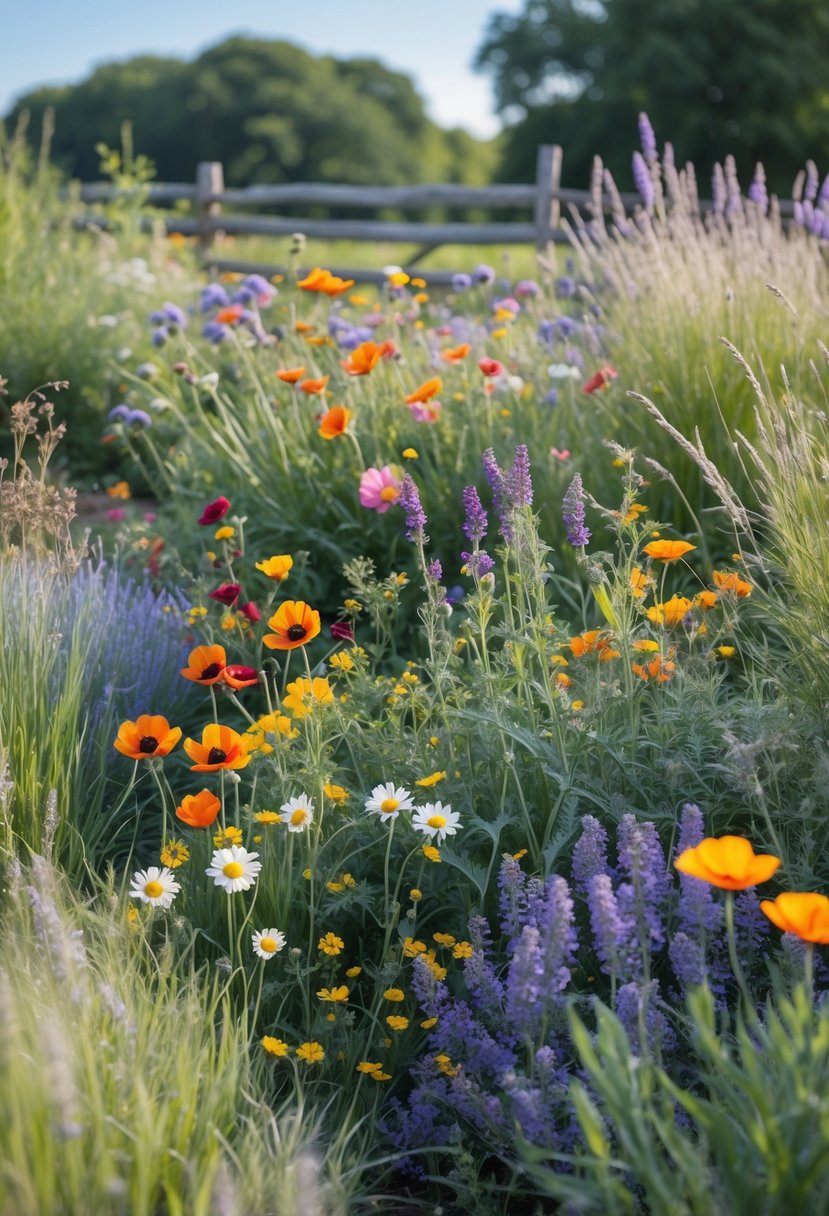
Wildflower gardens are low-maintenance and can create vibrant, eco-friendly environments with a relaxed approach to gardening. They provide an opportunity to enjoy nature while improving biodiversity and reducing traditional lawn care work.
Create a colorful wildflower meadow with native species

A wildflower meadow using native plants offers natural beauty and supports local wildlife. Selecting species that grow well in the local climate helps the meadow thrive with less effort.
To start, clear an area of grass and weeds before sowing seeds. Timing the planting according to the season is important for good germination.
Native wildflowers provide lasting color through different blooming times. They also attract pollinators like bees and butterflies, which benefit the whole garden. Once established, the meadow requires minimal maintenance while creating a vibrant, natural look.
Use wildflowers to attract pollinators like bees and butterflies

Wildflowers provide essential nectar and pollen that bees and butterflies need. These pollinators help plants reproduce by moving pollen from flower to flower.
Choosing native wildflowers is important. Native plants are better suited to the local climate and soil, making them easier to grow and more attractive to local pollinators.
A garden filled with wildflowers supports biodiversity. It creates a habitat where many insects can thrive, helping the ecosystem stay balanced and healthy.
Plant wildflowers in large pots with good drainage for balconies
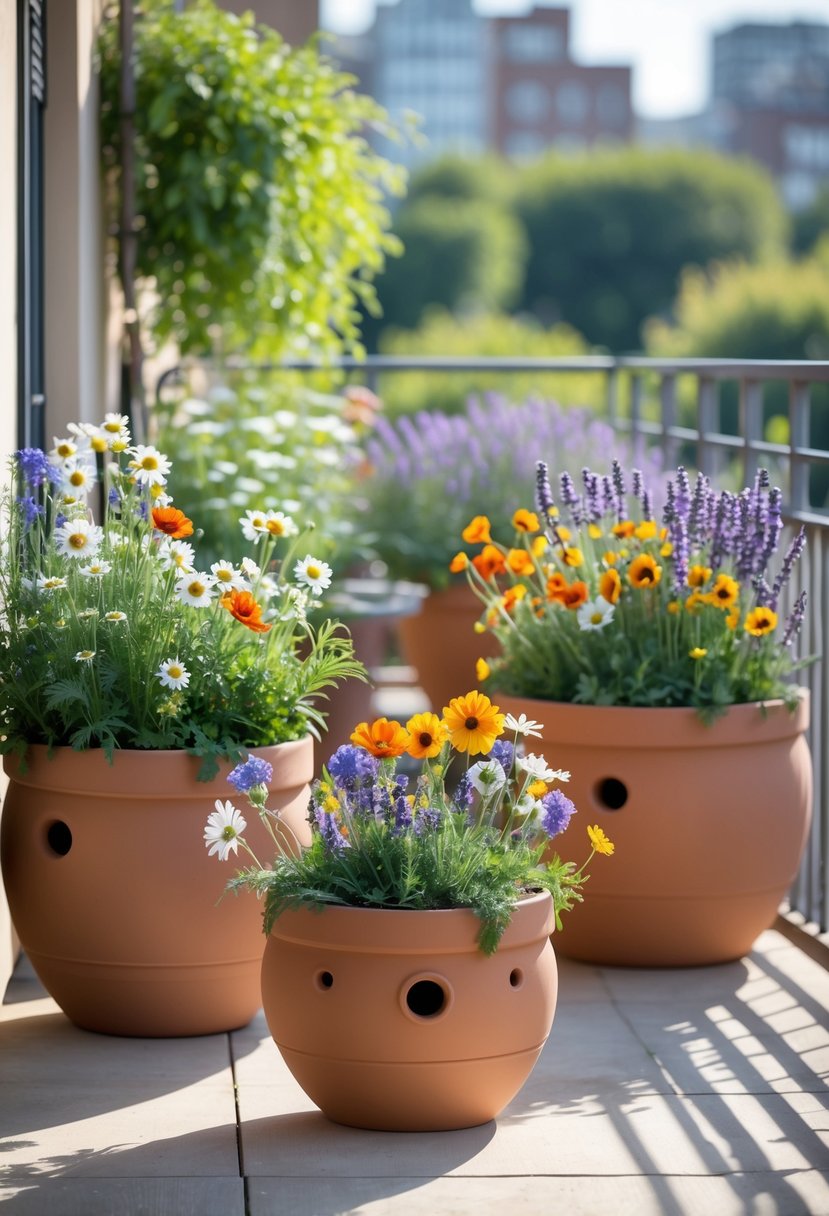
Using large pots helps wildflowers grow strong roots and stay healthy. Pots should be at least 12 inches deep to give enough space for the plants.
Good drainage is important to keep roots from sitting in water. Pots with drainage holes work best. If the pot does not have holes, adding some is necessary.
A mix of garden soil and compost provides nutrients for wildflowers. Regular watering is needed, especially during hot weather, but the soil should not stay soggy.
Incorporate wildflowers along garden paths for natural borders

Adding wildflowers along garden paths creates soft, natural borders. They help define walkways without using hard edges like bricks or stones.
Choosing a variety of flowers that bloom at different times keeps the border colorful all year. Low-growing plants like alyssum mix well with taller flowers such as larkspur.
Wildflower borders attract bees and butterflies, making the garden more lively. They also blend well with other plants, giving the yard a relaxed and natural look. Planting along paths encourages exploration and adds a gentle charm to outdoor spaces.
Mix wildflowers with ornamental grasses for texture contrast

Combining wildflowers with ornamental grasses adds visual interest through different shapes and textures. The soft, flowing blades of grass contrast well with the bright, structured blooms of wildflowers.
This mix creates a natural look that feels balanced and lively. Grasses like switchgrass or little bluestem provide height and movement. Wildflowers such as coneflowers or black-eyed susans add vibrant color.
Together, they make gardens more attractive to pollinators. They also require little care once established, making the garden low-maintenance. This blend works well in meadow-style or border gardens, offering year-round appeal.
Design a seasonal wildflower garden for year-round color

A seasonal wildflower garden uses plants that bloom at different times of the year. This means there will always be flowers to enjoy, no matter the season.
Choosing early bloomers like crocuses in spring, sunflowers in summer, and asters in fall helps keep the garden lively.
They should also select native plants suited to their climate. This supports local wildlife and makes the garden easier to maintain.
By planning for staggered blooms, the garden offers color and interest throughout the year. This approach creates a natural, changing landscape without much extra work.
Use drought-tolerant wildflowers to conserve water

Drought-tolerant wildflowers are ideal for gardens in dry areas or places with water restrictions. These plants need less water than typical garden flowers, helping save water without sacrificing beauty.
They often have deep roots that find moisture underground, allowing them to survive long dry periods. This makes them low maintenance and cost-effective over time.
Native drought-tolerant wildflowers support local wildlife by providing food and shelter. Using these plants creates a garden that is both water-wise and environmentally friendly.
Combine wildflowers with herbs for biodiversity and scent

Wildflowers paired with herbs create a garden that supports a range of pollinators like bees and butterflies. This mix encourages biodiversity by attracting helpful insects that keep pests in check naturally.
Herbs such as lavender, thyme, and rosemary add pleasant scents and practical uses for cooking or remedies. The combination also adds different textures and colors, making the garden visually interesting.
This approach helps plants grow better together by providing natural benefits. It is a simple way to create a garden that is both beautiful and useful throughout the seasons.
Plant wildflowers around fruit trees to boost pollination

Planting wildflowers near fruit trees attracts pollinators like bees and butterflies. These insects help increase fruit set by moving pollen from flower to flower.
Wildflowers also add variety to the garden, creating a habitat for beneficial insects. This can improve the overall health of the fruit trees without the need for chemicals.
Choosing native wildflowers is often best because they match local pollinators’ needs. A mix of colors and shapes encourages more types of pollinators to visit the orchard.
Create a wildflower patch in sunny, unused yard spaces

A wildflower patch works best in sunny spots with well-drained soil. It is important to clear the area of grass and weeds before planting.
Choosing the right seed mix is key. Annual seeds bloom for one season, while perennial seeds return year after year.
Even sowing helps flowers spread evenly. After planting, light watering supports seed growth. Regular maintenance keeps the patch healthy and vibrant.
This simple method turns unused spaces into natural, low-maintenance gardens that attract pollinators and add color.
Use wildflowers as ground cover to reduce lawn maintenance

Using wildflowers as ground cover can help cut down on lawn care. They need less watering and mowing than traditional grass.
Wildflower lawns grow thick and become self-sustaining over time. This makes them more resistant to weeds and soil erosion.
These plants support pollinators and beneficial insects, which improve the local ecosystem. Plus, they add natural color and texture to outdoor spaces without much effort.
Include a mix of tall and low-growing wildflowers

A mix of tall and low-growing wildflowers adds variety and depth to a garden. Tall flowers, like larkspur or liatris, provide height and visual interest.
Low-growing plants such as alyssum serve as ground cover and soften the garden edges. This combination creates layers that look natural and balanced.
Using different heights also helps attract a wider range of pollinators. It allows sunlight to reach all plants and improves garden health.
This approach works well along borders, pathways, or prairie-style patches. It makes the garden feel more dynamic and connected to nature.
Choose wildflowers that bloom at different times for continuous color

Selecting wildflowers that bloom in different seasons helps keep the garden colorful all year. Early bloomers bring life in spring, while summer flowers add brightness during warmer months. Late-season blooms extend the garden’s appeal into fall.
Using a mix of native wildflowers suited to the local climate increases the chances of success. This variety attracts pollinators like bees and butterflies over many months. It also supports local wildlife by providing food throughout the seasons.
Design a naturalistic wildflower garden with irregular shapes
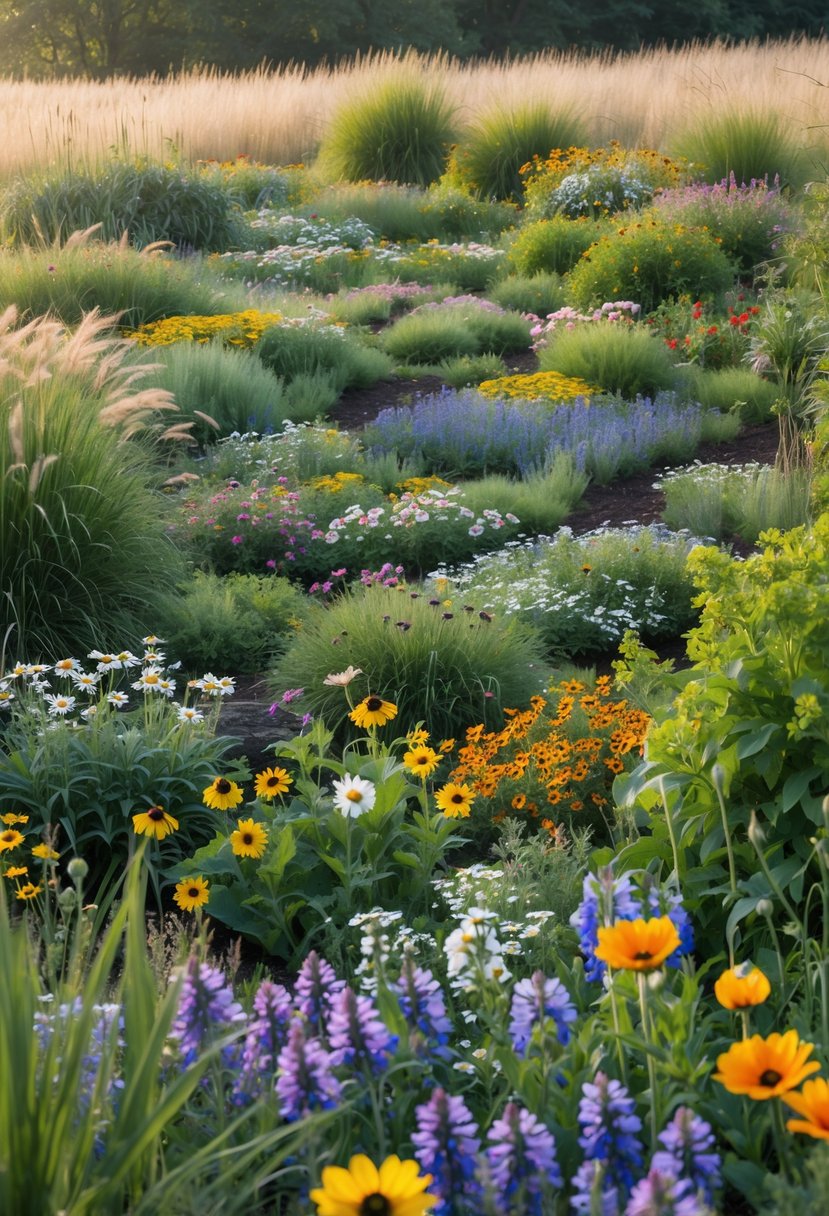
A naturalistic wildflower garden uses irregular shapes to mimic how plants grow in the wild. This approach avoids straight lines and sharp corners. Instead, soft curves and uneven edges create a relaxed, organic look.
This design helps plants blend with their surroundings. It also offers varied spaces for pollinators and wildlife. Grouping flowers in clusters can improve growth and visual interest.
Using different heights and textures adds depth. Paths or open spots can wind through the garden, inviting exploration. This style requires less formal maintenance and supports local ecosystems naturally.
Maintaining a Healthy Wildflower Garden

A healthy wildflower garden thrives with careful watering, mulching, and natural weed control. These actions support strong plant growth and reduce competition from unwanted plants.
Watering and Mulching Strategies
Wildflowers need consistent moisture, especially during the first few weeks after planting. Water deeply and less often to encourage deep root growth. Avoid frequent shallow watering, which can lead to weak roots.
Mulching helps keep the soil moist and cool, reducing water loss. Use organic mulch like straw or shredded leaves, spreading a 2-3 inch layer around the plants. This also helps slow weed growth and improves soil quality as the mulch breaks down.
They should water early in the morning or late in the evening to reduce evaporation. Adjust watering frequency based on rainfall and soil moisture.
Managing Weeds Naturally
Weeds compete with wildflowers for water, light, and nutrients. Hand pulling is the safest method to remove weeds without harming wildflowers.
Mulching also plays a key role in weed prevention by blocking sunlight and stopping weed seeds from sprouting.
Planting wildflowers thickly creates a natural cover that crowds out weeds. Regularly check the garden for weeds and remove them promptly to stop them from seeding.
Using natural herbicides or spot-treating with vinegar can control persistent weeds but should be used carefully to avoid damage to wildflowers.
Final Thoughts

Wildflower gardens offer a simple way to bring color and life to outdoor spaces. They work well for those who want a low-maintenance garden that also supports local wildlife.
Choosing the right location is important. Wildflowers need plenty of sunlight and enough space to grow naturally. This makes them ideal for yards with open, sunny spots.
Planting a variety of wildflower species can attract different pollinators like bees and butterflies. It also helps create a balanced and healthy garden ecosystem.
Maintenance is generally easy. Wildflower gardens usually require less watering and weeding than traditional gardens. This makes them a good option for gardeners who prefer a relaxed approach.
Wildflower gardens can suit many different styles. From neat borders to sprawling meadows, the designs can fit small yards or large areas.
Creating a wildflower garden encourages sustainability. It supports biodiversity and reduces the need for chemical fertilizers and pesticides.
A well-planned wildflower garden can grow into a beautiful and natural-looking space. It offers lasting benefits for both people and the environment.