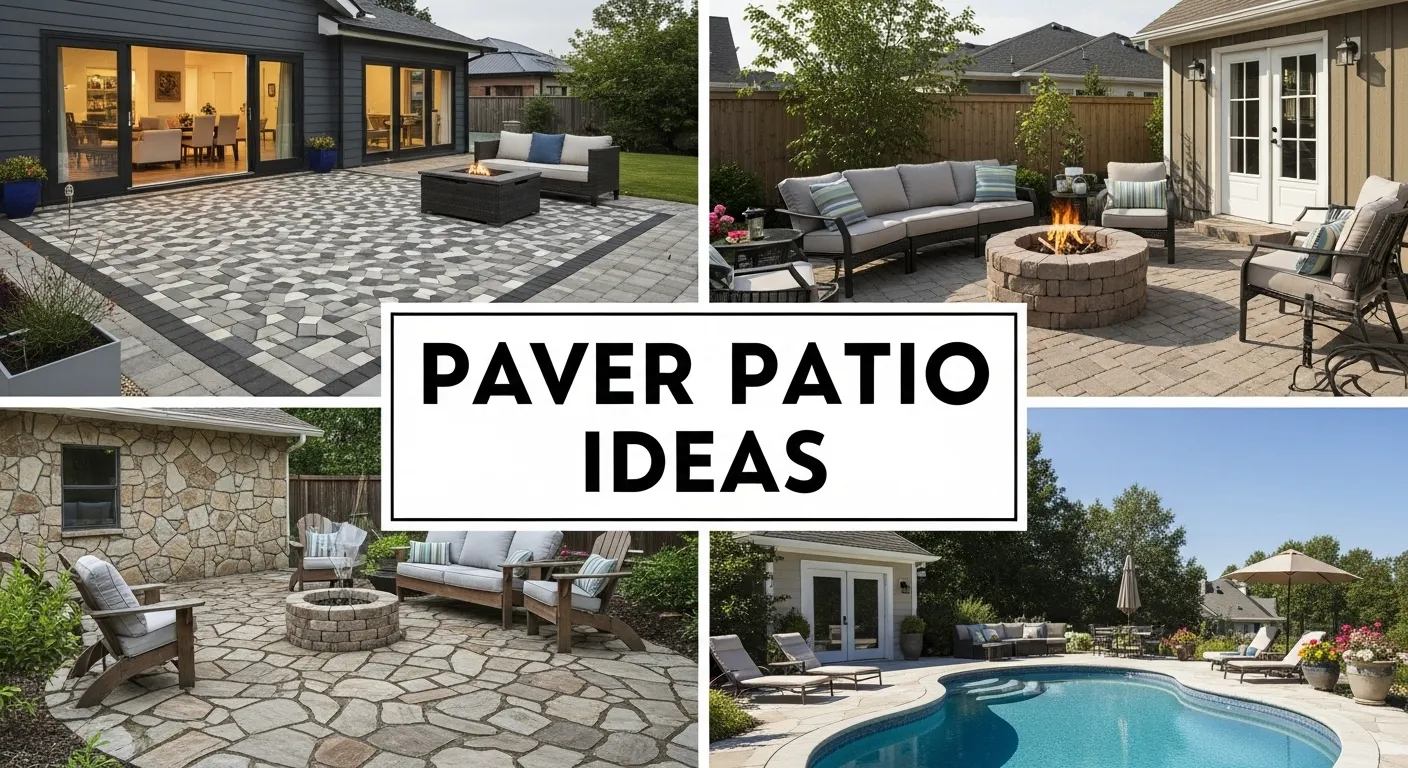
15 Paver Patio Ideas for Stylish and Durable Outdoor Spaces
A paver patio can enhance the look and function of any outdoor space. It offers a practical way to create a seating area, walkway, or simple gathering spot that fits various styles and budgets.
This article presents 15 paver patio ideas to help people design a backyard area that suits their needs and taste. These ideas cover different materials, shapes, and layouts that add both beauty and durability to outdoor living spaces.
Classic Brick Herringbone Pattern
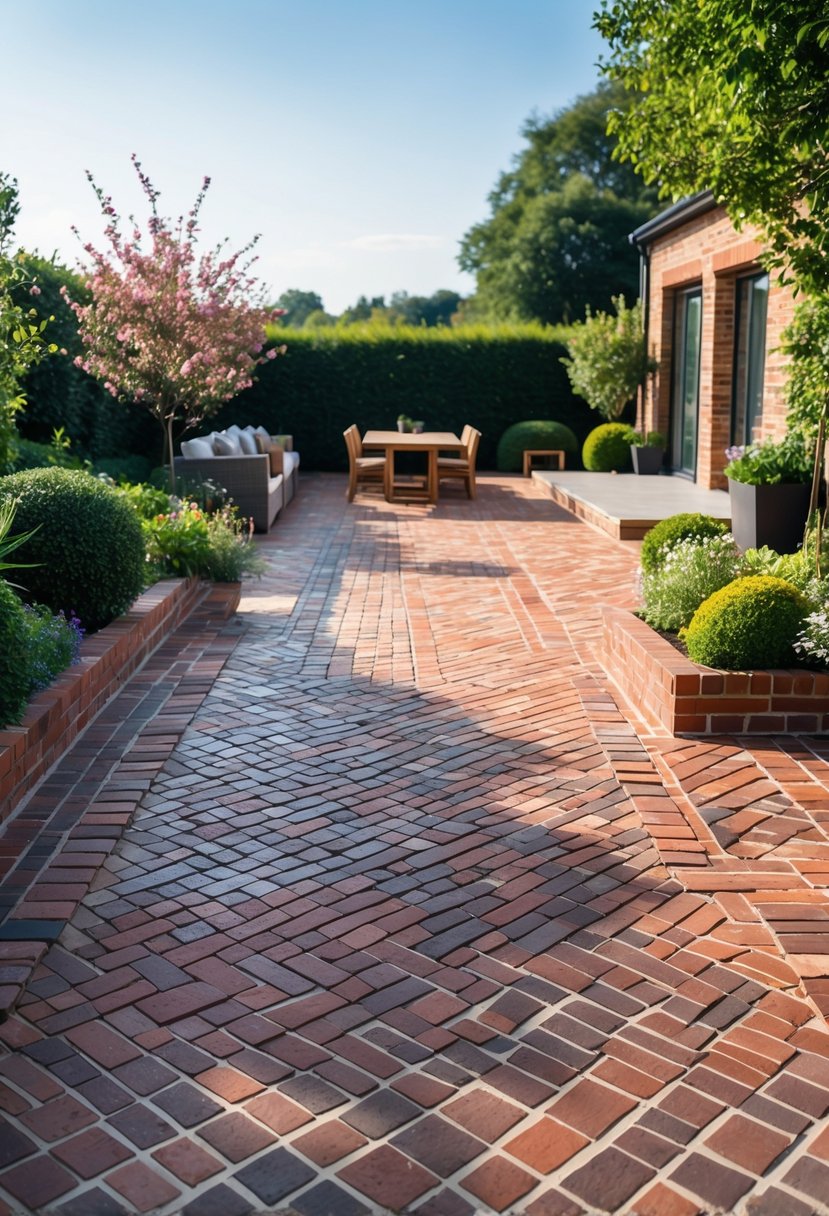
The classic brick herringbone pattern is a popular choice for paver patios. It creates a strong, interlocking design that improves durability. This pattern also adds a timeless look that fits well with many home styles.
The bricks are laid at a 45 or 90-degree angle, forming a zigzag pattern. This arrangement helps distribute weight evenly, making it great for high-traffic areas. Adding a border around the herringbone pattern can enhance its visual appeal and help define the space.
Natural Travertine Stone Layout
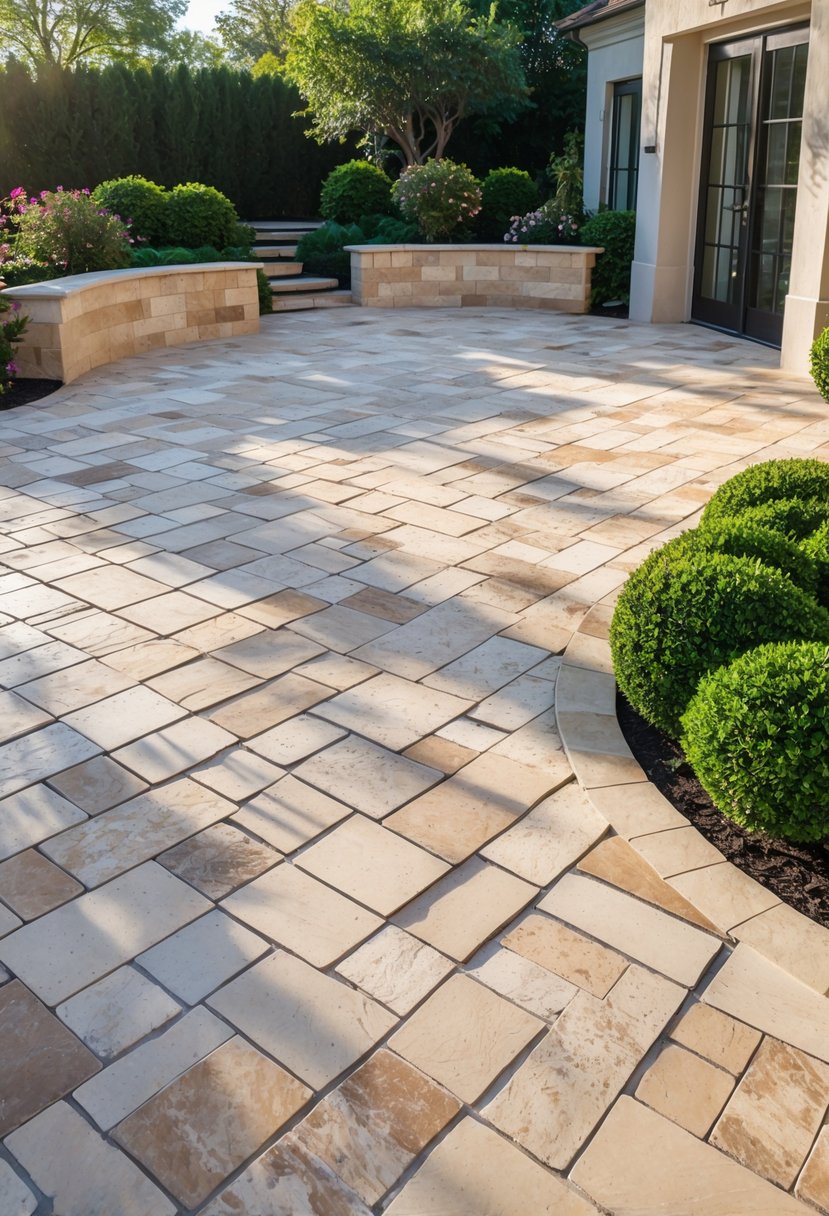
Natural travertine stone offers a warm, earthy look that fits well in many outdoor spaces. Its porous texture adds a unique character compared to smoother stones.
A common layout uses large-format tiles in a simple pattern like a French or grid style. This gives the patio a clean and elegant appearance.
Edges can be highlighted with lighter travertine to create subtle contrast. The stone’s natural color range works well with plants and other natural elements.
Travertine also stays cool in the sun, making it a practical choice for patios in warmer climates.
Modern Geometric Paver Design
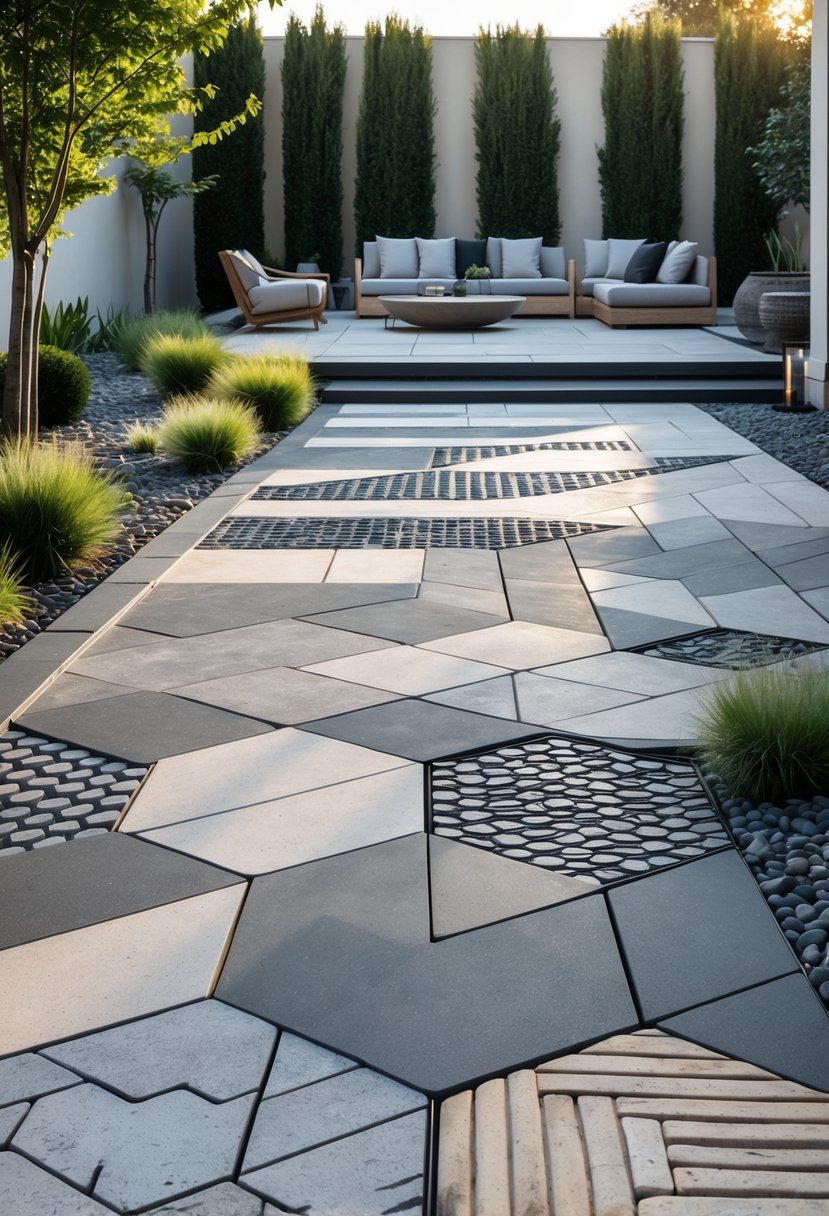
Modern geometric paver designs use shapes like hexagons, triangles, and rectangles to create clean, sharp patterns. These shapes can be mixed to form unique layouts that look both stylish and organized.
This design style works well in small and large patios alike. It adds a modern touch without being too flashy.
Color choices are important. Neutral tones or contrasting colors can highlight the geometric patterns and add depth to the space.
The look is sleek and helps patios stand out while remaining functional and easy to maintain.
Curved Patio with Cobblestone Edging

A curved patio creates a softer, more natural look in any backyard. Adding cobblestone edging helps define the space while giving it a sturdy border.
Cobblestones can be arranged in a smooth, curved line to follow the shape of the patio. This adds texture and contrast against smoother paver surfaces.
This edging also helps keep the patio materials in place. It prevents shifting and erosion along the curved edges. Cobblestone edging works well with various paver styles, making it a versatile choice for outdoor designs.
Eco-Friendly Permeable Pavers
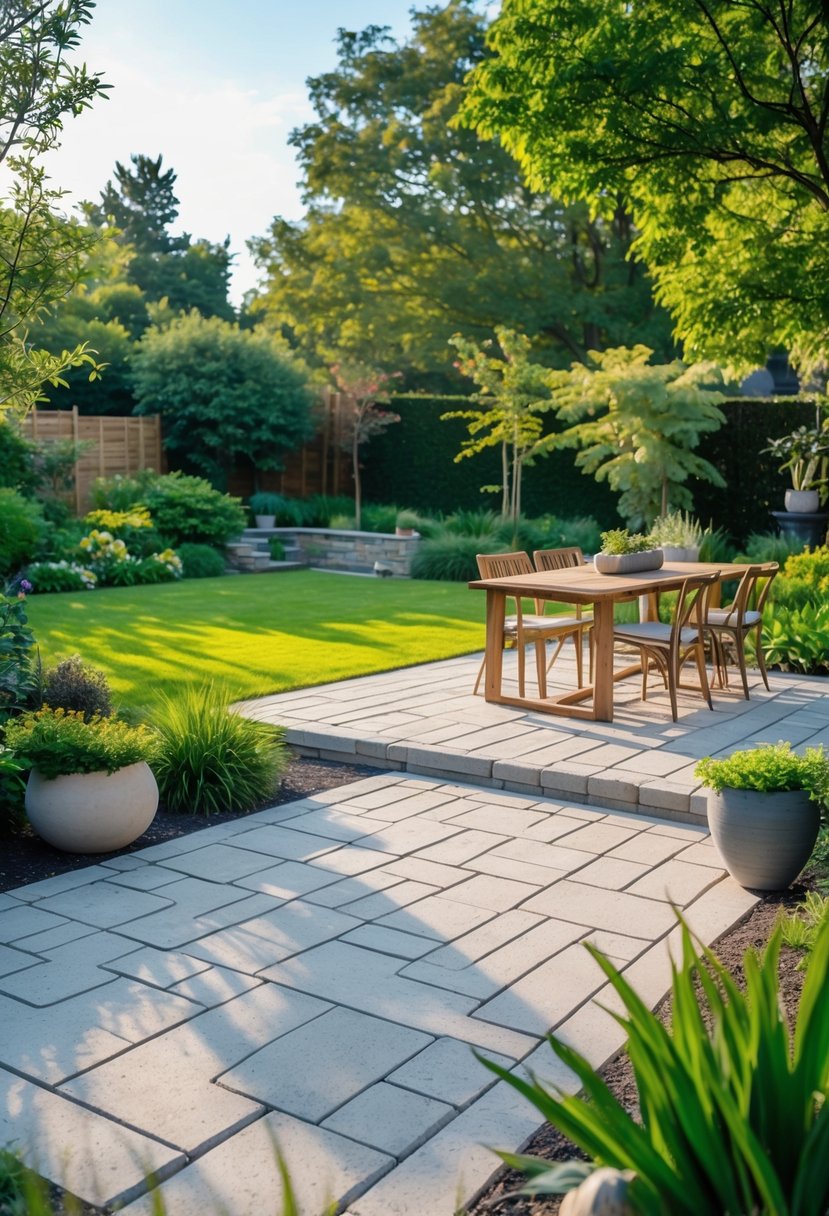
Permeable pavers allow water to pass through their surface. This helps reduce stormwater runoff and prevents flooding. They also help filter pollutants from the water before it reaches the soil.
These pavers improve drainage by letting water soak into the ground. They keep patios and walkways dry and reduce erosion. Many options use recycled or natural materials, making them an eco-friendly choice.
Using permeable pavers supports groundwater recharge. They are a practical way to manage water while keeping outdoor spaces functional and safe.
Mixed Material Patio with Wood and Stone
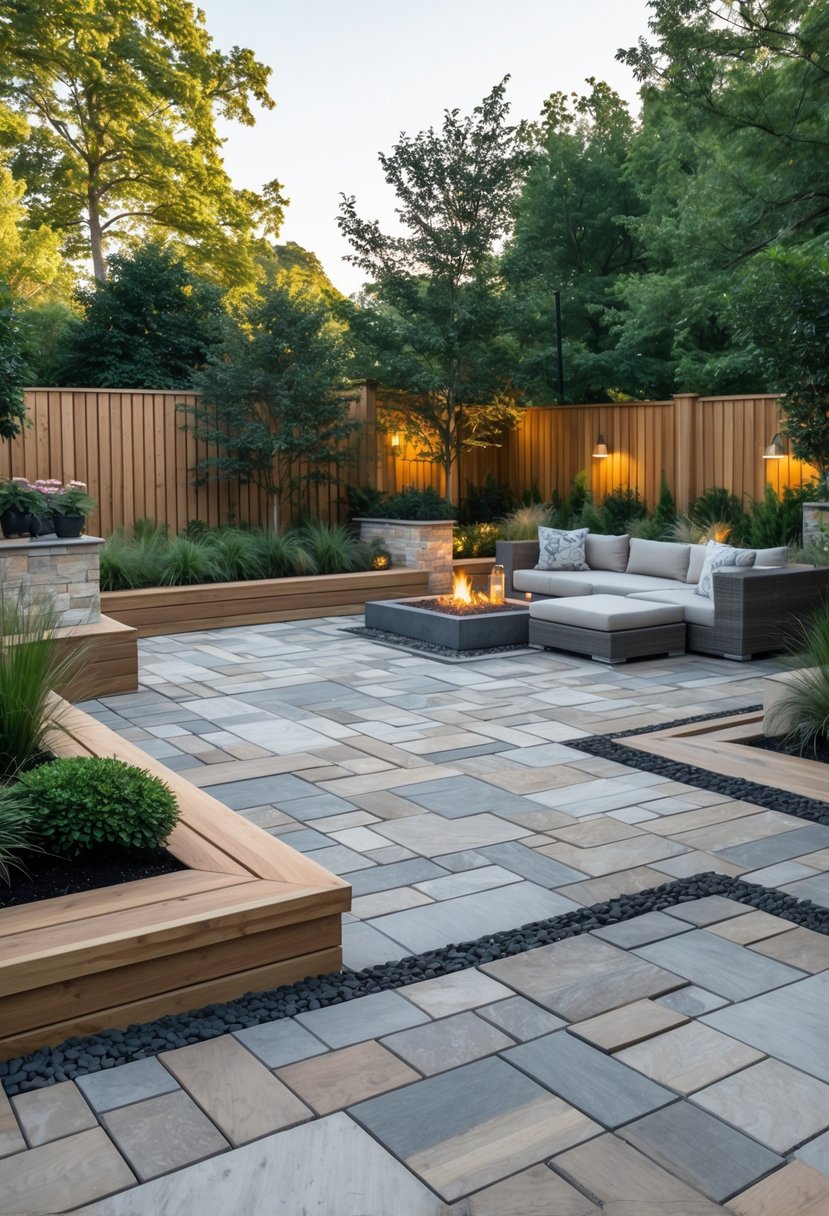
A patio that mixes wood and stone offers a natural and balanced look. Stone pavers provide durability and a strong base. Wood adds warmth and texture, making the space feel inviting.
Using wood for borders or seating areas complements the stone’s rough surface. This combination breaks up hard edges and creates visual interest. It also allows for creative layouts with different shapes and patterns.
Choosing weather-resistant wood and sealing it regularly helps the patio last longer. Stone comes in many styles, so blending colors and textures can enhance the design without looking busy.
Cozy Fire Pit Surrounded by Pavers
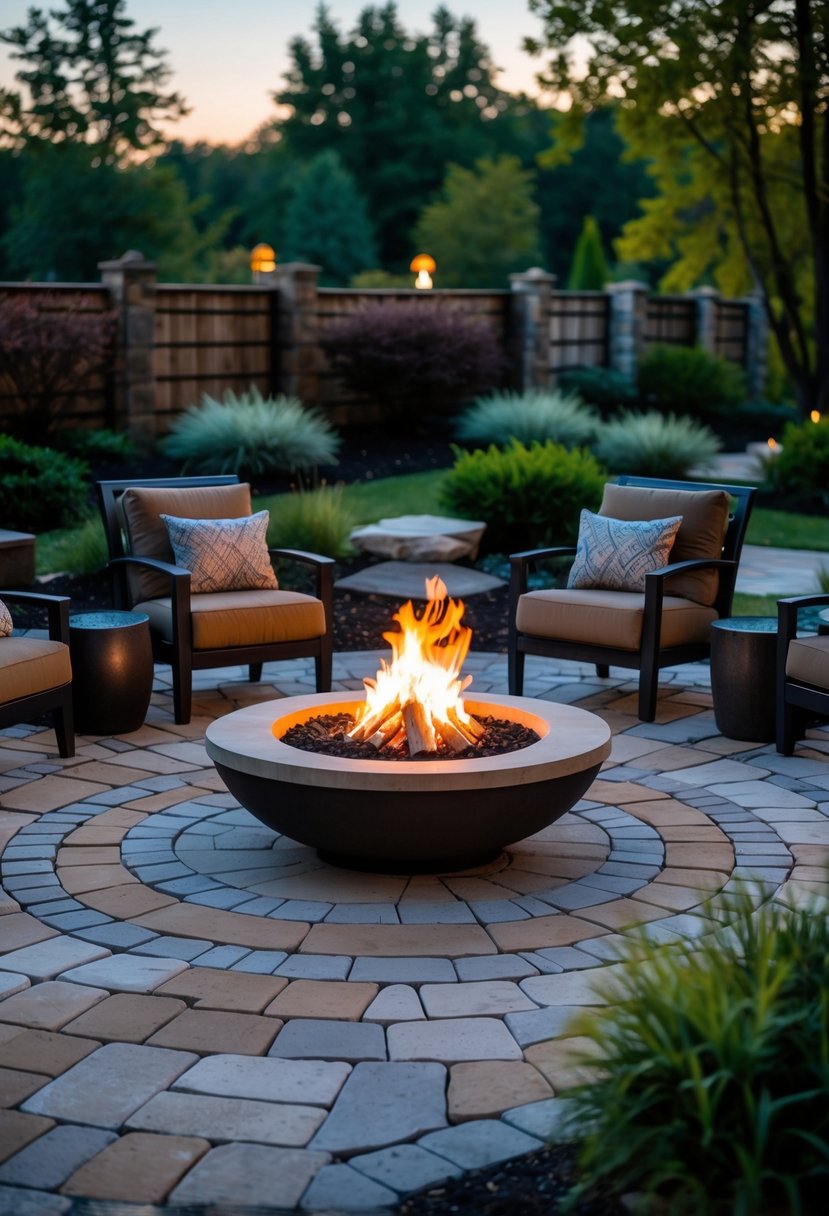
A fire pit surrounded by pavers creates a warm and inviting spot in any backyard. Pavers add structure and style, making the area safe and visually appealing.
The design can be simple or detailed, with different colors and shapes of pavers to match the overall patio.
This setup encourages gatherings, offering a comfortable place for people to sit and enjoy the fire. It also adds value by enhancing the outdoor space’s function and look.
Outdoor Kitchen Patio with Slate Pavers
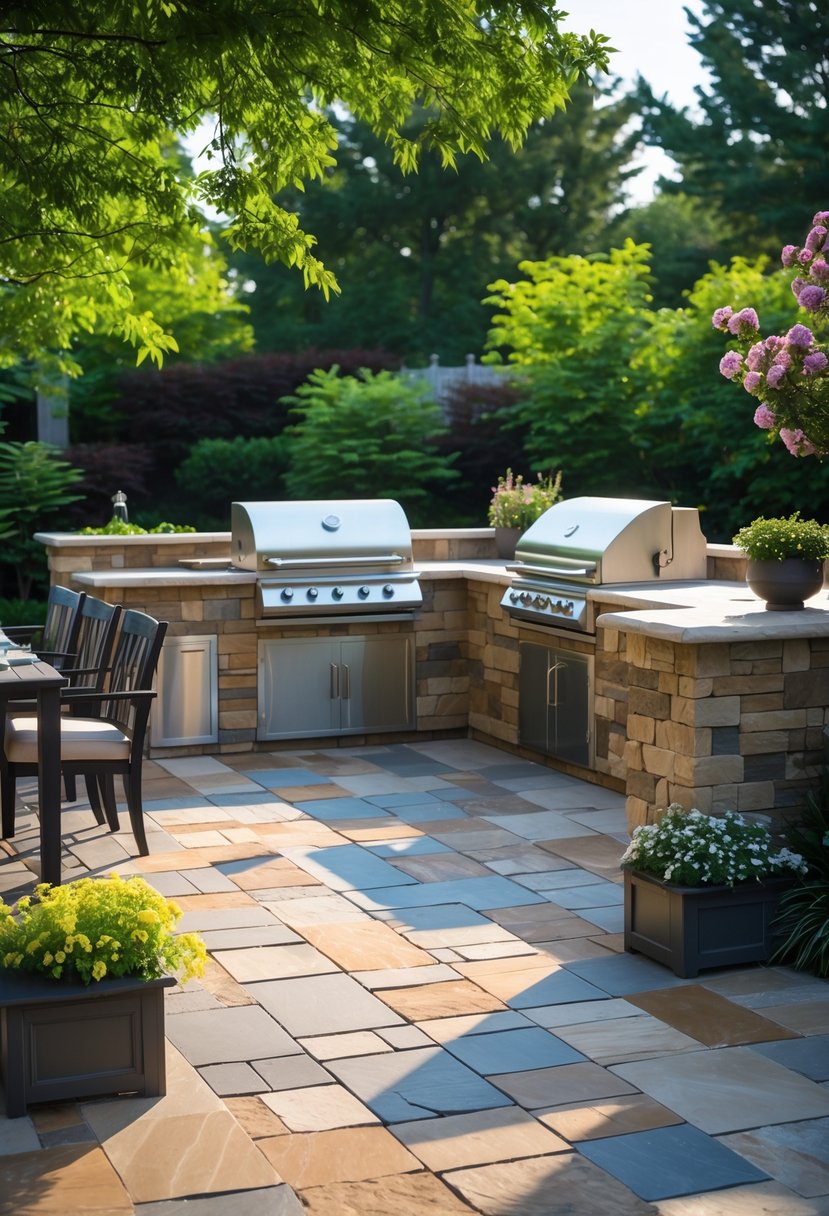
Slate pavers offer a smooth, natural look that fits well in outdoor kitchen patios. Their durability holds up against heat and heavy foot traffic.
They come in various shades, adding rich color to the space. This helps create a stylish, clean surface for cooking and dining areas.
Slate is also slip-resistant, making it safer around grills and prep stations. Proper sealing will protect it from stains and weather damage, keeping the patio functional and attractive over time.
Stamped Concrete Paver Style
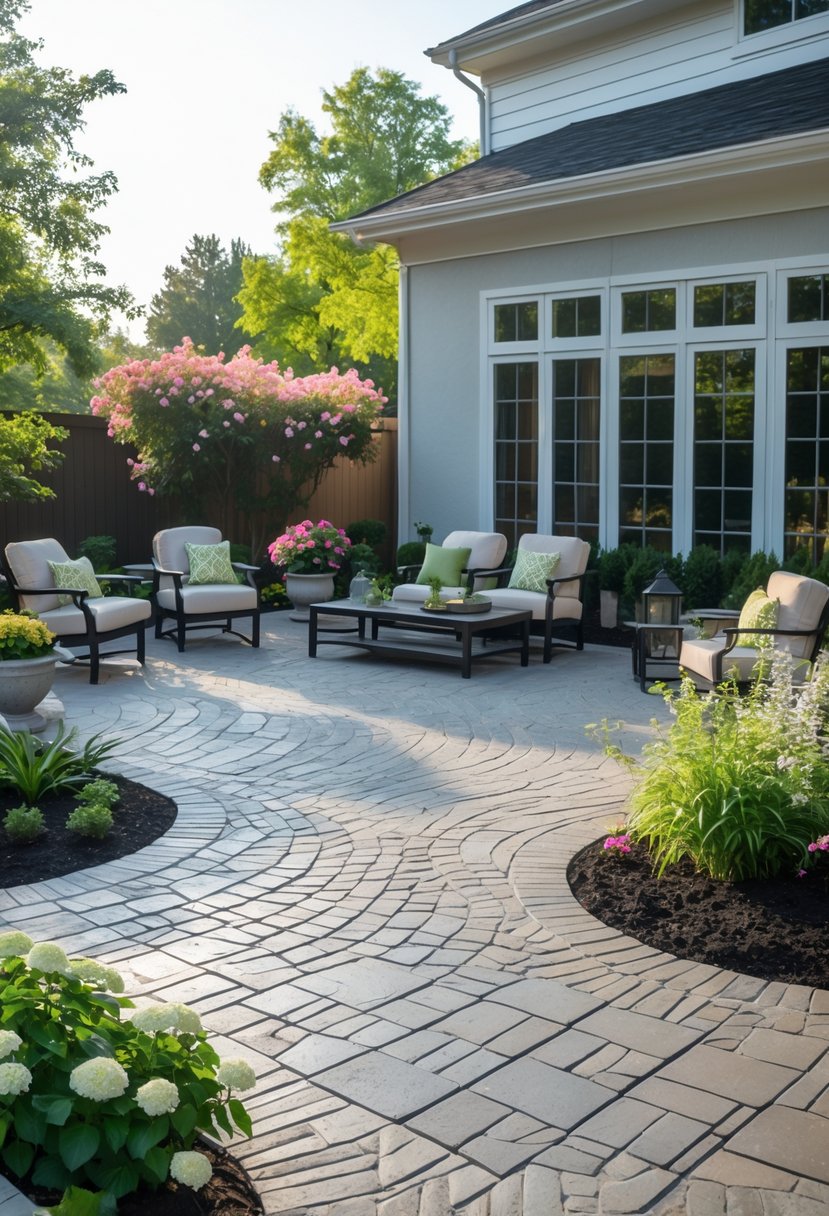
Stamped concrete paver style offers the look of traditional pavers without the high cost. It is made by imprinting patterns into wet concrete to mimic brick, stone, or tile.
This style is durable and requires less maintenance compared to real pavers. It also allows for a smooth, seamless surface that can handle heavy use.
Design options include curved layouts and geometric patterns, giving patios a modern or classic appearance. Stamped concrete is a practical choice for those who want style and strength in one material.
Rustic Flagstone Patio
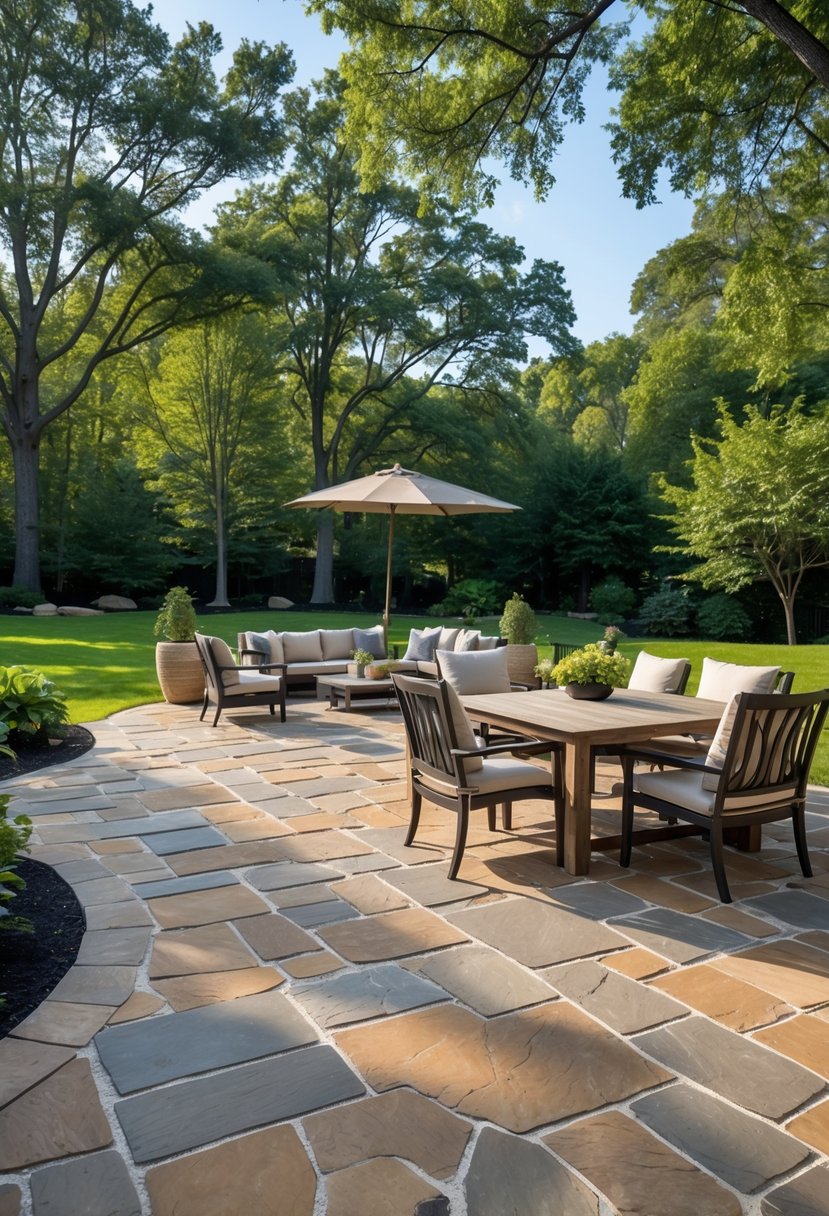
A rustic flagstone patio uses natural stones with uneven shapes and textures. This style creates a casual, earthy look that blends well with outdoor spaces.
The stones usually vary in color, adding visual interest without being too busy. They are often set with wider gaps filled with gravel or plants.
Flagstones in a rustic patio are typically thicker, around 2 to 4 inches. This gives the patio a sturdy, natural feel underfoot.
This design fits well in yards that want a cozy, relaxed atmosphere. It pairs nicely with wood or metal outdoor furniture for a balanced look.
Circular Patio with Radiating Pavers
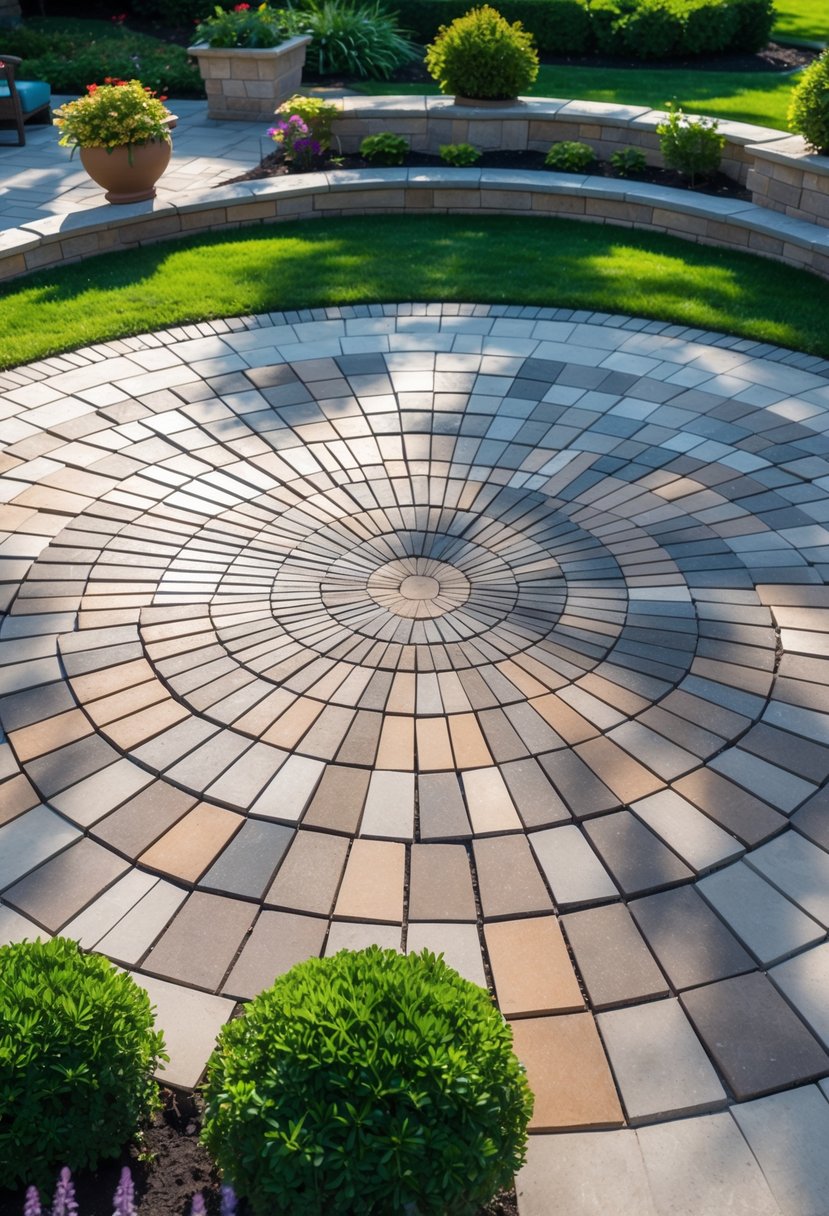
A circular patio with radiating pavers creates a visually striking design. The pavers are arranged in layers that spread outward from a central point, giving a clean and balanced look.
This layout works well with various materials like stone, brick, or concrete. Starting from the center helps keep the pattern even and tight.
The radiating style softens sharp lines in outdoor spaces, making the area inviting. It also allows for easy integration with garden beds or seating areas. This design offers both beauty and function for many backyard types.
Minimalist Large Format Concrete Slabs
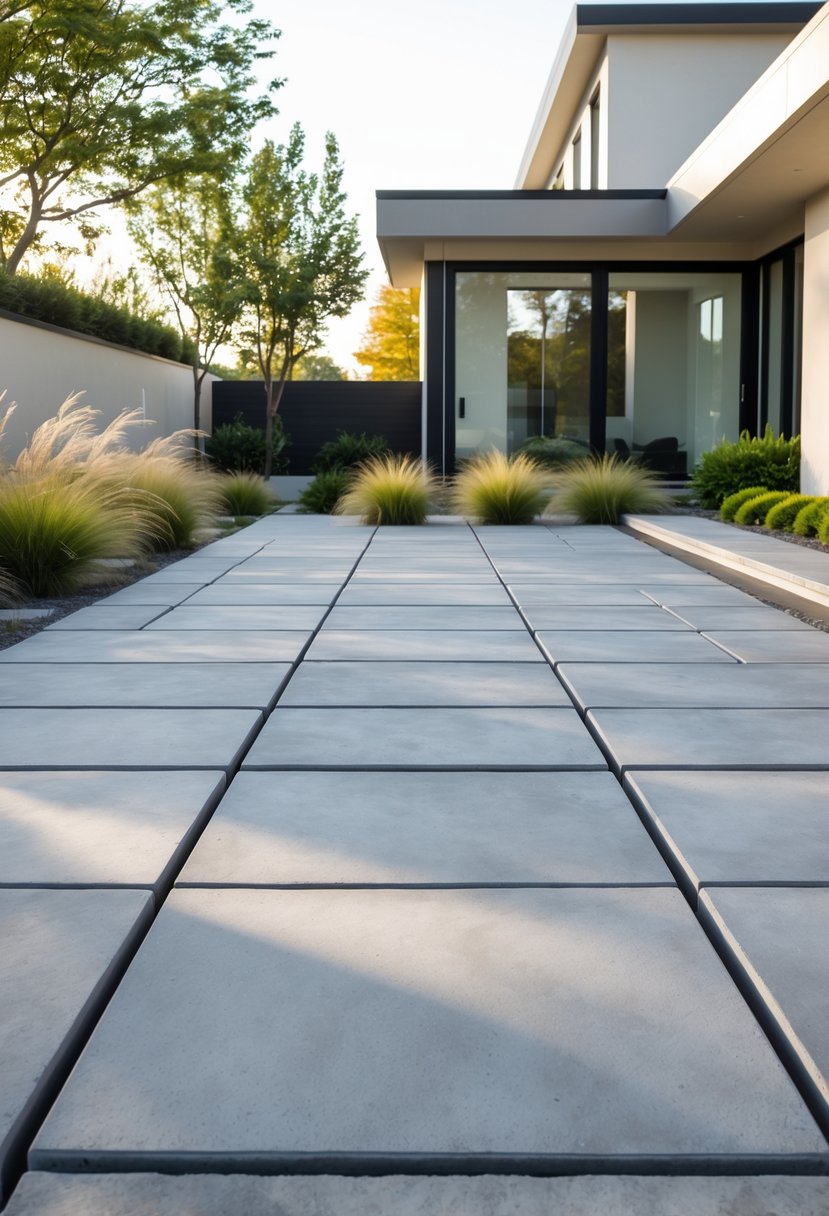
Large format concrete slabs create a clean and modern look for patios. They offer wide, smooth surfaces with fewer joints, which gives a sense of openness and simplicity.
This style works well in minimalist designs. It pairs easily with simple furniture and landscaping, keeping the space uncluttered.
Concrete slabs are durable and low maintenance. They can withstand different weather conditions without much wear, making them practical for outdoor use.
Color-Contrasting Border Paver Design

Using a border with contrasting colors adds clear definition to a patio. It helps separate the edges from the main field, making the layout more visually appealing.
A darker border can create depth and frame the space boldly. Lighter borders offer a softer, subtle look while still providing a clear edge.
This design also breaks up large paved areas, preventing the surface from looking too plain. It works well with different styles and materials for added interest.
Patterned Mosaic Paver Inlay
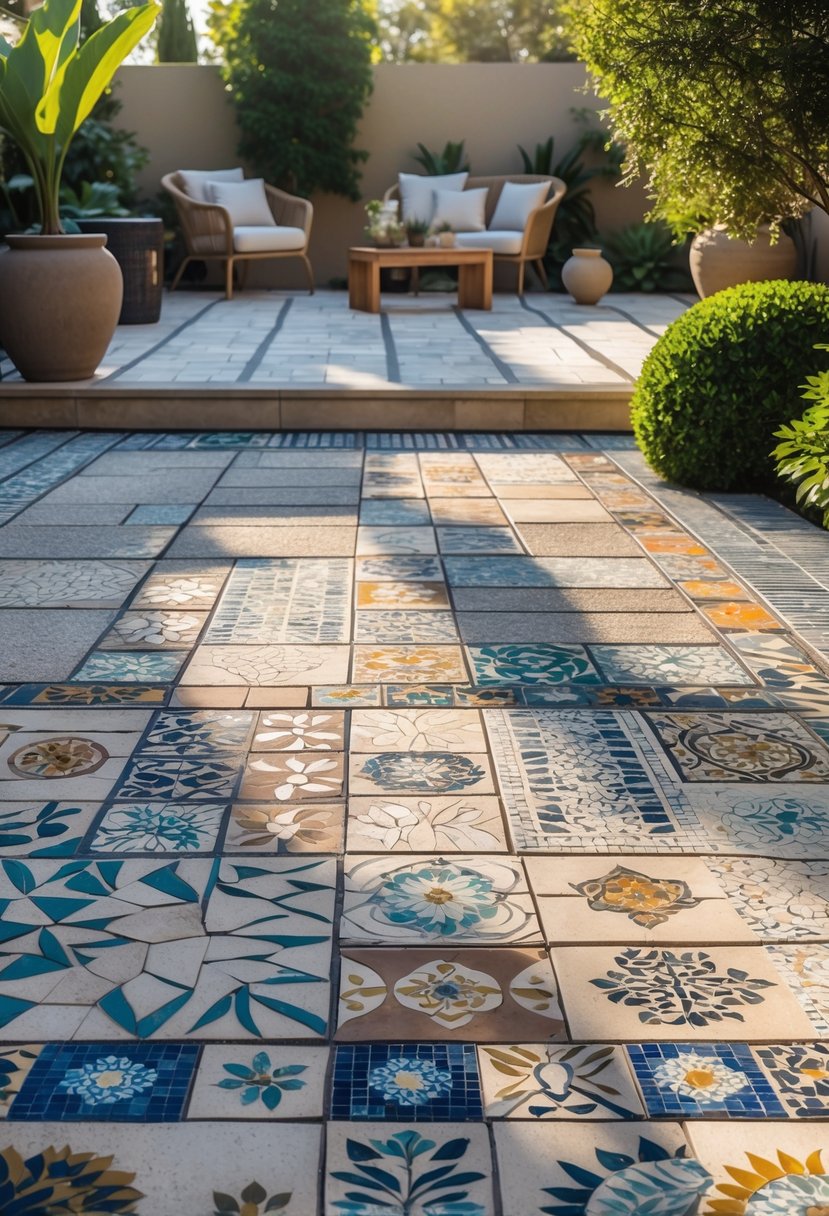
Patterned mosaic paver inlays add visual interest by combining different shapes and colors. They use small pieces of stone, glass, or ceramic arranged in geometric or nature-inspired designs.
This technique allows for unique, custom patterns that fit any style. It works well for both large patios and small accent areas.
Installation requires careful planning and skill to ensure durability and a smooth surface. Maintenance involves regular cleaning to keep the colors vibrant and prevent dirt buildup.
Integrated Drainage Paver System
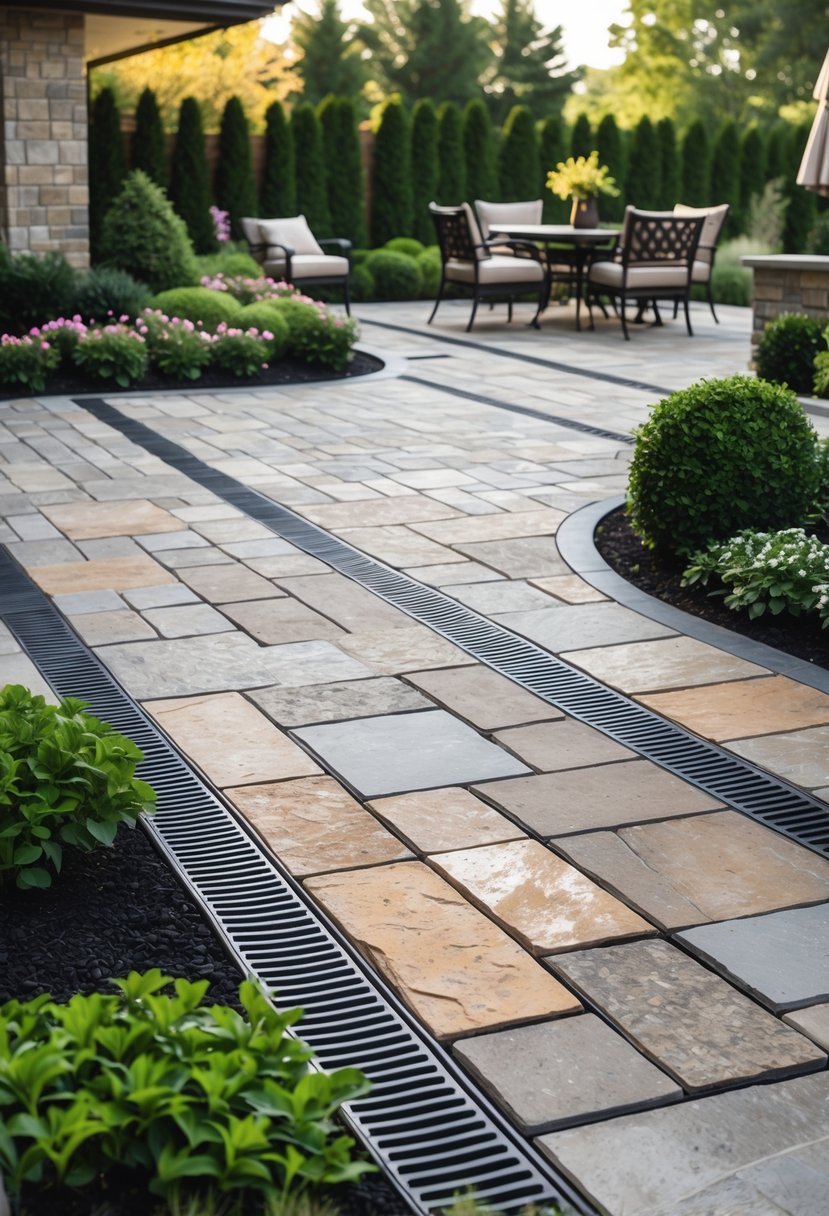
An integrated drainage paver system helps manage water effectively around patios. It uses permeable pavers that allow water to pass through, reducing runoff. This prevents water from pooling on the surface and protects the foundation.
These systems often include layers beneath the pavers to guide water safely away. They work well with sloped designs that direct water flow. This combination improves drainage and keeps the patio dry.
Integrated drainage systems also reduce the risk of erosion and water damage. They provide a practical solution while maintaining the patio’s appearance. This approach supports both functionality and durability.
Final Thoughts
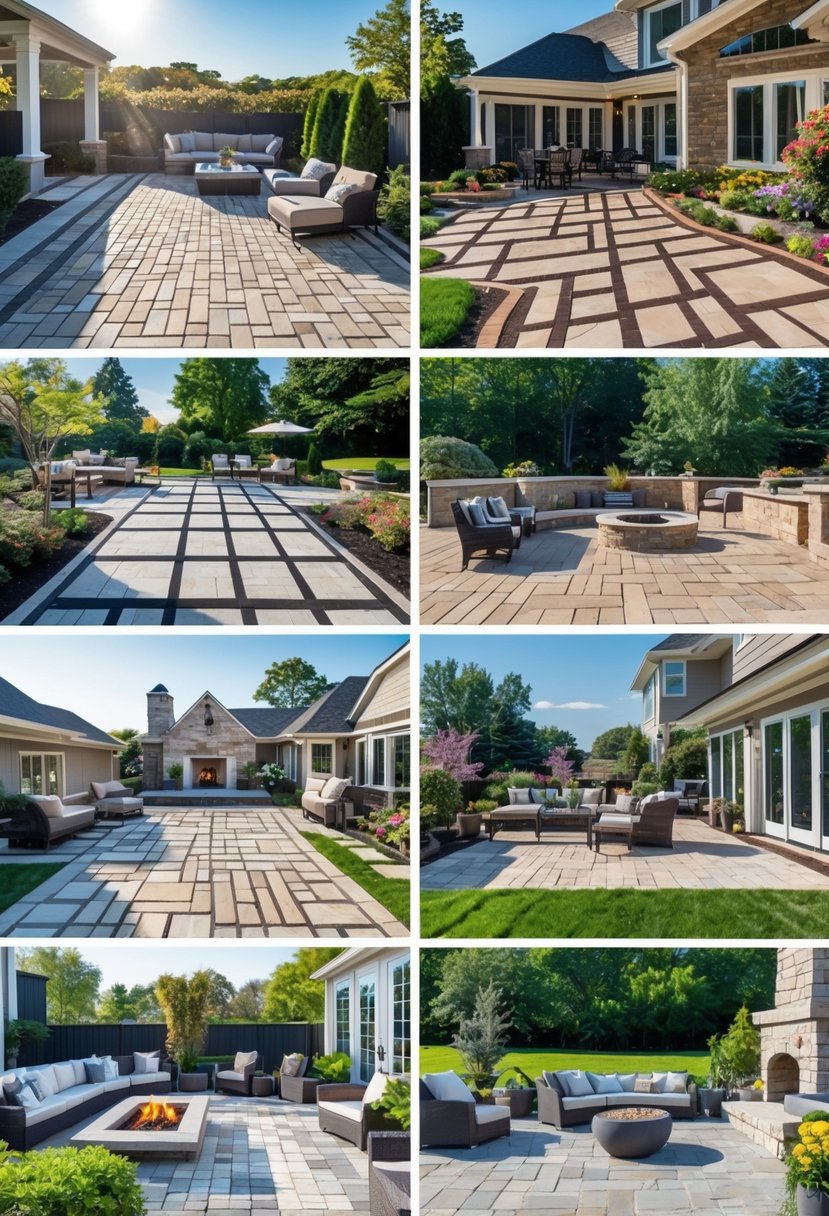
Paver patios offer a practical way to enhance any outdoor space. They come in many styles, colors, and materials, allowing for personalized designs that fit different tastes and budgets.
Durability is a key benefit of pavers. They can withstand weather changes and heavy use better than many other patio options. This makes them a smart choice for long-term outdoor projects.
When choosing a paver patio design, consider how the space will be used. Some ideas focus on creating a cozy seating area, while others include features like fire pits or pergolas for added function and style.
Maintenance is usually simple with pavers. Regular cleaning and occasional resealing can keep the patio looking fresh and prevent damage.
Key points to remember:
- Pavers offer versatility in design.
- They provide strong durability.
- Designs can suit many functions.
- Maintenance is easy compared to other materials.
Thinking ahead about the patio’s purpose and style helps ensure it becomes a valuable and attractive part of the yard. With the right choices, paver patios can truly transform outdoor living areas into inviting spots for relaxation or entertaining.